When you share your yard with dogs, cats, or other pets, a fence does more than mark a property line. It becomes a safety barrier, a containment system, and a peace-of-mind investment. Arkansas yards present unique challenges for pet owners: uneven terrain from the Ozark foothills, expansive clay soils that shift with moisture, and weather patterns that swing from humid summers to freezing winters. Choosing the wrong fence can lead to escapes, injuries, or constant repairs. The right pet friendly fence solutions Arkansas yards require materials and designs that withstand local conditions while keeping your animals safe and secure. This guide walks through the most effective options for Batesville homeowners and surrounding communities.
Why Standard Fences Often Fail for Pets in Arkansas
Many homeowners install a fence without considering how their pets will interact with it. A standard chain-link fence might keep a large dog contained, but a determined beagle or terrier can dig underneath in hours. Wood privacy fences offer seclusion, but dogs can push through loose pickets or climb if the design lacks a smooth top rail. Arkansas clay soil adds another layer of difficulty. After heavy rain, the ground softens, and fence posts can shift. This creates gaps at the bottom that small pets exploit. In our guide on fence repair leaning posts Arkansas solutions that work, we explain how unstable posts compromise the entire structure. For pet owners, a leaning fence is not just an eyesight issue. It is an escape route waiting to happen.
The emotional cost is significant too. A lost pet can cause days of worry and stress. Preventing escapes through thoughtful fence design is far easier than searching for a frightened animal. Arkansas pet owners need solutions that address digging, climbing, jumping, and the environmental wear that comes with the local climate.
Top Materials for Pet Friendly Fences in Arkansas
Selecting the right material is the foundation of any successful pet enclosure. Each option has strengths and weaknesses depending on your pet’s size, energy level, and habits. Below are the most reliable materials for pet friendly fence solutions Arkansas yards can use effectively.
Vinyl Fencing with Pet-Specific Features
Vinyl fencing has become a top choice for Arkansas pet owners because it resists moisture, never rots, and requires no painting. For dogs that like to jump or climb, solid vinyl panels with no horizontal toe holds eliminate the ladder effect that wooden fences often create. Many vinyl systems include a bottom rail that sits flush with the ground, which discourages digging. The smooth surface also prevents paw splinters and is easy to clean when muddy paws leave marks. For Arkansas summers, vinyl does not absorb heat as much as metal, making it more comfortable for pets that press against the fence to look through gaps.
Wood Privacy Fences with Dig Guards
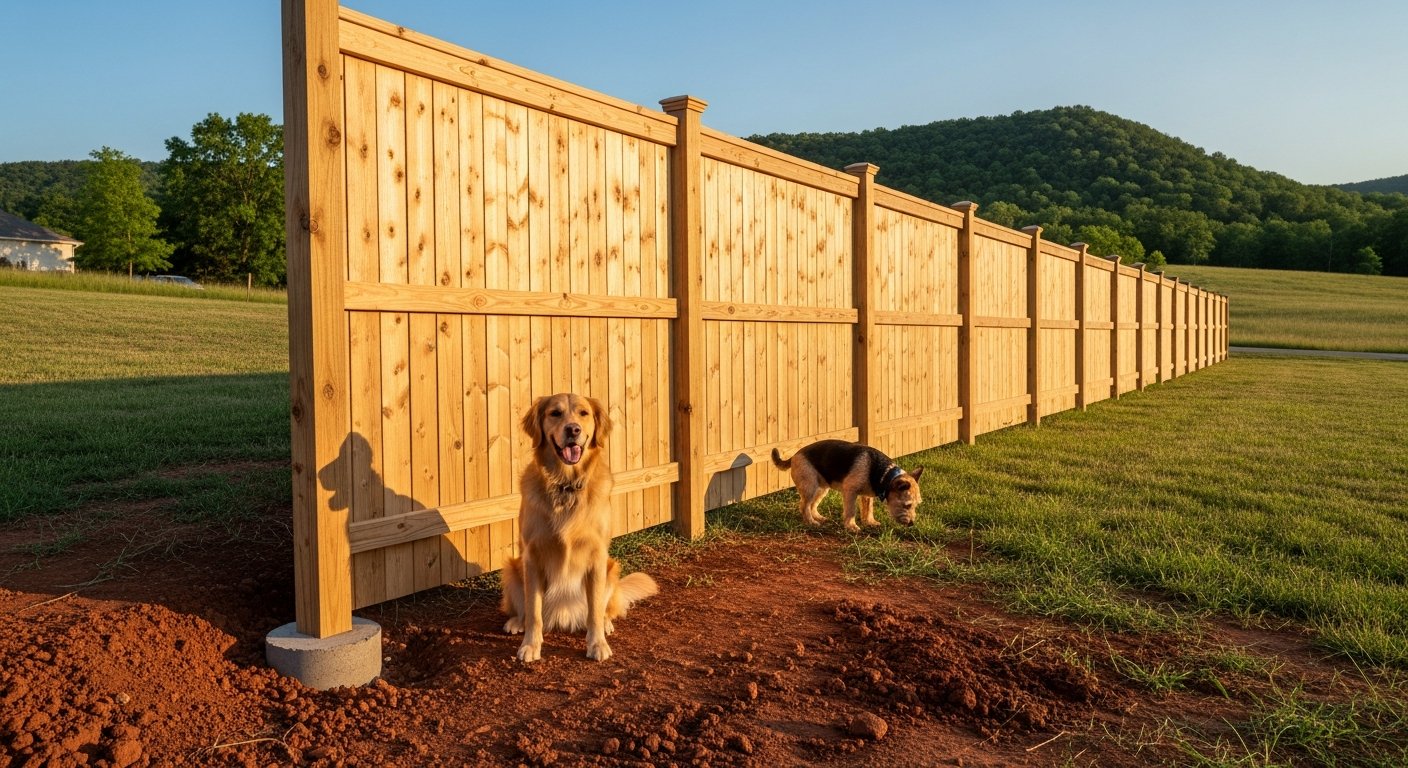
Wood remains a popular choice for its natural look and affordability. However, standard wood fences need modifications to work well for pets. The most effective upgrade is installing a dig guard, which is a buried wire mesh or pressure-treated lumber section that extends 12 to 18 inches below the ground along the bottom of the fence. This prevents dogs from tunneling out. Additionally, using tongue-and-groove or board-on-board construction eliminates gaps that small pets can squeeze through. Cedar and pressure-treated pine are the most durable wood options for Arkansas humidity. Sealing the wood annually protects it from moisture and extends its life.
Chain-Link with Privacy Slats and Bottom Reinforcement
Chain-link fencing is budget-friendly and durable, but it requires modifications to become truly pet-friendly. Adding privacy slats blocks visual stimuli that can cause barking and aggression toward passersby. More importantly, installing a bottom tension wire or a concrete curb along the base prevents digging. For climbing dogs, adding a top rail with a roller attachment makes it impossible for them to get a grip and scale the fence. Chain-link works well for large properties where budget is a primary concern, but the modifications are essential for pet safety.
Aluminum and Wrought Iron with Narrow Spacing
For homeowners who want an open view without sacrificing security, aluminum or wrought iron fences with narrow picket spacing (3 inches or less) are excellent options. These materials are strong, rust-resistant in Arkansas humidity, and visually appealing. The key is ensuring the spacing is tight enough that pets cannot slip through or get their heads stuck. Adding a bottom panel or extending the pickets close to the ground eliminates escape routes. These fences are particularly good for larger yards where you want to maintain sightlines while containing active dogs.
Essential Design Features for Pet Containment
Beyond material selection, specific design elements make the difference between a fence that works and one that frustrates both you and your pet. When planning pet friendly fence solutions Arkansas yards need, consider these features carefully.
- Bottom seals and dig barriers: A continuous barrier at ground level prevents digging. Options include buried wire mesh, pressure-treated lumber planks, or concrete mow strips that also simplify landscaping.
- Smooth top rails or roller bars: Climbing dogs cannot gain traction on rounded surfaces. A smooth top rail or a roller bar attachment stops even athletic breeds from scaling the fence.
- Self-closing gates with secure latches: A latch that a dog can nose open defeats the entire fence. Choose a gate with a spring-loaded self-closing hinge and a latch that requires manual dexterity to open.
- No toe holds: Horizontal rails on the exterior side create a ladder for climbing dogs. Opt for designs with all horizontal supports on the interior side or use materials like vinyl with no horizontal grips.
These features work together to create a containment system that addresses the most common escape methods. A fence that only prevents one type of escape will eventually fail. Combining multiple deterrents gives you redundancy and peace of mind.
Arkansas Climate Considerations for Pet Fences
Arkansas weather is hard on fences. High humidity accelerates rot in wood, freeze-thaw cycles heave fence posts out of alignment, and heavy rain saturates clay soil, causing posts to lean. For pet friendly fences, these issues are critical because a shifting fence creates gaps and weak points. Here are specific steps to make your fence last longer in Arkansas conditions.
Use concrete footings for all fence posts. Setting posts in concrete prevents the ground movement that causes leaning. The hole should be at least 24 inches deep to go below the frost line. Adding gravel at the bottom of the hole improves drainage and reduces the risk of frost heave. For wood posts, use pressure-treated lumber rated for ground contact. For metal posts, choose galvanized or powder-coated options that resist rust.
Regular maintenance is not optional. Inspect your fence at least twice per year, once in spring and once in fall. Look for loose boards, rusted hardware, gaps at the bottom, and signs of digging. Address small problems immediately before they become escape routes. A proactive approach saves money and prevents the stress of a lost pet.
Working with a Local Contractor for Best Results
Building a pet friendly fence is not a simple DIY project for most homeowners. The digging required for proper post footings, the precision needed for level installation on sloped Arkansas terrain, and the knowledge of local zoning laws all point to hiring a professional. A local contractor who understands Batesville and Independence County regulations can ensure your fence meets height restrictions, setback requirements, and HOA rules. They also know which materials perform best in this specific climate.
When you hire a contractor, discuss your pet’s specific behaviors. Tell them if your dog is a digger, a jumper, or a chewer. A good contractor will recommend design modifications that address those habits. They can also advise on gate placement for convenience, such as positioning a smaller pet gate near the back door for quick access to the yard.
Investing in quality materials and professional installation pays off over time. A poorly built fence that requires annual repairs costs more in the long run than a well-built fence that lasts two decades. For Arkansas pet owners, the peace of mind that comes from a secure enclosure is invaluable.
Cost Factors for Pet Friendly Fencing in Arkansas
The cost of pet friendly fence solutions Arkansas yards depend on material, linear footage, terrain difficulty, and design complexity. Vinyl fencing typically runs higher than wood but requires less maintenance over its lifespan. Wood fencing with dig guards and professional installation falls in the mid-range. Chain-link with modifications is the most budget-friendly option. Aluminum and wrought iron sit at the higher end but offer unmatched durability and appearance.
Terrain adds cost. Sloped yards require stepped or racked fence panels, which take more labor and materials. Rocky soil makes digging post holes more difficult and may require specialized equipment. Clearing vegetation along the fence line also adds to the budget. Get multiple estimates from local contractors and ask for itemized breakdowns so you understand where your money is going.
Remember that the cheapest fence is rarely the best value for pet owners. A fence that fails and allows your pet to escape costs more in replacement, repairs, and emotional stress. Prioritize quality and design features that directly address your pet’s needs.
Final Thoughts on Keeping Pets Safe in Arkansas Yards
Creating a secure outdoor space for your pets requires thoughtful planning, quality materials, and professional execution. The best pet friendly fence solutions Arkansas yards combine durable materials with smart design features that prevent digging, climbing, and squeezing through gaps. By investing in a fence built for Arkansas weather and your pet’s specific behaviors, you create a yard where your animals can exercise and explore safely. Work with a trusted local contractor who understands both fencing and pet needs. Your peace of mind and your pet’s safety are worth the investment.