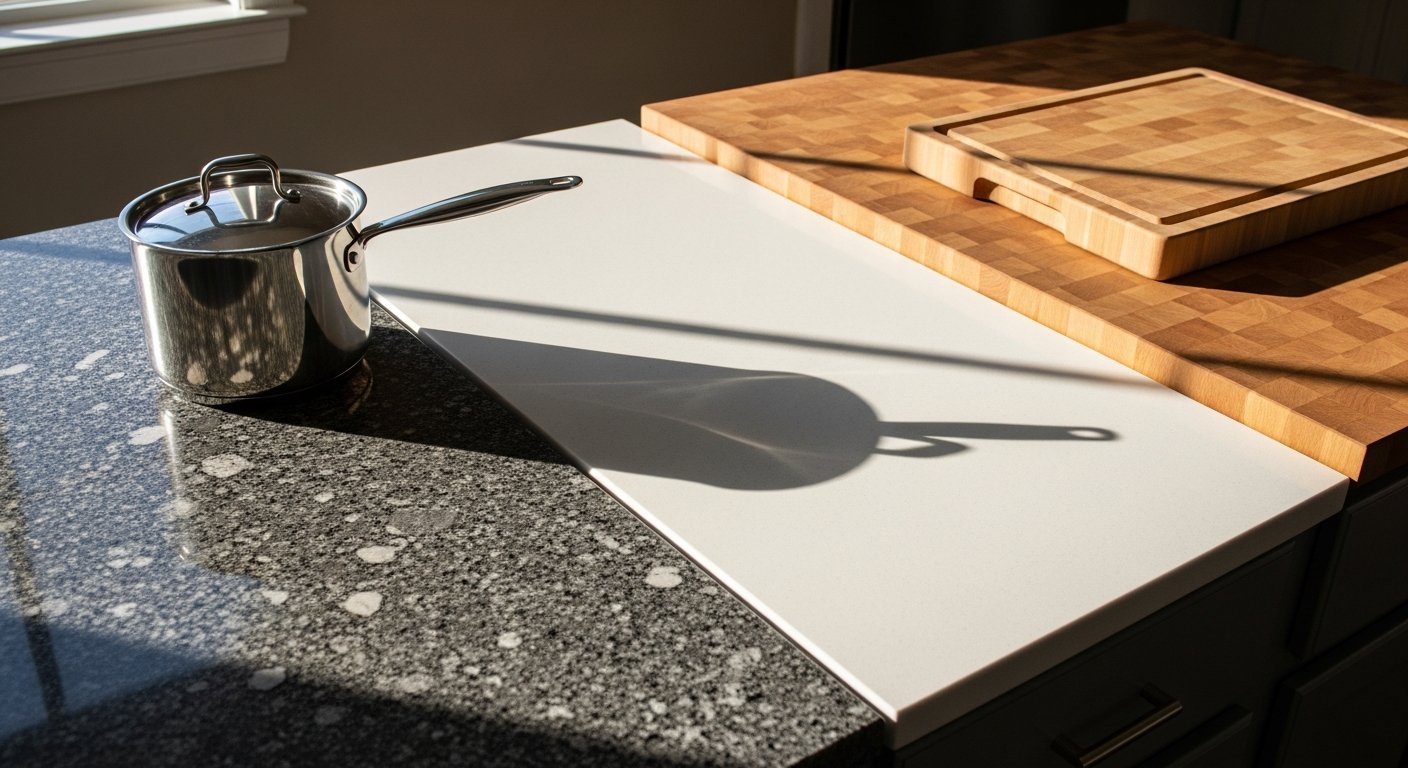
Choosing a new kitchen countertop in Arkansas means balancing durability, style, and the unique humidity and temperature swings of the region. A kitchen countertop comparison granite quartz butcher block Arkansas helps homeowners make a confident choice. Each material brings distinct strengths to the table, and the right pick depends on how you cook, clean, and live. In this guide, we break down the real differences to help you find the surface that fits your home and your habits.
Granite Countertops: Natural Beauty With Real Staying Power
Granite is a natural stone that has been a top choice for Arkansas kitchens for decades. It forms deep within the earth under intense heat and pressure, which gives it exceptional hardness. For homeowners in Batesville and the surrounding areas, granite offers a surface that can handle hot pots, sharp knives, and daily cooking without showing much wear. Each slab is unique, with veining and speckles that add character to your kitchen.
One of the biggest advantages of granite is its heat resistance. You can place a hot pan directly on the surface without worrying about damage. This makes it ideal for busy families who cook frequently. Granite also resists scratches and chips when properly sealed. However, the stone is porous and requires periodic sealing to prevent stains from wine, oil, or acidic foods. In Arkansas, where humidity can be high, maintaining that seal is especially important to keep the stone looking pristine.
Cost is a factor to consider. Granite typically ranges from $40 to $100 per square foot installed, depending on the rarity of the color and the complexity of the edge profile. For a typical kitchen, this investment pays off in long-term durability and resale value. Many homebuyers in Arkansas view granite as a premium feature. When you work with a local contractor like The Real Deal of Batesville, you can select slabs that complement your cabinetry and flooring while ensuring proper installation and sealing.
Quartz Countertops: Low Maintenance and Consistent Style
Quartz countertops are engineered from crushed natural quartz crystals combined with resin and pigments. This manufacturing process creates a non-porous surface that requires no sealing. For Arkansas homeowners who want a beautiful countertop without the upkeep, quartz is a strong contender. It resists stains, bacteria, and mold growth, which is a significant advantage in a humid climate where moisture can linger.
Unlike granite, quartz offers a more uniform appearance. If you prefer a consistent pattern or a specific color that matches your design vision, quartz delivers. It also comes in a wide range of colors, including shades that mimic natural stone but with more predictable veining. Quartz is durable but not heat-proof. You should always use trivets or hot pads to protect the surface from direct heat, as the resin can discolor or melt under extreme temperatures.
The cost of quartz is similar to mid-range to high-end granite, typically falling between $50 and $120 per square foot installed. The investment is worthwhile for homeowners who value convenience and a clean, modern look. Quartz also pairs well with custom cabinetry and kitchen islands, especially in homes where families gather for meal prep and homework. A local remodeling team can help you choose the right slab thickness and edge profile to match your kitchen’s style.
Butcher Block Countertops: Warmth and Practicality
Butcher block countertops bring a warm, natural aesthetic to Arkansas kitchens. Made from strips of wood glued together under pressure, they offer a surface that is gentle on knives and inviting to the touch. For homeowners who love to cook and bake, butcher block provides a built-in cutting board that can be sanded and refinished when it shows wear. This makes it one of the most forgiving countertop materials over time.
Wood is naturally antimicrobial when properly maintained, but it does require regular oiling to prevent drying and cracking. In Arkansas, where humidity fluctuates between wet springs and dry winters, maintaining the oil finish is crucial. Butcher block is also susceptible to water damage if spills are left standing. You need to wipe up liquids quickly and avoid placing the material near sinks without proper sealing. Despite these considerations, many homeowners love the character that butcher block adds to a kitchen.
Butcher block is the most budget-friendly option of the three, typically costing $20 to $60 per square foot installed. It works particularly well on kitchen islands or as an accent surface in a kitchen with other countertop materials. For example, you might pair a granite perimeter with a butcher block island for the best of both worlds. Local contractors in Batesville can help you source quality hardwoods like maple, walnut, or oak that stand up to daily use.
Side-by-Side Comparison: Key Factors for Arkansas Homes
To help you visualize the differences, here is a breakdown of how each material performs on the factors that matter most to Arkansas homeowners. Use this list as a starting point for your decision.
- Durability: Granite is extremely hard and heat-resistant. Quartz is tough but sensitive to heat. Butcher block can be sanded and refinished but dents and scratches easily.
- Maintenance: Quartz requires the least maintenance with no sealing needed. Granite needs periodic sealing. Butcher block requires regular oiling and careful cleaning.
- Cost: Butcher block is the most affordable. Granite and quartz are comparable, with quartz often costing slightly more for premium colors.
- Aesthetic Variety: Granite offers unique natural patterns. Quartz provides consistent, engineered colors. Butcher block delivers warmth and natural wood grain.
- Resale Value: Granite and quartz both add strong resale value. Butcher block can be a selling point for buyers who appreciate its charm and practicality.
Each material has trade-offs that align with different lifestyles. A family with young children might prefer quartz for its stain resistance and easy cleaning. A serious home cook might lean toward granite for its heat tolerance. A homeowner focused on budget and character might choose butcher block for its affordability and timeless look.
How Arkansas Climate Affects Your Countertop Choice
The climate in Arkansas presents specific challenges for countertop materials. High humidity during summer months can affect porous materials like granite if the sealant is not maintained. Butcher block is especially sensitive to moisture changes, which can cause the wood to expand and contract. Quartz, being non-porous, is largely unaffected by humidity, making it a reliable choice for the region.
Temperature swings between hot summers and cold winters can also impact countertops. Granite handles temperature changes well, but sudden shifts can sometimes cause stress fractures in thin slabs. Quartz is more stable in terms of temperature but should never have hot pans placed directly on it. Butcher block expands and contracts with the seasons, so proper acclimation and installation are critical. A skilled contractor in Batesville will account for these factors during fabrication and installation to ensure long-term performance.
Installation Considerations for Batesville Homeowners
Proper installation is just as important as material selection. Granite and quartz slabs are heavy and require professional handling. Seams must be carefully matched and supported by sturdy cabinetry. Butcher block installation is more straightforward but still requires precise cutting and sealing around sinks and appliances. Working with a local construction and remodeling company ensures that your countertops are installed correctly and will last for years.
If you are planning a full kitchen remodel, consider the sequence of work. Countertops are typically installed after cabinets are in place but before backsplash and flooring are finished. This allows for precise measurements and a clean fit. Your contractor can coordinate the timing with other trades to keep the project on schedule. Many homeowners in Arkansas find that pairing a countertop upgrade with a kitchen island addition maximizes both function and value. In our guide on kitchen countertop comparison granite quartz butcher block Arkansas, we cover additional details about matching materials to your specific kitchen layout.
Making Your Final Decision
Start by evaluating how you use your kitchen. If you cook daily and want a surface that can take heat and abuse, granite is a strong choice. If you prioritize easy cleaning and a consistent look with minimal upkeep, quartz is ideal. If you love the warmth of wood and want a budget-friendly option that can be renewed over time, butcher block is worth considering. Many homeowners also choose to combine materials, using granite or quartz for the main countertops and butcher block for a breakfast bar or island.
Visit a local showroom or countertop fabricator to see slabs and samples in person. Colors and patterns look different in natural light than they do online. Bring cabinet samples and paint swatches to ensure everything coordinates. A local contractor can guide you through the selection process and answer questions about maintenance, cost, and installation timelines.
Your kitchen countertop is a daily workhorse and a central design element. By comparing granite, quartz, and butcher block side by side, you can choose the surface that fits your cooking style, budget, and Arkansas home. With the right material and professional installation, your countertops will serve your family well for decades.