Your property in Batesville, Arkansas is surrounded by beautiful native trees. Oaks, hickories, and maples provide shade, increase property value, and connect your home to the natural landscape of Independence County. But trees are living organisms, and they eventually decline, become diseased, or sustain damage from storms. Knowing exactly when to call professional tree removal Batesville Arkansas homeowners trust can prevent catastrophic property damage, personal injury, and expensive emergency services. Waiting too long to remove a hazardous tree is one of the most common and costly mistakes a homeowner can make.
We specialize in construction, remodeling, and outdoor structures like decks and fences across Batesville and the surrounding areas. When a dangerous tree threatens your home or a planned addition, we coordinate with trusted tree removal professionals to ensure your project stays safe and on track. This guide will walk you through the specific warning signs that demand immediate professional intervention, the risks of DIY removal, and how to evaluate whether a tree on your property has become a liability.
Visible Signs of Structural Instability
The most obvious reason to call a professional is when a tree shows clear structural failure. Look for large cracks or splits in the trunk. These fissures can run vertically or horizontally and often indicate that the tree’s internal support system is compromised. A crack that extends deep into the wood reduces the tree’s ability to withstand wind loads or even its own weight. If you see a crack wider than a few inches, or one that exposes the inner wood, treat it as a serious hazard.
Another critical sign is a lean that was not present before. While some trees naturally grow at an angle, a sudden lean or a progressive lean over a few months signals root failure. The roots may have been damaged by construction, soil erosion, or disease. A leaning tree that is tilting more than 15 degrees from vertical, especially if the ground near the base is heaving or cracking, requires immediate assessment. In our experience working on construction sites in Batesville, we have seen leaning trees fall without warning during heavy rain or wind events.
Dead or hanging branches, often called widowmakers, are another urgent red flag. These branches can fall at any moment, especially during a storm or even a light breeze. A tree with more than 50 percent dead branches is likely in decline and should be evaluated for removal. Do not attempt to remove large hanging branches yourself, as they can be under tension and whip unpredictably when cut.
Disease and Pest Infestation
Batesville’s climate supports a range of tree diseases and pests that can weaken a tree to the point of failure. Oak wilt, a fungal disease spread by beetles, can kill a mature oak within a few months. Symptoms include browning leaves that start at the top of the canopy and spread downward, as well as fungal mats under the bark. If you suspect oak wilt, call a professional immediately. Infected trees become brittle and can drop large limbs or fall entirely.
Emerald ash borer is another serious threat that has reached Arkansas. This invasive beetle attacks ash trees, tunneling under the bark and disrupting the tree’s ability to transport water and nutrients. Signs include D-shaped exit holes in the bark, canopy dieback, and increased woodpecker activity. Once an ash tree is infested, it typically dies within two to four years and becomes extremely hazardous. In our guide on common tree diseases and pests in Batesville Arkansas, we explain how to identify these threats early.
Fungal growth on the trunk or at the base of the tree, such as mushrooms or conks, indicates internal rot. The fungus is digesting the wood, making it soft and structurally unsound. A tree with significant fungal growth at the base may have a hollow trunk and can fail without warning. Professional arborists use tools like a resistograph to measure internal decay, something a homeowner cannot do on their own.
Storm Damage and Aftermath
Arkansas is no stranger to severe weather. Thunderstorms, ice storms, and tornadoes can cause immediate and obvious damage to trees. After a storm, inspect your property for broken limbs, split trunks, or trees that have been partially uprooted. Even if a tree looks stable, hidden damage such as cracked branches in the canopy or root damage may make it dangerous. A tree that has lost a large portion of its canopy is now unbalanced and more likely to fail in the next storm.
If a tree has been struck by lightning, it may survive, but the strike can cause internal damage that weakens the tree over time. Lightning-struck trees often develop long vertical cracks and may die slowly. Have a professional assess the tree to determine if it can be saved or if removal is the safer option. After a storm, do not walk under damaged trees or attempt to clear debris near them. Call a professional tree service that has the equipment and training to handle storm-damaged trees safely.
We recommend that homeowners in Batesville prepare a storm response plan before severe weather hits. Identify trees that are close to your house, garage, or other structures. If a tree has a history of dropping limbs or shows any of the signs described in this article, have it evaluated before the next storm season. Proactive removal is always safer and less expensive than emergency removal after a storm has already caused damage.
Proximity to Structures and Infrastructure
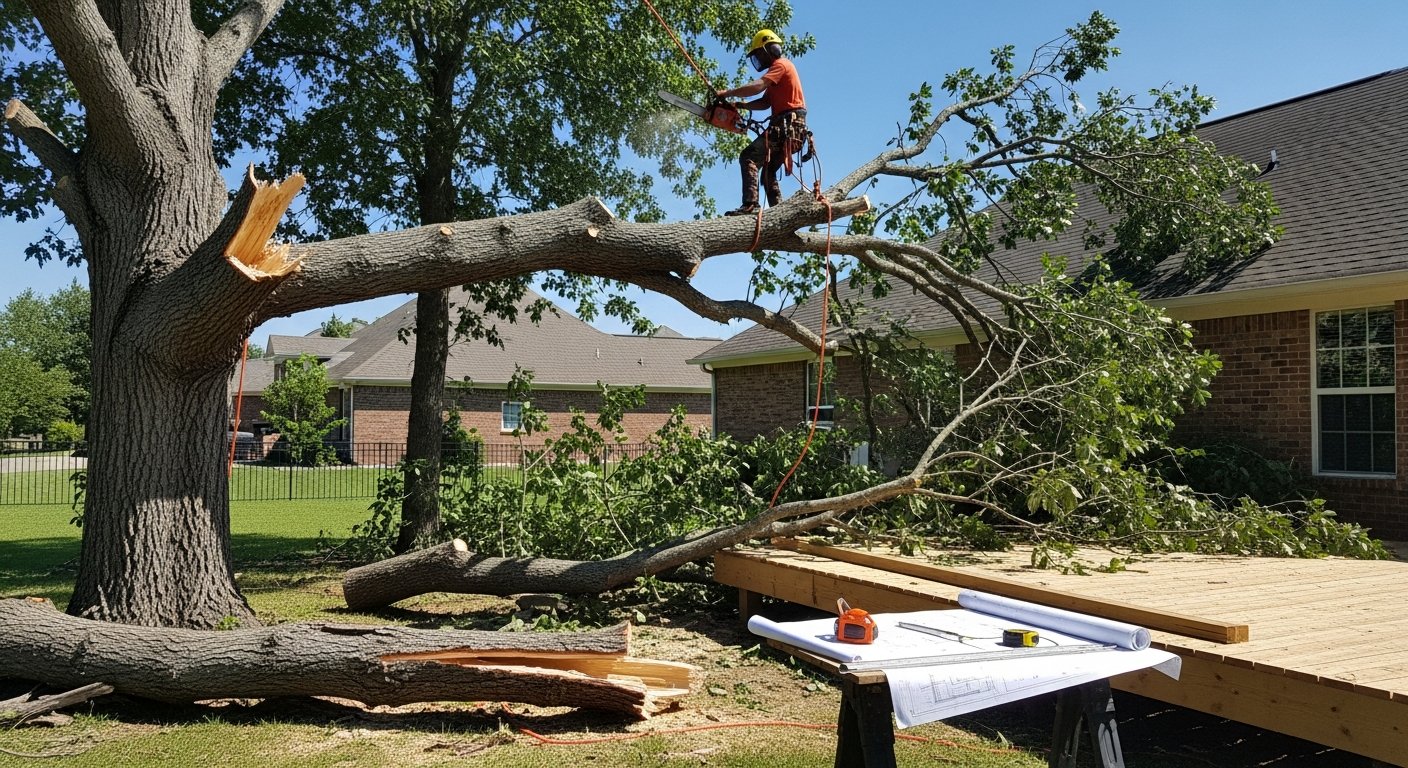
A tree that is healthy today can become a hazard tomorrow if it is too close to your home, deck, fence, or utility lines. Mature trees with canopies that overhang your roof drop leaves, branches, and sap that can damage shingles and gutters. More importantly, a falling limb or entire tree can punch a hole through your roof, destroy a deck, or take down power lines. If a tree is within striking distance of your home, it deserves extra scrutiny.
When you are planning a home addition, new deck, or fence installation, it is important to assess the trees in the area. We have seen projects delayed because a tree that appeared healthy had roots that compromised the foundation of a new structure, or a tree that was too close to a planned deck had to be removed after construction began. Before starting any construction project on your property, have a professional evaluate nearby trees. This can save you thousands of dollars in redesign and removal costs.
Root damage is another concern. Tree roots can grow into foundation cracks, lift sidewalks, and clog underground drainage pipes. If you are planning concrete work, such as a new driveway or patio, roots from nearby trees can heave and crack the concrete over time. In some cases, removing the tree is the only permanent solution. A professional can advise you on whether root pruning or full removal is the best course of action.
When DIY Tree Removal Is Not an Option
Tree removal is dangerous work. Even a small tree can weigh several hundred pounds, and a large oak can weigh several tons. Chain saws, ropes, and ladders create hazards that can lead to serious injury or death. According to the Centers for Disease Control and Prevention, tree removal is one of the most dangerous activities a homeowner can attempt. Falls from ladders, chainsaw kickback, and being struck by falling limbs are common causes of injury.
Consider these factors before attempting DIY removal:
- Tree height and weight: Trees taller than 20 feet or with a trunk diameter larger than 12 inches require professional equipment and expertise to remove safely.
- Proximity to structures: If the tree is within 30 feet of your home, a power line, or a neighbor’s property, professional removal is the only safe option.
- Condition of the tree: Dead, diseased, or damaged trees are unpredictable and can break or fall in unexpected ways during removal.
- Access and terrain: Trees on slopes, near water, or in tight spaces require specialized rigging and equipment that most homeowners do not have.
- Local regulations: Batesville and Independence County may have ordinances regarding tree removal, especially for protected species or trees near public rights-of-way.
Professional tree removal companies carry liability insurance and workers’ compensation, protecting you from financial responsibility if something goes wrong. They also have the training to safely dismantle a tree piece by piece, using ropes and cranes to lower branches and trunk sections to the ground without damaging your property. The cost of professional removal is a small price to pay compared to the cost of repairing a damaged home or paying medical bills.
How to Choose a Tree Removal Professional in Batesville
When you decide to call a professional, take the time to choose a reputable company. Start by asking for referrals from neighbors, friends, or local contractors like us. We have worked with several tree removal services in the Batesville area and can recommend companies that are reliable and insured. You can also check online reviews and the Better Business Bureau for complaints.
Ask any tree removal company you consider these questions:
- Are you licensed and insured? Request proof of both general liability insurance and workers’ compensation.
- Do you have an arborist on staff? An ISA-certified arborist has advanced training in tree health and risk assessment.
- Will you provide a written estimate? A detailed estimate should include the scope of work, timeline, and total cost.
- Do you handle stump grinding? Stump grinding is often an additional service, but it is important to prevent pests and tripping hazards.
- Will you clean up the site? A professional crew should remove all debris and leave your yard clean.
Get at least three written estimates before making a decision. Be wary of companies that demand full payment upfront or offer significantly lower prices than competitors. A low price may indicate inadequate insurance or shortcuts that could compromise safety. Remember that tree removal is an investment in your property’s safety and value. Paying a fair price for quality work is always the better choice.
The Cost of Waiting
Delaying tree removal can have serious financial consequences. A tree that falls on your home can cause structural damage that costs tens of thousands of dollars to repair. Homeowners insurance may cover some of the damage, but policies often have exclusions for neglect. If an adjuster determines that the tree showed visible signs of decay or disease and you did not act, your claim could be denied. Paying for tree removal out of pocket is always less expensive than paying a deductible and the potential increase in your insurance premiums.
There is also the risk of liability. If a tree on your property falls and damages a neighbor’s home or injures a passerby, you could be held legally responsible. Proactive removal protects you from these lawsuits and demonstrates that you are a responsible property owner. In Batesville, where trees are abundant and storms are common, regular tree inspections should be part of your home maintenance routine.
Schedule an annual inspection of all trees on your property, especially those near your home. A certified arborist can identify problems early and recommend treatments or pruning that may extend the life of the tree. In some cases, a tree that appears hazardous can be saved with proper care. But when removal is the only safe option, do not wait. The peace of mind that comes from knowing your family and property are safe is worth the investment.
Knowing when to call professional tree removal Batesville Arkansas is not just about protecting your home. It is about protecting your family, your finances, and your future. If you see any of the signs described in this article, or if you are planning a construction project that involves trees, contact a professional tree service today. And if you need help with the aftermath of a tree removal, such as repairing a deck, fence, or concrete pad, we are here to help. We have the experience and expertise to restore your property and make it even better than before.