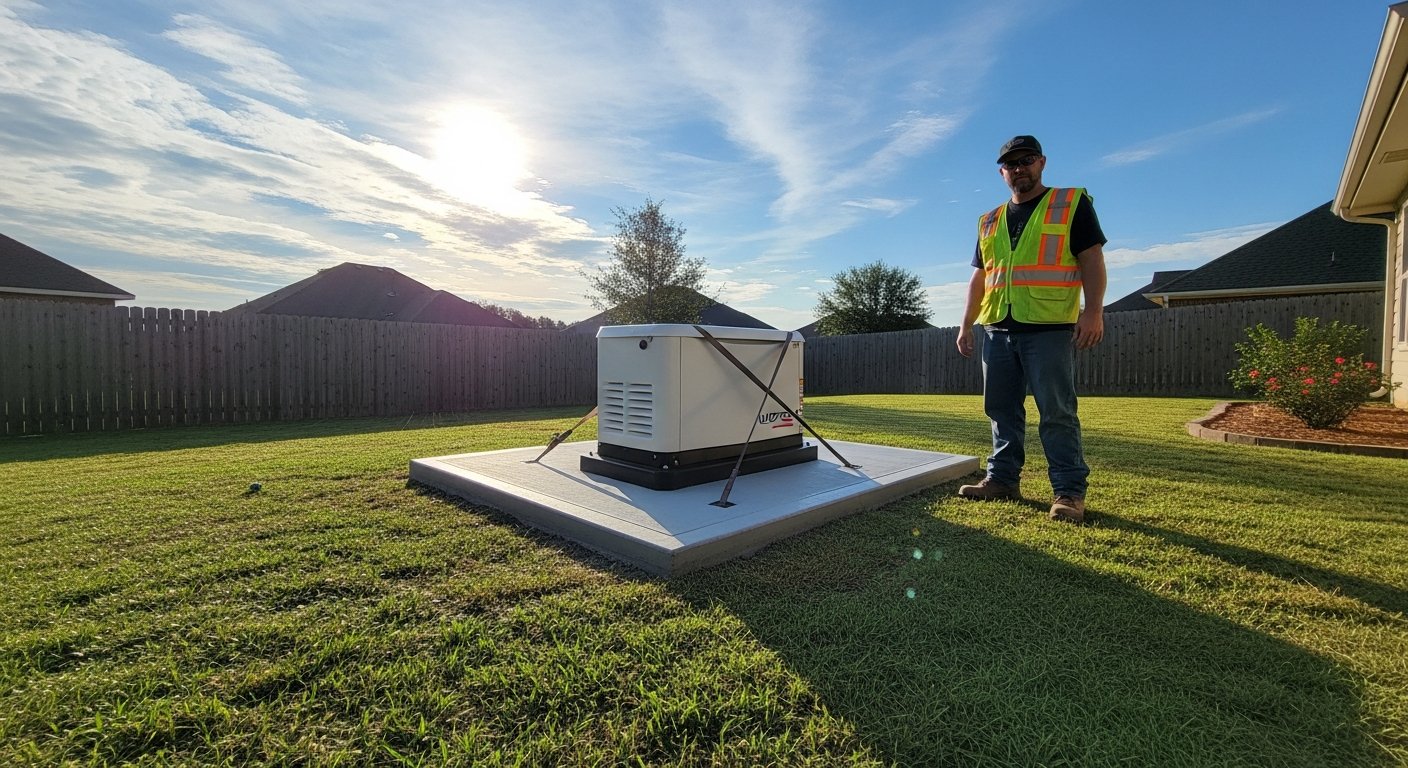
When a severe storm knocks out power across Independence County, a portable generator can keep your refrigerator running and your lights on. But setting that generator directly on grass or gravel invites serious problems. Vibration can tip the unit, exhaust can scorch vegetation, and an uneven surface stresses the frame. A concrete pad for outdoor generator installation Arkansas provides the stable, level, and fire-resistant foundation your equipment needs to operate safely for years.
Arkansas weather brings humidity, freeze-thaw cycles, and occasional tornado warnings. Your generator pad must withstand all of it. A properly poured concrete slab keeps the generator elevated above standing water, prevents rust from ground moisture, and gives you a designated spot that meets manufacturer clearances. This guide walks through sizing, site preparation, local codes, and the step-by-step process for building a pad that lasts.
Why a Concrete Pad Matters for Your Generator
A generator produces heat, vibration, and exhaust fumes. Placing it on bare ground can lead to sinking, weed growth underneath, and erosion that tilts the unit. Concrete solves these issues with a permanent, non-combustible surface. The slab distributes the generator’s weight evenly, which protects the frame and reduces noise transfer into the house.
In Arkansas, where spring rains can saturate the ground for weeks, a concrete pad also acts as a moisture barrier. Without it, moisture wicks up into the generator’s metal components, accelerating corrosion on the alternator and control panel. A pad with proper gravel drainage underneath keeps the bottom of the generator dry even during heavy downpours.
Safety is another critical factor. Generator engines get hot enough to ignite dry grass or leaves. Concrete provides a spark-resistant surface that contains any fuel spills or oil drips. This reduces fire risk around your home and keeps your generator compliant with insurance requirements.
Determining the Right Pad Size and Thickness
Generator pads are not one-size-fits-all. The dimensions depend on the generator’s footprint, the manufacturer’s clearance requirements, and your local climate. A standard residential standby generator typically needs a pad that extends at least 12 inches beyond the unit on all sides. For a portable generator, a 4-foot by 4-foot pad works for most models, but larger units may need a 5-foot by 5-foot or even 6-foot by 6-foot slab.
Thickness matters just as much as length and width. For a generator weighing under 500 pounds, a 4-inch thick pad is sufficient. Heavier units, especially those with concrete ballast or large fuel tanks, require a 6-inch slab to prevent cracking. The pad must also sit on a compacted gravel base that is at least 4 inches deep. This base provides drainage and prevents frost heave during Arkansas winters.
Here are the key measurements to consider before pouring:
- Pad width and length: Add 24 inches to the generator’s width and depth to allow service access on all sides. A 4×4 foot pad fits most portable units.
- Slab thickness: 4 inches for generators under 500 pounds, 6 inches for heavier standby units. Thicker slabs resist cracking from vibration.
- Gravel base depth: 4 to 6 inches of compacted crushed stone. This layer prevents settling and channels water away from the pad.
- Surface slope: A slight slope of 1/8 inch per foot away from the house. This directs rain and generator condensation away from the foundation.
Always check the generator owner’s manual for specific clearance requirements. Some manufacturers require 18 inches of clearance on the exhaust side and 36 inches on the access panel side. The pad must accommodate these distances plus the generator’s physical dimensions.
Site Selection and Preparation for Arkansas Conditions
Choosing the right location for your generator pad involves more than just finding a flat spot. The site must meet local setback requirements, provide adequate airflow, and stay clear of windows, doors, and dryer vents. In Batesville and surrounding areas, generators must typically sit at least 5 feet from any building opening and 3 feet from combustible materials.
Start by marking the pad location with stakes and string. Clear the area of grass, roots, and topsoil to expose the mineral soil beneath. Dig down at least 8 inches total: 4 inches for the gravel base and 4 inches for the concrete slab. If you are installing a 6-inch pad, dig 10 inches deep. The excavation should extend 6 inches beyond the pad dimensions on all sides to allow room for forms.
Arkansas clay soil expands and contracts with moisture changes. To prevent cracking, compact the soil at the bottom of the excavation using a hand tamper or plate compactor. Then add the crushed stone in 2-inch layers, compacting each layer before adding the next. Proper compaction prevents the pad from settling unevenly, which would tilt the generator and stress its frame.
For more details on preparing a stable base for concrete slabs, see our guide on concrete pad for shed preparation drainage Arkansas. The same drainage principles apply to generator pads and will help you avoid moisture problems.
Building Forms and Installing Reinforcement
Once the gravel base is compacted and level, build wooden forms to hold the concrete. Use 2×4 lumber for a 4-inch pad or 2×6 lumber for a 6-inch pad. Cut the boards to length and stake them into the ground, making sure the top edges are level. Check the level frequently with a 4-foot level, adjusting the stakes as needed.
Reinforcement prevents cracking in the concrete slab. For generator pads, welded wire mesh or rebar works well. Place the reinforcement in the middle of the slab thickness, not on the bottom. Use wire chairs or small rocks to lift the mesh off the gravel base by 2 inches. Overlap mesh sheets by at least 6 inches and tie them together with wire.
If you are pouring a pad larger than 4×4 feet, consider adding control joints. These are shallow grooves cut into the fresh concrete that control where cracks form. Without control joints, random cracks can develop and weaken the pad over time. A contractor can cut joints with a grooving tool or a concrete saw after the pad sets.
Mixing and Pouring Concrete the Right Way
For a small generator pad, bagged concrete mix from a home improvement store works well. A 4×4 foot pad that is 4 inches thick requires approximately 18 80-pound bags of concrete mix. For larger pads, ordering ready-mix concrete from a local supplier saves labor and ensures consistent quality.
Mix the concrete according to the manufacturer’s instructions, adding water gradually until the mix reaches a thick, peanut-butter consistency. Pour the concrete into the forms, starting at one corner and working across. Use a shovel or rake to spread the concrete evenly, filling all corners and edges.
After pouring, consolidate the concrete with a vibrating tool or by tapping the forms with a hammer. This removes air pockets and ensures the concrete flows around the reinforcement. Then screed the surface by dragging a straight 2×4 across the top of the forms in a sawing motion. This levels the concrete and fills any low spots.
Finishing and Curing for Long-Term Durability
Once the concrete is level, finish the surface for durability and appearance. A steel trowel creates a smooth, hard surface that resists oil stains and is easy to clean. For better traction around the generator, use a broom finish by dragging a stiff broom across the surface after troweling. This creates a non-slip texture that prevents slipping when refueling or servicing the generator.
Curing is the most overlooked step in concrete work. Concrete gains strength through a chemical reaction that requires moisture. If the surface dries too quickly, the top layer becomes weak and prone to dusting or cracking. Keep the pad moist for at least 5 to 7 days by covering it with plastic sheeting or spraying it with water daily.
In Arkansas summer heat, curing is especially critical. High temperatures and low humidity can cause the concrete to dry in hours instead of days. Use a curing compound or wet burlap to maintain moisture. Do not place the generator on the pad until the concrete has cured for a full week. For heavy standby generators, wait 14 days before loading the pad.
Connecting the Generator to the Pad
After the concrete cures, you can position the generator on the pad. Place vibration isolation pads or rubber feet between the generator frame and the concrete. These reduce noise and prevent metal-to-concrete contact that can cause corrosion. Secure the generator with anchor bolts if the manufacturer recommends them, but many portable units simply sit on the pad without fasteners.
Consider installing a concrete pad that includes a conduit stub-up for electrical connections. If you plan to connect the generator to a transfer switch, run PVC conduit from the generator location to the house before pouring the concrete. This keeps wiring protected underground and eliminates tripping hazards from extension cords.
Fuel storage is another consideration. If you use a propane or natural gas generator, the fuel line must run underground or in conduit to the pad. Plan the fuel line route before pouring concrete to avoid drilling through the slab later.
Permits and Local Codes in Arkansas
Most Arkansas counties require a permit for concrete pads that support permanent structures or heavy equipment. In Independence County, a building permit is typically needed for generator pads larger than 120 square feet or those connected to a natural gas line. Smaller portable generator pads may not require a permit, but check with the Batesville building department to confirm.
Local codes also regulate generator placement. The Arkansas Fire Prevention Code requires generators to be at least 5 feet from buildings, property lines, and combustible materials. The pad must sit on undisturbed soil or compacted fill, not on top of septic tanks or drain fields. If your property is in a flood zone, the pad may need to be elevated above the base flood elevation.
Working with a licensed contractor simplifies the permitting process. A local contractor knows the inspection requirements and can ensure the pad meets all code specifications. This saves time and prevents costly rework.
A concrete pad for outdoor generator installation Arkansas provides the stability, safety, and longevity that your generator needs. By following proper sizing, site preparation, reinforcement, and curing practices, you create a foundation that protects your investment through Arkansas storms, heat, and freeze-thaw cycles. Whether you install a small portable unit or a whole-house standby generator, the right concrete pad keeps your power backup ready when you need it most.