Remodeling a small bathroom in Batesville, Arkansas, presents a unique set of challenges and opportunities. You want a space that feels larger than its square footage, functions efficiently for your daily routine, and reflects your personal style. The key to achieving this lies in the careful selection of fixtures and the strategic planning of your layout. By making smart choices about toilets, vanities, showers, and tubs, and by arranging them thoughtfully, you can transform a cramped, outdated bathroom into a comfortable, inviting retreat that maximizes every inch of available space. This guide will walk you through the essential fixtures and layout strategies specifically suited for small bathrooms in Batesville homes, helping you make informed decisions for a successful remodel.
Understanding Your Small Bathroom Space
Before you choose a single fixture, you need to understand the canvas you are working with. Measure your bathroom meticulously. Note the location of existing plumbing lines, electrical outlets, windows, and doors. These elements will heavily influence your layout options and fixture choices. Moving a toilet, for example, is one of the most expensive plumbing changes you can make, while swapping a vanity for a pedestal sink can be relatively simple. In Batesville, many homes were built in the mid-20th century and feature compact bathrooms with standard stud-wall construction. Understanding your home’s specific construction will help you and your contractor plan a remodel that works with the existing structure, saving you time and money. For more on the broader process, check out our guide on Smart Small Bathroom Remodel: Maximize Space in Arkansas.
Choosing the Right Fixtures for a Small Bathroom
The fixtures you select are the workhorses of your bathroom. In a small space, every fixture must earn its place by being functional, space-efficient, and visually unobtrusive. Here are the key categories to consider.
Toilets: Compact and Wall-Mounted Options
The toilet is a necessity, but it does not have to dominate the room. Standard toilets can extend 28 to 30 inches from the wall, which is a significant footprint in a small bathroom. Consider these space-saving alternatives:
- Compact Elongated Toilets: These offer the comfort of an elongated bowl but with a shorter overall length, typically around 26 to 28 inches.
- Round Front Toilets: A classic choice for small bathrooms, round front toilets can save up to 3 inches of space compared to standard elongated models.
- Wall-Mounted Toilets: This is a premium option that creates a floating effect, making the floor appear larger and simplifying cleaning. The tank is hidden inside the wall, which can free up several inches of floor space.
When selecting a toilet, also consider a comfort-height model (17 to 19 inches from floor to seat). While these take up similar floor space, they are easier for adults and seniors to use, which is a growing consideration for many Batesville homeowners planning to age in place.
Vanities and Sinks: Maximizing Storage and Counter Space
The vanity is often the largest fixture in a small bathroom. Your goal is to balance storage with floor space. A bulky 36-inch vanity can overwhelm a tiny room, while a pedestal sink might leave you with nowhere to store toiletries. Here are some excellent options:
- Wall-Mounted Vanities: These float off the floor, creating the illusion of more space and allowing for easy floor cleaning. They come in various widths, from 24 to 30 inches.
- Corner Vanities: If your bathroom layout allows, a corner vanity can utilize an otherwise wasted space and leave the central floor area open.
- Pedestal or Wall-Mounted Sinks with a Storage Tower: If you prefer a minimalist look, a pedestal sink paired with a tall, narrow storage cabinet (a linen tower) can provide ample storage without the bulk of a full vanity.
- Vessel Sinks on a Narrow Console: A sleek console table with a vessel sink on top combines style with a small footprint, perfect for a guest bath.
The key is to choose a vanity or sink that provides just enough storage for your daily essentials without encroaching on the walking path.
Showers and Tubs: Making the Right Choice
In a small bathroom, you often have to choose between a shower and a tub. A standard 60-inch tub-shower combination is a common fixture, but it can make a small room feel even tighter. Consider these alternatives:
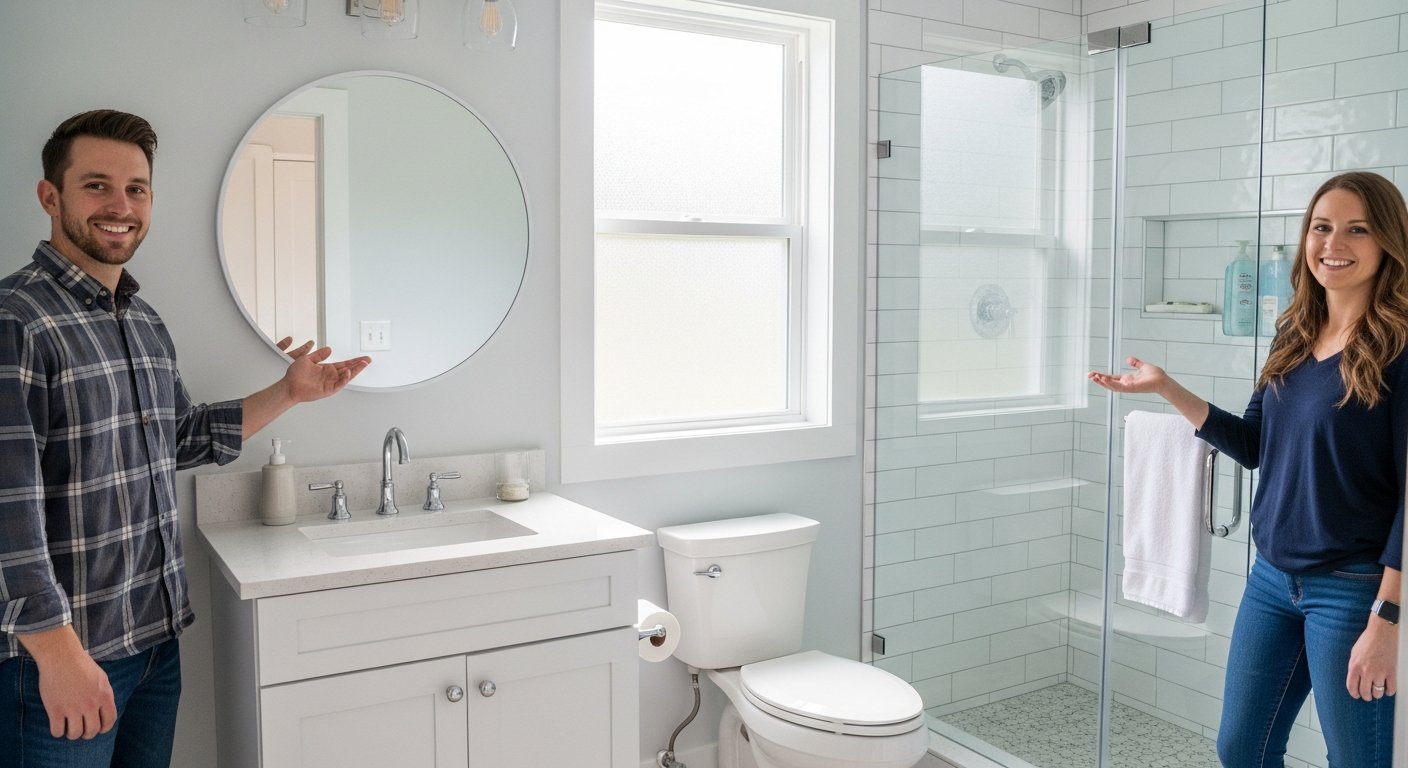
- Walk-In Shower: Replacing a tub with a curbless or low-curb walk-in shower can dramatically open up the room. Use a clear glass enclosure (frameless is best) to maintain visual flow. A corner shower unit with a neo-angle door can also save significant floor space.
- Soaking Tub: If you value baths, a compact, deep soaking tub (often called a Japanese soaking tub) takes up less floor space (around 55 inches by 30 inches) than a standard tub. Pair it with a wall-mounted showerhead.
- Wet Room: For the ultimate space saver, a wet room eliminates the shower enclosure entirely. The entire bathroom floor is waterproofed, and the shower area is open to the rest of the room. This works best in very small bathrooms and creates a seamless, spa-like feel.
Your choice here will dramatically affect the layout and overall feel of the room. Think about your daily habits: do you shower every day and only take a bath occasionally? A walk-in shower might be the better long-term investment.
Strategic Layouts for Small Bathroom Remodels in Batesville
Once you have selected your fixtures, the next step is arranging them in a layout that optimizes flow and function. In a small bathroom, the layout is everything. Here are three common and effective layouts for small spaces.
The One-Wall Layout
This is the most efficient layout for a very narrow bathroom, such as a powder room or a small guest bath. All fixtures are placed along a single wall. From left to right, you might have a toilet, a small vanity (24 inches), and a corner shower. This linear arrangement leaves the opposite wall free for a mirror or open shelving. A one-wall layout is simple to plumb and can make a narrow room feel wider because the central floor area is unobstructed.
The Galley Layout
Similar to a galley kitchen, this layout places fixtures on two opposing walls. The toilet and sink might be on one wall, while the shower or tub is on the other. This creates a clear traffic lane down the middle. The galley layout is excellent for small bathrooms because it separates the wet and dry zones, making the space feel organized. It works best in rooms that are slightly longer than they are wide. For example, a room measuring 5 feet by 8 feet can comfortably accommodate a toilet and vanity on one side and a 60-inch shower on the other.
The L-Shaped Layout
This layout uses two adjacent walls to create an L-shaped fixture arrangement. It is a great option for a square or slightly rectangular room. For instance, the toilet might be placed on one wall, while the vanity and shower are placed on the adjoining wall. This opens up the center of the room, making it feel more spacious. An L-shaped layout can also accommodate a corner shower or a corner tub, which are excellent space-savers. This layout provides a natural separation of zones and often allows for more counter space than other small layouts.
When planning your layout, always ensure there is at least 21 inches of clear space in front of the toilet, 30 inches in front of the sink, and 30 inches of interior space in the shower. These minimum clearances are essential for comfort and code compliance.
Finishing Touches: Lighting, Color, and Storage
Fixtures and layout are the foundation, but the finishing touches will make your small bathroom feel complete. Use these strategies to enhance the sense of space.
- Lighting: Use layered lighting. A central ceiling fixture is good, but add a wall sconce on each side of the mirror (at eye level) to eliminate shadows. Consider a skylight or a larger window to bring in natural light, which is the best way to make a small room feel larger.
- Color Palette: Stick to light, neutral colors on walls and floors. Whites, creams, soft grays, and pale blues reflect light and create an airy feel. Use darker colors sparingly as accents, such as on a single wall or in a patterned tile backsplash.
- Storage: Maximize vertical space. Install a tall, narrow cabinet next to the vanity. Use shelves above the toilet. Add a recessed medicine cabinet for hidden storage. Every inch of wall space is an opportunity for storage in a small bathroom.
- Mirrors: A large mirror, or even a full-wall mirror, can double the visual space of a room. Consider a mirrored medicine cabinet that provides both reflection and storage.
By carefully selecting fixtures, planning a strategic layout, and applying smart design principles, you can achieve a small bathroom remodel that feels spacious, functional, and beautiful. Working with a local contractor who understands Batesville’s housing stock and building codes will ensure your project is a success from start to finish. Your new bathroom will not only serve your daily needs but also add lasting value to your home.