When you think about the heart of your Arkansas home, the kitchen almost always comes to mind. And at the center of that heart, a kitchen island can be the most hardworking piece of furniture you own. But a poorly planned island can become a clutter collector or a traffic jam. The right functional kitchen island design ideas Arkansas homeowners use every day go beyond just adding counter space. They turn your kitchen into a more efficient, enjoyable place for cooking, gathering, and managing daily life. Whether you are remodeling a historic home in Batesville or building new in Independence County, the goal is the same: create an island that works as hard as you do.
Arkansas kitchens come in all shapes and sizes, from cozy farmhouse layouts in older homes to open-concept designs in new construction. The climate here, with its humid summers and chilly winters, also plays a role in material choices. A truly functional island accounts for your cooking habits, your family size, and the way you move through the room. In this guide, we will explore practical, stylish, and durable island designs that fit the Arkansas lifestyle. You will learn about storage strategies, seating solutions, appliance integration, and material selections that stand up to real use. Let’s walk through the best options for your next kitchen project.
Smart Storage Solutions for Arkansas Kitchens
Storage is the number one reason homeowners want a kitchen island in the first place. But not all storage is created equal. Deep cabinets that swallow pots and pans are less useful than pull-out drawers and custom organizers. When planning your functional kitchen island design ideas Arkansas families need, think about what you actually store. Do you have a collection of cast iron skillets? A set of large mixing bowls? A drawer full of plastic lids? The island is the perfect place to solve these storage puzzles.
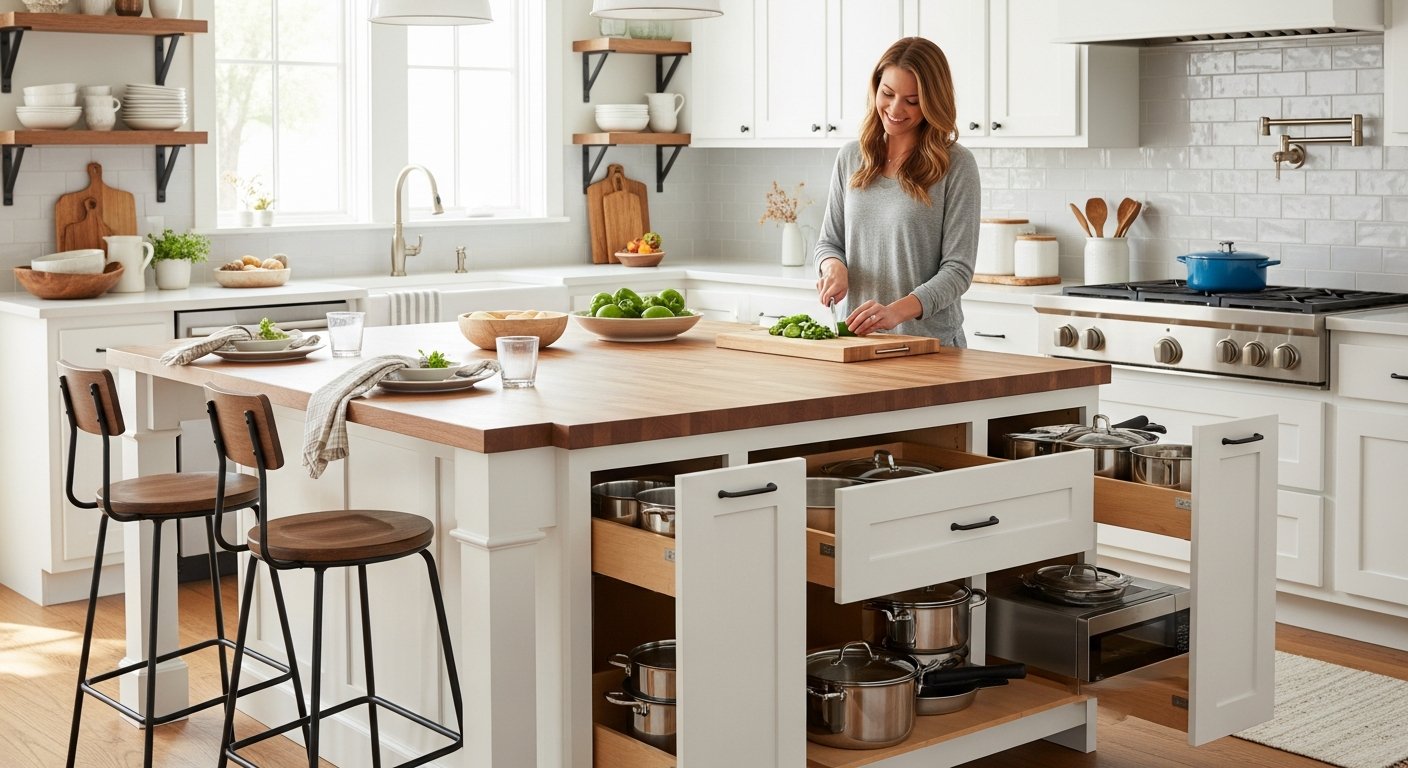
Consider adding a bank of deep drawers on one side of the island. These are ideal for pots, pans, and small appliances like slow cookers or stand mixers. Pull-out shelves in base cabinets let you see everything at a glance without digging to the back. For baking enthusiasts, a shallow drawer for cookie sheets and cutting boards keeps flat items organized and easy to grab. You can also include a spice pull-out near the cooktop or a trash and recycling pull-out to keep messes hidden. The key is to customize the interior fittings for your specific needs rather than leaving the space as one big empty cabinet.
For smaller kitchens where every inch matters, an island with open shelving on one end can display cookbooks or decorative baskets while keeping everyday items within reach. Another smart idea is to use the end of the island for wine storage or a microwave cart. If your island is large enough, you can even incorporate a built-in desk or charging station for family mail and devices. The goal is to make the island a storage powerhouse that reduces clutter on your countertops and in your main cabinets.
Seating and Social Spaces
An island is not just for cooking. It is where kids do homework, friends gather for a glass of iced tea, and family members chat while dinner is being prepared. Adding seating to your island makes it a true multi-functional space. But before you order bar stools, think about how many seats you really need and how they will affect traffic flow. In a busy kitchen, you do not want stools blocking the path between the sink, stove, and refrigerator.
For most Arkansas homes, a single-level counter at standard kitchen height (36 inches) works best for seating. This height matches standard dining tables and allows for comfortable seating with regular chairs or low-profile stools. A two-tier island with a raised bar is less common in modern designs because it can feel disconnected from the work area. However, if you have young children, a raised bar can keep little hands away from hot pans while still letting them be part of the action.
When choosing seating, consider these practical points: allow 24 to 30 inches of counter space per person, leave at least 12 inches of legroom between the counter edge and the stool back, and position seating away from main walkways. If your island is against a wall, a bench on one side can save space and add a casual feel. For larger islands, placing seating on two sides creates a more open, conversational layout. Remember that the stools themselves should be easy to clean and durable enough for daily use. Leather, faux leather, or stain-resistant fabric are good choices for Arkansas homes with kids and pets.
Appliance Integration for Maximum Efficiency
One of the most powerful functional kitchen island design ideas Arkansas homeowners are using is integrating appliances directly into the island. This can transform your workflow and reduce steps between tasks. The most common appliance to add is a second sink. A prep sink on the island lets you wash vegetables, fill pots, or rinse dishes without crossing the main kitchen. This is especially helpful if your main sink is located in a separate counter. Pair the prep sink with a pull-out faucet for added convenience.
Another popular option is installing a cooktop or rangetop on the island. This creates a true cooking hub with seating on the opposite side for a social cooking experience. However, a cooktop on an island requires a proper ventilation system. A downdraft vent that rises from the countertop works well for islands without an overhead hood. If you prefer a traditional range hood, you will need to plan for a ceiling-mounted model. Both options are viable in Arkansas homes, but consider your ceiling height and kitchen layout before deciding.
Other appliance ideas include a microwave drawer, a beverage refrigerator, or an ice maker. A microwave drawer installed below the counter keeps the counter clear and is easy for children and shorter adults to reach. A beverage fridge with glass doors stores drinks and keeps them visible. These small appliances make the island a true convenience station. Just remember that any appliance installation requires careful planning for electrical, plumbing, and ventilation. Working with an experienced contractor like The Real Deal of Batesville ensures your island is both functional and code-compliant.
Durable Materials for Arkansas Climate
Arkansas weather can be tough on kitchen materials. High humidity in summer and dry heat in winter can cause wood to warp, stone to stain, and paint to peel. Choosing the right materials for your island is essential for long-term performance. Countertops, cabinets, and flooring all need to withstand daily use and seasonal changes. Start with the countertop. Quartz is a top choice because it is non-porous, resists staining, and does not require sealing. Granite is another durable option, but it needs regular sealing to prevent moisture absorption. Butcher block adds warmth but requires oiling and careful maintenance to avoid water damage in a humid climate.
For the island base, consider painted wood cabinets with a durable factory finish. Solid wood construction with plywood boxes resists warping better than particle board. If you prefer a more industrial look, a metal base or reclaimed wood can work well. The floor around the island should be easy to clean and comfortable to stand on. Luxury vinyl plank or tile are practical choices that mimic wood or stone without the maintenance issues. If you choose hardwood, make sure it is properly sealed and acclimated to the Arkansas humidity.
Here is a quick checklist of material considerations for your island:
- Choose quartz or sealed granite for the countertop to resist stains and moisture.
- Use plywood cabinet boxes instead of particle board for better stability.
- Select a durable finish like conversion varnish or catalyzed lacquer for painted cabinets.
- Install a backsplash or counter-to-ceiling panel behind the cooktop for easy cleaning.
- Consider a mat or rug near the sink area to reduce fatigue and catch spills.
These choices will keep your island looking great and working well for years, even through Arkansas’s changing seasons. Materials that resist moisture and temperature swings are a smart investment for any kitchen remodel.
Lighting and Electrical Planning
Good lighting can make or break a functional kitchen island. You need task lighting for food prep, ambient lighting for the room, and accent lighting for style. Pendant lights are the most common choice for islands. They provide focused light directly where you need it. For a four-foot island, two pendants are usually enough. For longer islands, three pendants or a linear suspension fixture work better. Hang pendants 30 to 36 inches above the countertop for optimal light without blocking views.
In addition to overhead lighting, consider under-counter lights on the island itself if it has a raised bar or shelves. These lights add warmth and help with task visibility. Dimmer switches are a must for controlling brightness throughout the day. You might want bright light for chopping vegetables and softer light for evening entertaining. Also, plan for electrical outlets on the island. Pop-up outlets that sit flush with the counter are sleek and practical for small appliances. You will need at least one outlet on the island, but two are better for busy kitchens.
For those who love to cook, a dedicated outlet for a stand mixer or blender on the island is a game-changer. No more dragging heavy appliances across the kitchen. If your island includes a sink or dishwasher, you will need plumbing and drainage as well. These should be planned early in the design process. A licensed contractor can help you navigate the electrical and plumbing requirements to ensure your island is both functional and safe.
Designing for Small Spaces and Open Concepts
Not every Arkansas kitchen has room for a massive island. But even small kitchens can benefit from a well-designed island. In fact, in our guide on small kitchen islands clever ideas for Arkansas homes, we show how a compact island can add storage, prep space, and style without sacrificing floor area. A movable cart or butcher block table on wheels can serve as a temporary island that tucks away when not in use. This is perfect for rental properties or kitchens with limited square footage.
For open-concept homes, the island acts as a visual anchor between the kitchen and living areas. It should complement the surrounding design without competing with it. Use the same countertop material as other kitchen counters for a cohesive look, or choose a contrasting color for a bold statement. The island can also define the boundary between cooking and dining zones. A large island with seating on one side and cabinets on the other creates a natural division while keeping the space open and airy. In these layouts, consider the sightlines. You want the island to look good from every angle, so pay attention to the back and sides of the island, not just the front.
Final Thoughts on Your Kitchen Island Project
A functional kitchen island is one of the best investments you can make in your home. It improves your daily routine, adds value to your property, and becomes a natural gathering spot for your family and friends. By focusing on storage, seating, appliances, materials, and lighting, you can create an island that truly works for your Arkansas home. Whether you are starting from scratch or updating an existing space, take the time to plan each detail carefully. Work with a trusted local contractor who understands the unique needs of Arkansas homes. With the right design and professional installation, your kitchen island will serve you well for decades.