Choosing the right fence for your Batesville property is a big decision. A fence does more than mark a boundary; it provides privacy, security, curb appeal, and a framework for your outdoor living space. With so many materials on the market, the choice between wood, vinyl, and aluminum can feel overwhelming. Each material has distinct strengths and trade-offs, especially when faced with Arkansas’s humid summers, freeze-thaw cycles, and occasional severe storms. This fence material comparison wood vinyl aluminum Batesville guide breaks down the real-world performance, cost, maintenance, and aesthetic considerations for each option, helping you make an informed decision that fits your property and lifestyle.
Whether you are building a new fence or replacing an old one, understanding how each material behaves over time in Independence County is critical. Wood offers timeless beauty but demands regular upkeep. Vinyl promises low maintenance but can be vulnerable to extreme impacts. Aluminum provides durability and a classic look but may not offer the privacy some homeowners want. By the end of this guide, you will have a clear picture of which material aligns with your priorities. For a deeper look at local regulations and design ideas, check out our guide on Batesville privacy fence rules, styles, and smart ideas.
Understanding Your Fencing Priorities
Before comparing specific materials, it helps to identify what matters most for your property. Every homeowner has different needs. Some prioritize absolute privacy, while others focus on curb appeal or long-term value. Answering a few key questions will guide your material choice.
Consider the primary function of your fence. Is it to contain pets and children, block a busy street view, enhance security, or simply define your property line? The answer will influence whether you need a solid privacy fence or a more open design. Also think about your willingness to perform ongoing maintenance. Pressure washing and sealing wood every few years is very different from occasionally hosing off vinyl or aluminum. Finally, consider your budget not just for installation but for the lifespan of the fence. A cheaper upfront cost may lead to higher long-term expenses if the material requires frequent repairs or early replacement.
Wood Fencing: Classic Beauty With Maintenance Demands
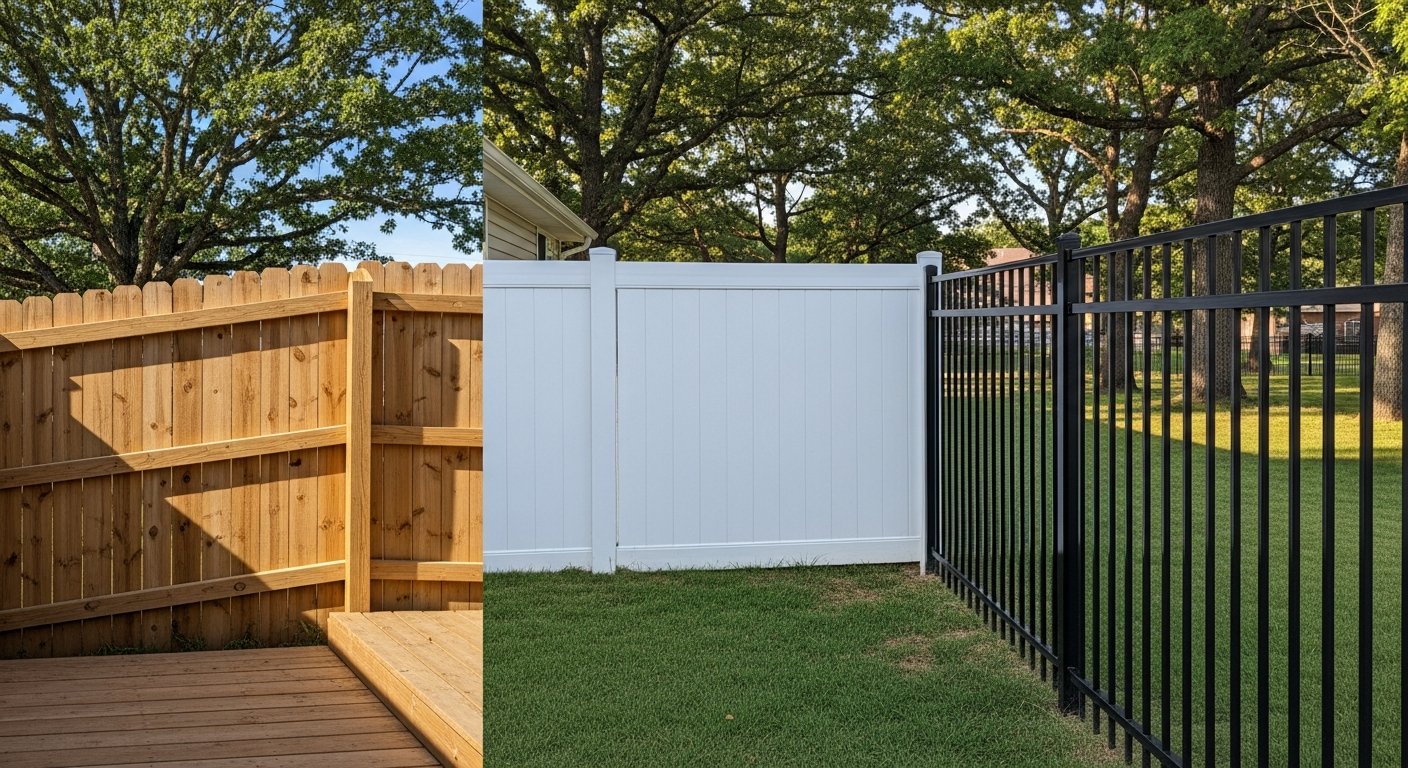
Wood remains one of the most popular fencing materials in Batesville and across Arkansas. Its natural appearance blends seamlessly with the local landscape, from the Ozark foothills to established neighborhoods. Wood offers a warmth and character that synthetic materials often struggle to replicate. Common species include pressure-treated pine, cedar, and redwood. Pressure-treated pine is the most affordable and widely available, while cedar and redwood offer natural resistance to rot and insects.
The main advantage of wood is its versatility. It can be painted or stained in virtually any color, allowing you to match your home’s exterior perfectly. Wood fences can be built in multiple styles, including the classic dog-ear, board-on-board privacy, semi-private, and picket designs. Customization is nearly unlimited. However, the trade-off is maintenance. In Arkansas’s humid climate, wood is susceptible to moisture damage, including warping, cracking, and rot. It also requires regular sealing or staining every two to three years to protect against the elements. Without proper care, a wood fence can look weathered and worn within a few years.
Cost for wood fencing in Batesville typically ranges from $15 to $30 per linear foot installed, depending on the species and style. Pressure-treated pine is the most budget-friendly option. Cedar and redwood cost more but offer better natural durability. Over a 20-year period, the cumulative cost of maintenance (stain, sealer, occasional board replacement) can add up, sometimes exceeding the initial installation cost. Wood is an excellent choice if you enjoy hands-on home care and want a traditional look that can be customized over time.
Pros and Cons of Wood Fencing
Summarizing the key points helps clarify the decision.
- Pros: Natural beauty and warmth, highly customizable with paint or stain, versatile for many styles, widely available and familiar to local contractors, can be repaired by replacing individual boards.
- Cons: Requires regular staining or sealing every 2-3 years, susceptible to rot, warping, and insect damage in humid climates, lifespan is shorter than vinyl or aluminum without diligent maintenance, can fade and gray over time if not protected.
Wood is a solid choice for homeowners who value aesthetics and are willing to invest time in upkeep. If you prefer a set-it-and-forget-it approach, however, you may want to consider vinyl or aluminum.
Vinyl Fencing: Low Maintenance and Long-Lasting
Vinyl fencing has gained significant popularity in Batesville over the past decade, primarily because of its low maintenance requirements. Made from polyvinyl chloride (PVC), vinyl fences resist moisture, rot, insects, and UV damage. They do not need painting, staining, or sealing. A simple wash with a garden hose or pressure washer is usually enough to keep them looking new. For busy families or homeowners who prefer to spend weekends on other activities, vinyl is an attractive option.
Vinyl fences are available in a wide range of styles, including privacy panels, semi-private designs, picket fences, and even styles that mimic the look of wood grain. They come in several colors, though white and tan are the most common. One important consideration is that vinyl expands and contracts with temperature changes. In Arkansas’s hot summers, panels can become slightly more flexible, and in cold snaps, they can become more brittle. Proper installation with adequate expansion gaps is essential to prevent buckling or cracking.
The cost of vinyl fencing in Batesville is higher than wood, typically ranging from $25 to $40 per linear foot installed. However, the long-term value is compelling. With virtually no maintenance costs over its 20- to 30-year lifespan, vinyl often proves more economical than wood over time. The initial investment is higher, but the total cost of ownership is lower. One drawback is that vinyl can be damaged by impact. A strong blow from a lawn mower, a falling branch, or a vehicle can crack or dent a vinyl panel. Repairing vinyl usually requires replacing the entire damaged section, which can be more complex than replacing a single wood board.
Key Considerations for Vinyl Fencing
Before choosing vinyl, evaluate a few specific factors.
- Color Stability: High-quality vinyl includes UV inhibitors to prevent fading. Cheaper grades may yellow or chalk over time, so choose a reputable brand.
- Impact Resistance: Vinyl is less impact-resistant than wood or aluminum. If you have active children, large dogs, or overhanging trees, consider this vulnerability.
- Installation Quality: Proper post setting and panel alignment are critical. Poor installation can lead to sagging or warping as the material expands and contracts.
- Privacy Level: Solid vinyl panels offer complete privacy, but they can also block breezes. If airflow is important, consider a semi-private louvered style.
Vinyl is ideal for homeowners who want a clean, uniform look with minimal effort. It performs well in Batesville’s climate when installed correctly.
Aluminum Fencing: Durability and Elegance
Aluminum fencing is often chosen for its combination of strength, elegance, and virtually zero maintenance. Unlike wrought iron, aluminum does not rust, making it an excellent choice for Arkansas’s humid environment. It is lightweight yet incredibly strong. Aluminum fences are typically powder-coated in colors like black, white, or bronze, and the finish resists chipping and fading for decades. This material is most commonly used for decorative and security fences rather than privacy fences, because the design is typically open with vertical pickets and rails.
The open design of aluminum fencing makes it ideal for front yards, pool enclosures, property boundaries, and areas where you want to maintain a view. It provides a clear sightline while still defining the space and deterring intruders. Many aluminum fence styles are designed to be climb-resistant, with smooth rails that offer no foothold. This makes them a popular choice for security-conscious homeowners. Aluminum also works well on sloped properties because the panels can be racked to follow the grade of the land.
Cost for aluminum fencing in Batesville generally ranges from $30 to $50 per linear foot installed. This is the most expensive of the three materials, but the longevity is exceptional. A well-installed aluminum fence can last 30 years or more with no maintenance beyond occasional cleaning. Unlike wood, it will not rot or warp. Unlike vinyl, it will not crack or become brittle. The trade-off is that aluminum does not provide privacy. If seclusion is your primary goal, you will need to combine aluminum with landscaping or choose a different material.
When to Choose Aluminum Fencing
Aluminum excels in specific scenarios.
- Security: Strong, climb-resistant, and difficult to cut. Ideal for securing gates and entry points.
- Pool Enclosures: Meets safety codes without obstructing views of the pool area.
- Front Yard Boundaries: Adds curb appeal and defines property lines without blocking the view of your home.
- Sloped Yards: Panels can be installed on a rack to follow uneven terrain, avoiding unsightly gaps.
Aluminum is the best choice for homeowners who prioritize durability, security, and a classic ornamental look with no maintenance burden.
Fence Material Comparison Wood Vinyl Aluminum Batesville: Side-by-Side
To simplify your decision, here is a direct comparison of the three materials across the most important factors for Batesville homeowners.
Cost: Wood is the most affordable upfront ($15-$30 per linear foot). Vinyl is mid-range ($25-$40). Aluminum is the most expensive ($30-$50). However, when you factor in maintenance costs over 20 years, vinyl and aluminum often become more cost-effective than wood.
Maintenance: Wood requires staining or sealing every 2-3 years plus occasional board replacement. Vinyl needs only occasional washing. Aluminum requires no maintenance beyond an occasional rinse.
Durability: Wood is susceptible to rot, insects, and warping in humid climates. Vinyl resists moisture but can crack under impact or extreme temperature changes. Aluminum is highly durable, rust-proof, and impact-resistant.
Privacy: Wood offers excellent privacy with solid board-on-board designs. Vinyl provides complete privacy with solid panels. Aluminum offers minimal privacy due to its open design.
Aesthetics: Wood offers natural warmth and can be painted or stained. Vinyl provides a clean, uniform look but limited color options. Aluminum offers an elegant, classic ornamental appearance.
Lifespan: Wood lasts 10-20 years with proper maintenance. Vinyl lasts 20-30 years. Aluminum lasts 30+ years with minimal care.
This fence material comparison wood vinyl aluminum Batesville shows that no single material is best for everyone. The right choice depends on your priorities. If you love the look of natural wood and do not mind maintenance, wood is a great option. If you want low maintenance and privacy, vinyl is a strong contender. If you need durability, security, and elegance with no upkeep, aluminum is the premium choice.
Local Climate Considerations for Batesville
Batesville experiences a humid subtropical climate with hot, humid summers and mild to cool winters. This climate affects each fence material differently. Humidity promotes mold, mildew, and rot in wood. Proper sealing and ventilation are essential. Vinyl handles humidity well but can become brittle during rare cold snaps. Aluminum is unaffected by humidity and does not rust, making it the most climate-resilient option.
Freeze-thaw cycles in winter can cause ground heave, which may shift fence posts. All materials require posts set below the frost line (typically 12-18 inches in Arkansas) to prevent movement. Aluminum and vinyl posts are less likely to rot than wood posts, but concrete footings are recommended for all materials. In the summer, intense UV rays can fade lower-quality vinyl. Choosing a vinyl product with UV stabilizers is important. Wood can also fade and gray in the sun, but this can be managed with UV-protective stains.
Storm readiness is another factor. Arkansas experiences severe thunderstorms and occasional tornadoes. Wood fences can be vulnerable to high winds if not properly braced. Vinyl panels can crack if struck by debris. Aluminum fences, with their structural strength, tend to withstand storms best. For any material, ensure gates are securely latched and posts are deeply set to minimize storm damage.
Making Your Final Decision
After reviewing the fence material comparison wood vinyl aluminum Batesville, you should have a clear sense of which material fits your needs. Start by defining your top three priorities. Is it privacy, low maintenance, durability, or cost? Rank them. Then match those priorities to the material that excels in those areas.
Next, walk your property lines. Note the soil type, any slopes, and the amount of sun or shade the fence will receive. Shaded areas can be harder on wood, promoting moisture retention. South-facing fences will get more UV exposure, which can fade vinyl. Consider how the fence will interact with your landscaping. A wood fence can be softened with climbing vines, while an aluminum fence can be paired with hedges for privacy.
Finally, talk to a local contractor who understands Batesville’s specific conditions. A professional can assess your soil, recommend the best materials for your site, and ensure the installation meets local codes. The Real Deal of Batesville has extensive experience installing wood, vinyl, and aluminum fences throughout Independence County. We can help you weigh the options and choose a fence that will serve your home beautifully for decades.
Your fence is an investment in your property’s value, security, and enjoyment. By understanding the strengths and limitations of each material, you can make a choice that you will be happy with for years to come.