Your deck is the centerpiece of your outdoor living space, and the railing is its defining feature. In Arkansas, where we enjoy long spring evenings and mild fall afternoons, the right railing can transform a simple platform into an inviting retreat. Modern deck railing design trends in Arkansas are shifting away from traditional wooden balusters toward sleek, durable, and low-maintenance options that complement contemporary home architecture. Whether you are building a new deck or updating an existing one, understanding these trends will help you create a space that is both beautiful and functional for years to come.
The Natural State presents unique challenges for deck materials. High humidity, intense summer sun, and occasional freeze-thaw cycles mean that what works in Arizona or Maine might not hold up here. Modern railing designs now prioritize materials that resist warping, rust, and fading while offering clean lines and unobstructed views. Homeowners in Batesville and across Arkansas are embracing these innovations, choosing railings that enhance their home’s curb appeal and require little more than an occasional rinse with a garden hose.
Why Modern Railing Materials Matter in Arkansas Climate
Arkansas weather can be hard on outdoor structures. The combination of moisture from the Mississippi Delta influence and the temperature swings in the Ozark foothills causes traditional wood railings to crack, splinter, and rot within a few years. Modern materials solve these problems while delivering a cleaner aesthetic. The most popular choices among Arkansas homeowners include powder-coated aluminum, stainless steel cable, and tempered glass. Each offers distinct advantages, but all share a common trait: they are built to last in our region.
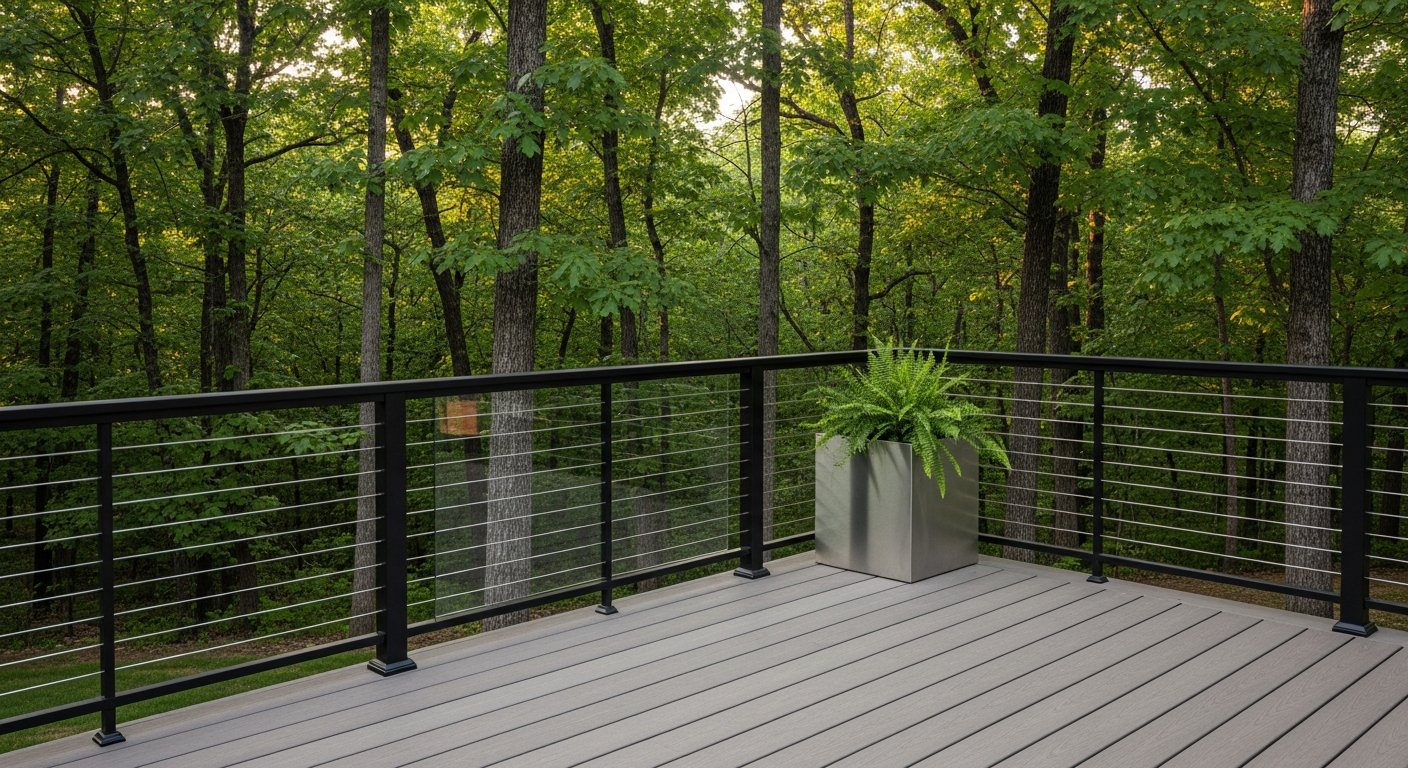
Powder-coated aluminum has become the frontrunner for modern deck railing design trends in Arkansas. It does not rust like steel, does not rot like wood, and the baked-on finish resists UV damage. You can choose from a wide range of colors, from matte black to bronze, that coordinate with your home’s exterior. Aluminum railings also support top rails wide enough to hold a drink or a potted plant, adding practical value to their visual appeal. For homeowners who want a truly unobstructed view, glass panel railings have gained significant popularity. These systems use tempered safety glass held in place by aluminum or stainless steel frames, providing a transparent barrier that keeps the view of your yard or the Arkansas landscape completely open.
Top Modern Deck Railing Styles for Arkansas Homes
When selecting a railing style, consider the architectural character of your home and how you plan to use your deck. The following styles represent the leading edge of modern deck railing design trends in Arkansas, each offering a distinct look and set of benefits.
Cable Railings for Unobstructed Views
Stainless steel cable railings consist of horizontal cables tensioned between posts. The thin profile of the cables creates a minimalist look that virtually disappears, allowing your view to take center stage. This style is ideal for decks overlooking wooded lots, lakes, or the rolling hills of Independence County. Cables are typically spaced three inches apart to meet building codes, and they require periodic tensioning to remain tight. Professional installation ensures the cables are properly anchored to withstand the weight of people leaning against them. The result is a railing that feels open and airy while meeting all safety requirements.
Glass Panel Railings for a Seamless Look
Frameless or semi-frameless glass railings use thick tempered glass panels secured with metal clamps or channels. These systems are the ultimate choice for homeowners who want zero visual obstruction. They work exceptionally well on decks with a modern or mid-century modern home design. Glass does require more frequent cleaning than other materials, especially after pollen season in Arkansas, but the payoff is a railing that never blocks your view. For maximum durability, choose glass with a low-iron content, which reduces the green tint visible on standard glass edges.
Horizontal and Vertical Aluminum Balusters
Aluminum baluster systems come in both horizontal and vertical configurations. The horizontal trend, where balusters run parallel to the deck surface, has become a hallmark of contemporary design. This style creates a clean, linear look that makes the deck appear longer and more expansive. Vertical balusters, while more traditional, can be updated with thicker, square-profile bars instead of round spindles. Both options are available in powder-coated finishes that resist chalking and fading. For Arkansas homeowners on a moderate budget, aluminum baluster systems offer the best balance of cost, durability, and style.
Color and Finish Trends for Modern Railings
The color of your railing plays a major role in the overall aesthetic. Modern deck railing design trends in Arkansas are moving away from white and natural wood tones toward darker, more dramatic hues. Matte black has emerged as the dominant choice for contemporary decks. It provides a strong contrast against light-colored decking, frames the view beautifully, and hides dirt and pollen between cleanings. Bronze and dark gray are also popular, particularly when the decking material is a warm cedar tone or a brown composite.
Another emerging trend is the use of mixed materials within a single railing system. For example, a top rail made of hardwood or a composite material like Trex can be paired with black aluminum balusters. This combination adds warmth and texture while maintaining the clean lines of modern design. If you choose a wood top rail, select a species like ipe or cedar that naturally resists decay, and seal it properly to withstand Arkansas humidity. The contrast between a natural wood handrail and dark metal components creates a sophisticated look that elevates the entire deck.
Integrating Lighting and Smart Features
Modern deck railings are no longer just barriers. They are opportunities to integrate lighting and technology that extend the usability of your outdoor space into the evening hours. LED strip lights can be installed under the top rail to cast a soft glow on the deck surface, improving safety and ambiance simultaneously. Post cap lights are another popular feature, available in a range of styles from sleek flush mounts to decorative lanterns. When choosing lighting, look for fixtures rated for wet locations and consider warm white LEDs, which create a welcoming atmosphere without attracting as many insects as cooler color temperatures.
For the tech-savvy homeowner, some railing systems now include built-in channels for running low-voltage wiring, making it easier to add speakers, charging stations, or even heated railings for those cooler Arkansas evenings. While heated railings are still a niche product, they are gaining traction among homeowners who want to enjoy their decks beyond the peak summer months. Planning for these features during the design phase is much easier than retrofitting them later.
Building Code and Safety Considerations for Arkansas
Before you finalize your railing design, it is essential to understand the building codes that apply in Arkansas. The International Residential Code (IRC) governs most residential deck construction, and local jurisdictions in Batesville and Independence County may have additional requirements. In general, deck railings must be at least 36 inches high for residential decks, though some municipalities require 42 inches. Baluster spacing must prevent a 4-inch sphere from passing through, which is roughly the size of a toddler’s head. Cable railings must be tensioned so they do not deflect more than the code allows under pressure.
Working with a licensed contractor who understands local codes is the best way to ensure your project passes inspection. A professional will also verify that the railing posts are properly attached to the deck frame, which is critical for safety. The connection between the railing and the deck structure must withstand significant lateral force, especially in high-wind situations. In our guide on spa like bathroom retreat Arkansas design trends, we discuss how careful planning and professional execution create lasting results. The same principle applies to deck railings: a well-built system adds value and peace of mind.
Material Comparison: Which Modern Railing Is Right for You?
Choosing the right material involves weighing several factors: initial cost, maintenance requirements, durability in Arkansas weather, and aesthetic preference. The table below summarizes the key characteristics of the most common modern railing materials.
- Powder-Coated Aluminum: Moderate initial cost, very low maintenance, excellent durability in humidity and sun, wide color selection, lightweight but strong. Best overall value for most homeowners.
- Stainless Steel Cable: Higher initial cost, moderate maintenance (periodic tensioning), excellent durability, minimalist look, requires professional installation. Ideal for view-oriented decks.
- Tempered Glass: Highest initial cost, moderate maintenance (frequent cleaning), excellent durability, completely unobstructed view, heavy and requires sturdy framing. Best for premium, view-maximizing designs.
- Composite Railings: Moderate to high cost, low maintenance, good durability but can fade in intense sun, mimics wood appearance without the upkeep. Good for matching composite deck boards.
Each material has its ideal application. For a deck that wraps around a backyard pool, glass panels provide safety without blocking sightlines to children. For a hillside deck overlooking the White River, cable railings keep the focus on the scenery. Aluminum works well for virtually any situation and is the most forgiving for DIY installation if you have some construction experience. When in doubt, consult with a local deck builder who can show you samples and discuss what has performed best on other projects in the area.
Installation Tips for Arkansas Homeowners
Proper installation is just as important as material selection. A modern railing system that is poorly installed will not only look bad but could also be unsafe. Start by ensuring your deck framing is structurally sound. Railing posts should be bolted through the decking into the joists or rim board, not just screwed into the deck surface. Use stainless steel or galvanized fasteners to prevent rust, a common issue in Arkansas humidity.
For cable railings, pay special attention to the tensioning system. Cables will stretch slightly over time, so choose a system that allows for easy adjustment. Some manufacturers offer turnbuckles or compression fittings that make retensioning a simple annual task. For glass panels, make sure the bottom channel is sloped or has drainage holes to prevent water from pooling against the glass, which can lead to mineral deposits and premature seal failure. In all cases, follow the manufacturer’s instructions exactly, and do not skip any step related to structural connections.
One of the most common mistakes homeowners make is underestimating the importance of post spacing. Most railing systems have a maximum post spacing of 6 to 8 feet. Exceeding this will cause the top rail to sag and the balusters to feel loose. Measure carefully and plan your post locations before you start cutting any materials. If your deck is longer than the standard post spacing, add intermediate posts to maintain rigidity. A little extra planning upfront saves a lot of frustration later.
Modern deck railing design trends in Arkansas continue to evolve, but the core principles remain the same: choose materials that withstand the local climate, prioritize safety and code compliance, and select a style that complements your home’s architecture. Whether you prefer the industrial look of cable, the transparency of glass, or the clean lines of aluminum, your railing is an investment in your home’s value and your family’s enjoyment of the outdoors. By working with experienced professionals and staying informed about current trends, you can create a deck that you will love for decades.
As you plan your project, remember that the best railing is one that you barely notice because it works so well. It keeps people safe, frames the view, and requires almost no upkeep. That is the hallmark of truly modern design: simplicity, durability, and beauty that lasts. In Arkansas, where the landscape is part of what makes living here special, your deck railing should let that landscape shine.