Your living room floor takes a beating. It endures foot traffic, pet claws, furniture dragging, and the occasional spilled drink. In Arkansas, it also faces high humidity, temperature swings, and the unique challenges of our local climate. Choosing the right material from the many living room flooring options hardwood laminate tile Arkansas homeowners consider is a decision that affects comfort, durability, and home value for years to come. This guide breaks down each choice to help you make a confident, informed decision for your Batesville area home.
Why Flooring Choice Matters in Arkansas Homes
Arkansas weather is a defining factor in any flooring decision. Our summers bring oppressive humidity, while winters can deliver freeze-thaw cycles that stress materials. A floor that performs perfectly in a dry, temperate climate may warp, buckle, or swell here. Beyond climate, your living room is a high-traffic zone that sets the aesthetic tone for your entire home. The wrong choice can lead to costly repairs or early replacement. The right choice, however, enhances daily life and adds real resale value. Understanding how each material interacts with Arkansas conditions is the first step toward a smart investment.
Hardwood Flooring: Timeless Beauty with Arkansas Considerations
Solid hardwood flooring remains the gold standard for elegance and long-term value. Its natural grain, warmth, and character are unmatched by synthetic materials. However, solid wood is also the most sensitive to environmental changes. In Arkansas, high humidity can cause solid hardwood planks to expand, cup, or gap. To mitigate this, many local homeowners opt for engineered hardwood, which uses a plywood core topped with a real wood veneer. This construction is more dimensionally stable and better suited to our climate.
Engineered vs. Solid Hardwood for Arkansas Living Rooms
Solid hardwood is typically 3/4 inch thick and can be sanded and refinished multiple times. This is ideal for historic homes or those planning to stay for decades. Engineered hardwood, by contrast, offers a thinner wear layer but resists moisture and temperature changes far better. For most Arkansas living rooms, engineered hardwood is the practical winner. It can be installed on concrete slabs (common in many newer homes) and handles the seasonal shifts of our region without catastrophic movement.
When selecting hardwood, consider the species. Hickory and oak are among the most durable options for Arkansas homes. They resist denting and wear better than softer woods like pine or cherry. A matte or satin finish also hides scratches better than high-gloss, which is critical in a family living space. If you choose hardwood, work with a professional installer who understands acclimation protocols. Wood must sit in your home for several days before installation to adjust to the ambient humidity. Skipping this step is a recipe for failure.
Laminate Flooring: Durability and Affordability
Laminate flooring has come a long way from the cheap, hollow-feeling planks of the past. Modern laminate uses high-definition photography to mimic wood, stone, or tile with surprising realism. Its layered construction, including a tough melamine wear layer, makes it highly resistant to scratches, stains, and fading. For busy Arkansas families, this is a major advantage. Laminate is also one of the most budget-friendly options among living room flooring options hardwood laminate tile Arkansas homeowners compare.
The key drawback of laminate is its sensitivity to moisture. While the surface is water-resistant, the core is typically made of high-density fiberboard (HDF). If water seeps into the seams, the planks can swell and become permanently damaged. In Arkansas, where humidity can creep into every corner, this is a real concern. To combat this, look for laminate with a waterproof or water-resistant rating. Many manufacturers now offer products with sealed edges and waxed joints that provide better protection against spills and dampness.
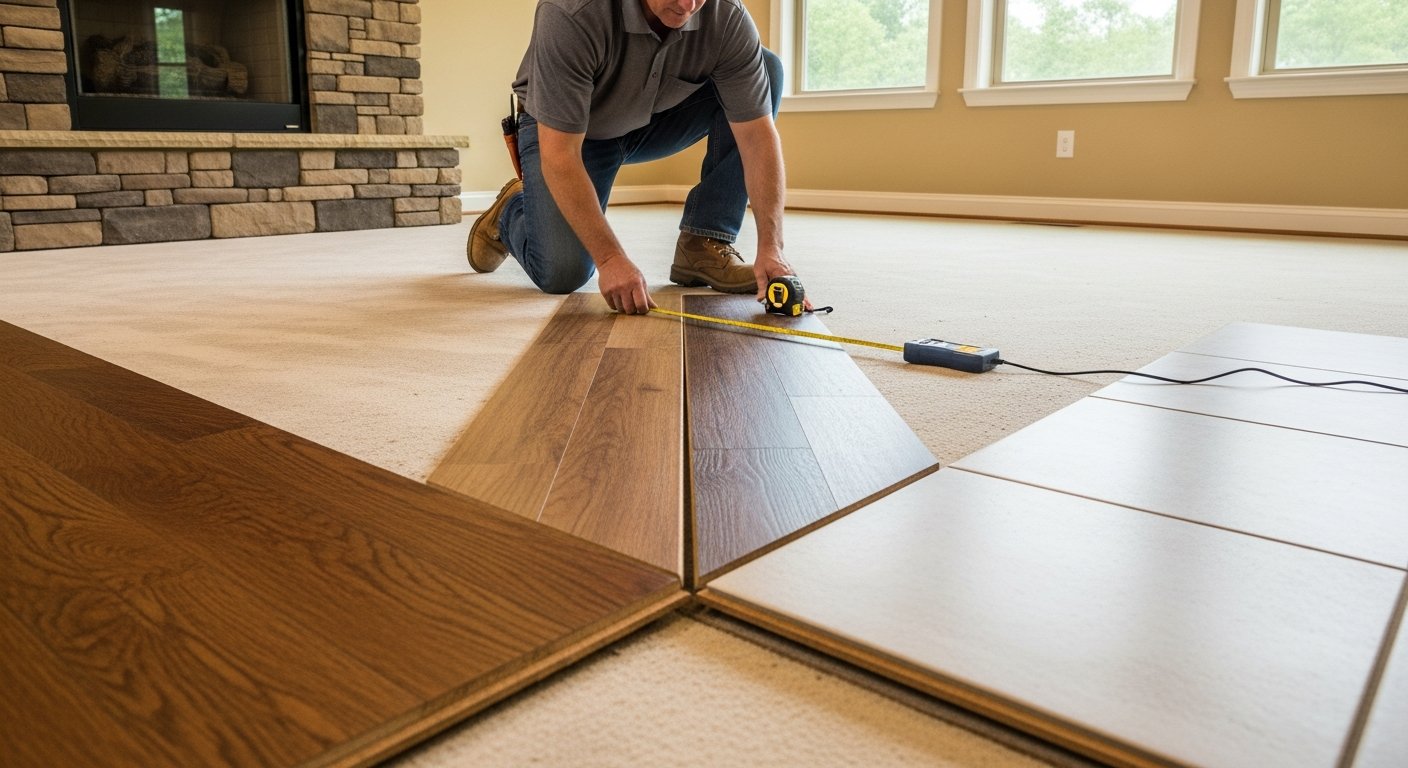
Installation matters immensely with laminate. A floating floor system requires a proper underlayment to manage moisture from below. For a living room on a concrete slab in Arkansas, a vapor barrier underlayment is non-negotiable. Professional installation ensures tight seams and proper expansion gaps at the walls, which prevent buckling when the material expands in humid weather. Laminate is an excellent choice for rental properties, homes with active kids, or budget-conscious renovations where the look of wood is desired without the maintenance.
Tile Flooring: Unbeatable for Arkansas Humidity
Tile flooring, whether ceramic or porcelain, is the most moisture-resistant option for Arkansas living rooms. Porcelain tile, in particular, has a very low water absorption rate, making it ideal for our humid climate and even for homes with concrete slab foundations. Tile will not warp, swell, or dent. It handles furniture movement, pet accidents, and muddy boots with ease. For homeowners who want a worry-free floor that lasts decades, tile is a compelling choice.
The chief concern with tile is comfort. It is hard underfoot and can feel cold in winter. In a living room where you might sit on the floor or walk barefoot, this is a real issue. Fortunately, radiant floor heating systems can be installed beneath tile to solve the cold problem. This adds cost but transforms the comfort level. Another consideration is the grout. Light-colored grout stains easily in a high-traffic space. Use an epoxy grout or a stain-resistant sealer to keep your tile floor looking fresh. Larger format tiles (12×24 inches or larger) also reduce grout lines and create a more modern, seamless look.
Choosing the Right Tile for Your Living Room
Porcelain is superior to ceramic for durability and moisture resistance. Within porcelain, rectified tiles have perfectly straight edges, allowing for very thin grout lines that are easier to clean. Wood-look tile is a popular trend in Arkansas, offering the aesthetic of hardwood with the durability of stone. It pairs beautifully with the natural design elements found in many Batesville homes. Tile does require a skilled installer to ensure a level surface and proper layout. Poor installation can lead to lippage (uneven edges) and cracked tiles over time.
For a comprehensive approach to your living room update, consider how your flooring choice integrates with other design elements. In our guide on living room accent wall ideas Arkansas homes love, we explore how texture and color can complement your new floor and create a cohesive space.
Comparing the Three Options: A Practical Framework
To simplify your decision, evaluate each material across five key criteria: durability, moisture resistance, comfort, cost, and aesthetics. Here is a breakdown of how each option performs in an Arkansas living room:
- Durability: Tile wins for scratch and dent resistance. Laminate is excellent for scratch resistance but vulnerable to impact damage. Hardwood can dent and scratch but can be refinished to restore its appearance.
- Moisture Resistance: Tile is virtually impervious. Laminate is moderate but improving. Hardwood (especially solid) is the most vulnerable and requires careful maintenance.
- Comfort Underfoot: Hardwood and laminate feel warmer and softer. Tile is hard and cold without radiant heating.
- Cost: Laminate is typically the most affordable. Tile and hardwood vary widely but generally cost more, especially with professional installation.
- Aesthetics and Resale: Hardwood offers the highest perceived value and timeless appeal. Tile offers versatility and durability. Laminate provides good looks at a lower price point.
Each material has trade-offs. The best choice depends on your specific priorities: budget, family activity level, and how long you plan to stay in the home. A family with young children and pets might prioritize laminate or tile for easy cleanup. A homeowner focused on long-term resale value might lean toward engineered hardwood. There is no single correct answer, only the right answer for your situation.
Professional Installation: The Arkansas Advantage
No matter which material you choose, professional installation is critical to long-term performance. In Arkansas, the subfloor must be properly prepared to handle moisture and leveling. A concrete slab may need a moisture barrier and self-leveling compound. A wood subfloor may require reinforcement and proper fastening. Attempting a DIY installation on a large living room often leads to gaps, buckles, or premature wear that voids the warranty.
Working with a local contractor who understands Arkansas building practices ensures your floor is installed correctly the first time. At The Real Deal of Batesville, we have experience with all three materials and can guide you through selection, preparation, and installation. We also handle related services like trim work and drywall repair, making your living room renovation a seamless process from start to finish.
Final Thoughts on Your Living Room Flooring Decision
Your living room is the heart of your home. The floor beneath you should provide beauty, durability, and comfort for years of family life. By understanding the strengths and weaknesses of hardwood, laminate, and tile in the Arkansas climate, you can choose with confidence. Evaluate your household needs, set a realistic budget, and invest in quality materials and professional installation. The result will be a living room that not only looks stunning but also stands up to the demands of daily life in the Natural State.