Sloping yards and uneven terrain are common challenges for homeowners in Batesville, Arkansas. The Ozark foothills create beautiful vistas but also present practical problems: soil erosion, unusable sloped areas, and water drainage issues that threaten foundations and basements. A concrete retaining wall solves these problems while adding structure and visual appeal to your property. When combined with thoughtful landscaping, a retaining wall transforms a problem slope into a tiered garden, a level patio, or a defined outdoor living space. This guide covers the essential considerations for concrete retaining wall landscaping in Batesville, Arkansas, including design options, material choices, drainage requirements, and how to work with local contractors for a lasting result.
Why Choose Concrete for Retaining Walls in Batesville
Concrete offers distinct advantages over other retaining wall materials, especially in Arkansas’s climate. The region experiences hot, humid summers and freeze-thaw cycles in winter. Properly reinforced concrete withstands these temperature swings without cracking or shifting. Unlike timber walls that rot within a decade or segmental block walls that can bulge under pressure, a poured concrete or concrete block wall provides decades of structural integrity. Concrete also allows for customization through stamping, staining, or texturing to match your home’s architecture and landscape style.
For Batesville homeowners, the primary benefit of concrete is its ability to handle the clay-heavy soils common in Independence County. Clay soil expands when wet and contracts when dry, creating significant lateral pressure against retaining walls. A well-engineered concrete wall with proper reinforcement and drainage resists this pressure effectively. This is especially important for walls over four feet in height, which require engineering calculations and permits. Working with a local concrete contractor who understands Batesville’s soil conditions ensures your wall is built to last through decades of weather cycles.
Key Design Considerations for Retaining Walls
Before pouring concrete, you must evaluate several factors that determine the wall’s design and cost. The height of the wall is the most critical variable. Walls under four feet typically do not require engineering approval in Independence County, but taller walls must meet specific building codes. The wall’s purpose also influences design: a low garden border wall differs significantly from a tall slope retention structure. Consider whether you need a gravity wall, cantilevered wall, or reinforced concrete block system. Each type has different footprint requirements and cost implications.
Another important factor is the wall’s relationship to existing structures. A retaining wall built too close to a house foundation can trap water against the basement wall, leading to moisture problems. If you have concerns about foundation issues, review our guide on common tree diseases pests Batesville Arkansas to understand how landscape elements affect your home’s structural health. Proper setback distances and drainage planning prevent these complications and protect your investment.
Drainage: The Most Critical Element
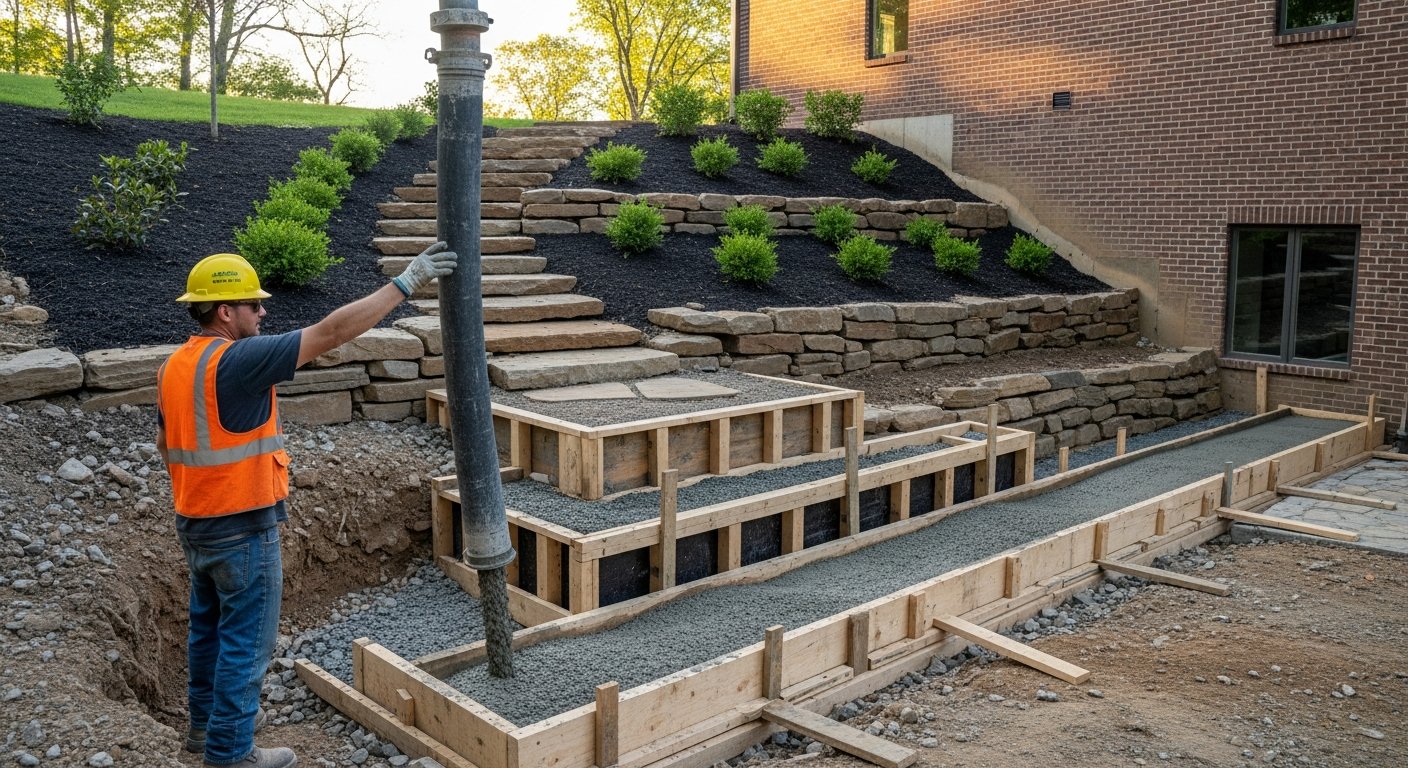
Every concrete retaining wall requires a drainage system behind it. Without proper drainage, hydrostatic pressure builds up and can push the wall forward or cause cracks. The standard solution is a perforated drain pipe placed at the base of the wall, surrounded by gravel. This pipe directs water away from the wall and toward a safe discharge point. Weep holes through the wall face provide additional pressure relief. In Batesville’s clay soils, the drainage system must be oversized to handle slow percolation rates. A qualified contractor will calculate the drainage needs based on your specific soil type and rainfall patterns.
Landscaping Integration Strategies
A concrete retaining wall is only half of the equation. The landscaping around and above the wall determines whether the finished project looks like a natural part of your yard or an industrial intrusion. Start by planning plantings that soften the wall’s appearance. Vining plants, cascading shrubs, and ornamental grasses planted at the top edge create a soft transition between the wall and the upper grade. At the base of the wall, low-growing perennials and ground covers hide the concrete footing and integrate the structure into the garden.
Tiered retaining walls offer the most landscaping potential. Multiple short walls create flat terraces that can host vegetable gardens, flower beds, or small patios. Each terrace level provides a microclimate with different sun exposure and moisture conditions. In Batesville’s climate, south-facing terraces warm up quickly in spring, extending the growing season. North-facing terraces stay cooler and retain moisture longer, ideal for shade-loving plants. A landscape plan that accounts for these microclimates maximizes the utility and beauty of your retaining wall system.
Cost Factors for Concrete Retaining Walls
The cost of a concrete retaining wall in Batesville depends on several variables. Wall height and length are the primary cost drivers. Expect to pay more per square foot for taller walls because they require more reinforcement and deeper footings. Site accessibility also affects pricing: walls built on steep slopes with limited equipment access require more manual labor. The type of concrete finish impacts cost as well. Plain poured concrete is the most economical, while stamped or stained finishes add 20 to 40 percent to the surface cost.
Here are the typical cost ranges for concrete retaining walls in Batesville:
- Poured concrete wall (under 4 feet): $30 to $50 per square foot, includes rebar reinforcement and basic drainage
- Concrete block retaining wall: $25 to $45 per square foot, faster installation but requires skilled labor for proper assembly
- Stamped or decorative concrete finish: add $8 to $15 per square foot for patterns and color
- Engineered wall (over 4 feet): $50 to $80 per square foot, includes structural engineering and permits
These estimates include excavation, base preparation, drainage materials, and concrete delivery. Additional costs may include permits (typically $50 to $200 for Independence County), soil testing, and landscaping after construction. Always obtain multiple quotes from local contractors who visit your site and assess the specific conditions.
Permits and Regulations in Independence County
Batesville and Independence County require building permits for retaining walls over four feet in height measured from the bottom of the footing to the top of the wall. Walls under four feet generally do not require permits, but you should verify with the county planning department before starting construction. The permit application typically includes a site plan showing the wall location, height, and drainage discharge point. For walls over four feet, a licensed structural engineer must stamp the design drawings. This requirement protects homeowners from wall failure and potential liability.
Property line setbacks also apply. Check your deed and local zoning ordinances to confirm how close the wall can be to neighboring properties. In most residential zones in Batesville, retaining walls must be at least three feet from property lines unless both property owners agree otherwise. If the wall affects drainage patterns on adjacent properties, you may need additional approvals. A reputable local contractor handles these permitting details as part of their service, saving you time and ensuring compliance.
Working With a Local Contractor
Hiring a Batesville-based contractor who specializes in concrete retaining walls offers several advantages. Local contractors understand the soil conditions, climate patterns, and building codes specific to Independence County. They have relationships with local suppliers and can source materials more efficiently. Perhaps most importantly, they have a reputation to protect in the community and are motivated to deliver quality work. When interviewing contractors, ask for references from recent retaining wall projects and visit completed installations if possible.
Questions to ask potential contractors include: How do you handle drainage behind the wall? What reinforcement do you use for walls over three feet? Do you include compaction testing for the backfill? How do you guarantee the wall against cracking or leaning? A confident contractor will provide detailed answers and written warranties. Avoid contractors who offer significantly lower prices than competitors; retaining wall failures are expensive to repair and can damage your property. Investing in quality construction upfront saves money and frustration over the long term.
Long-Term Maintenance and Care
A properly built concrete retaining wall requires minimal maintenance, but some routine care extends its lifespan. Inspect the wall annually after heavy rain seasons for cracks, bulging, or leaning. Check the drainage outlets and weep holes for blockages from soil or roots. Clear vegetation from the wall face that might trap moisture against the concrete. In freeze-thaw cycles, avoid piling snow against the wall; the freeze-thaw action can accelerate surface deterioration. Sealant applications every five to seven years protect decorative concrete finishes and prevent water absorption.
The landscaping around the wall also needs care. Prune overhanging branches that drop leaves into the drainage system. Replenish mulch in planting beds to prevent soil erosion onto the wall face. Monitor the soil level behind the wall; if it settles significantly, add more fill to maintain proper grade and drainage. With regular attention, a concrete retaining wall and its surrounding landscape remain functional and attractive for generations.
Concrete retaining wall landscaping in Batesville, Arkansas, is a practical investment that solves drainage problems, creates usable outdoor space, and increases property value. By choosing concrete for its durability and design flexibility, planning proper drainage, integrating thoughtful landscaping, and working with a qualified local contractor, you can transform a challenging slope into one of the most beautiful and functional areas of your property. The key is to treat the wall and landscape as a unified system, not separate projects. When both elements work together, the result is a lasting improvement that enhances your home’s curb appeal and livability for years to come.