Adding a storage shed to your property in Batesville, Arkansas can transform your outdoor space and free up valuable room in your garage or basement. But before you purchase that prefab shed or start framing walls, you need a solid, level base that will keep your structure stable for decades. A shed foundation concrete pad in Batesville, Arkansas is the gold standard for durability, and getting it right from the start prevents costly problems like sagging floors, rusted metal panels, and doors that stick. Whether you are storing lawn equipment, garden tools, or seasonal decorations, the foundation determines how long your shed will serve you. In this guide, we walk through every step of planning, pouring, and finishing a concrete pad that stands up to Arkansas weather and soil conditions.
Why Choose a Concrete Pad for Your Shed Foundation
Many shed owners consider gravel beds or plastic grid systems to save money. While those options work for lightweight structures, a concrete pad offers unmatched stability and longevity. The freeze-thaw cycles common in Arkansas can shift gravel or cause wooden skids to rot over time. A properly reinforced concrete pad resists these forces and provides a permanent, level surface that does not settle unevenly. Additionally, concrete pads keep moisture away from the shed floor, preventing mold and wood rot in the structure above. If you plan to store heavy items like a riding mower or workshop tools, a concrete foundation distributes the weight evenly and prevents the floor from bowing.
Step-by-Step Process for a Shed Foundation Concrete Pad Batesville Arkansas
1. Site Selection and Soil Preparation
Before you order any concrete, you need to choose the right location for your shed. Pick a spot that is slightly elevated or has natural drainage away from the building. Avoid low areas where water pools after a heavy rain. In Batesville, clay soils are common, and they expand and contract with moisture changes. This movement can crack an unprepared slab. Excavate the topsoil to a depth of at least 6 to 8 inches. Remove any organic material, roots, or large rocks. The excavation should be slightly larger than your shed footprint, adding about 12 inches on each side for working room.
Once the area is excavated, compact the soil using a plate compactor or hand tamper. This step is critical for preventing future settlement. If you hit soft spots during compaction, remove the unstable soil and backfill with crushed stone. Proper soil preparation is the foundation of your concrete pad, and cutting corners here leads to cracks and uneven surfaces later.
2. Building the Base with Gravel and Drainage
After compacting the native soil, add a layer of crushed stone or gravel. A 4-inch depth of 3/4-inch crushed stone provides excellent drainage and a stable base. Spread the gravel evenly and compact it again. This gravel layer serves two purposes: it allows water to drain away from underneath the slab, and it creates a capillary break that prevents moisture from wicking up through the concrete. In Arkansas, where humidity is high and rain is frequent, proper drainage is non-negotiable. Without it, water can freeze beneath the slab in winter and heave the concrete upward.
For larger sheds or those on slopes, consider installing a perforated drain pipe around the perimeter. This drain pipe carries water away from the pad and prevents hydrostatic pressure from building up. If your shed will house electrical equipment or valuable possessions, this extra step adds peace of mind.
3. Forming the Concrete Pad
Build wooden forms using 2×4 or 2×6 lumber, depending on your desired slab thickness. For most residential sheds, a 4-inch thick slab is sufficient. If you plan to store a vehicle or heavy machinery, increase the thickness to 5 or 6 inches. Stake the forms securely and make sure they are level. Use a string line and a long level to check that the forms are perfectly square and at the correct elevation. A slope of 1/8 inch per foot away from the shed helps water run off the surface.
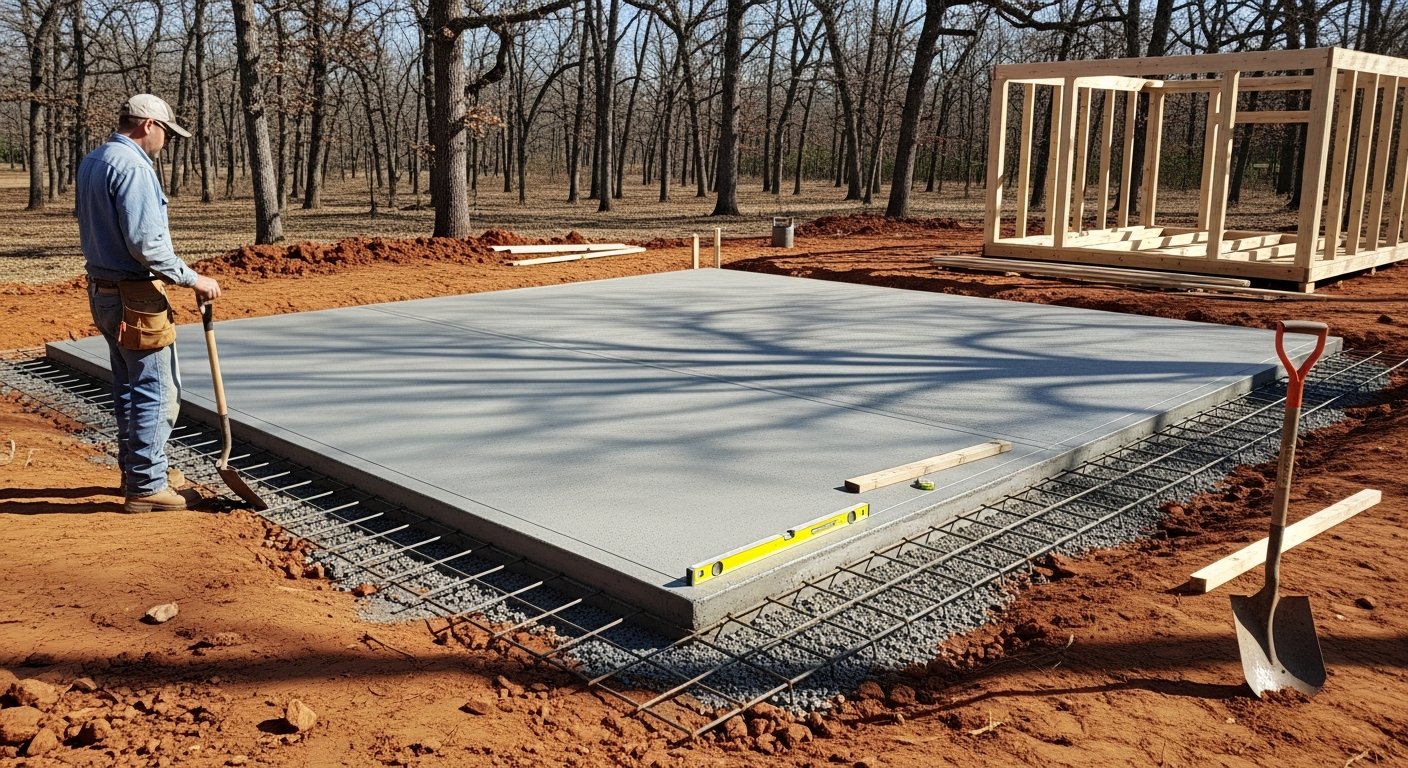
Reinforcement is essential for a durable concrete pad. Place a grid of welded wire mesh or rebar within the forms. Use rebar for larger pads or if the soil is unstable. The reinforcement should sit in the middle of the slab, not on the ground. Use small plastic chairs or pieces of rock to lift it off the gravel. This reinforcement prevents cracks from spreading and keeps the slab intact when the ground shifts.
4. Pouring and Finishing the Concrete
When the forms are ready and the reinforcement is in place, it is time to pour the concrete. For a shed foundation concrete pad in Batesville, Arkansas, order a mix with a compressive strength of 3,500 to 4,000 PSI. This mix is strong enough for residential use and resists the freeze-thaw damage common in the region. If you are mixing by hand, use a concrete mixer and add a plasticizer to improve workability.
Pour the concrete into the forms and spread it evenly using a shovel or rake. Use a screed board to level the surface, moving it back and forth across the forms in a sawing motion. After screeding, use a bull float to smooth the surface and bring the cream to the top. Wait for the water sheen to disappear, then use a magnesium float to finish the surface. For a non-slip texture, run a broom across the surface in straight lines after floating. This broom finish is ideal for shed floors because it provides traction when the surface is wet.
5. Curing the Concrete
Curing is the most overlooked step in concrete work, but it is vital for strength and durability. Concrete gains strength as it hydrates, and if the water evaporates too quickly, the surface becomes weak and prone to dusting and cracking. Keep the concrete moist for at least 7 days. You can cover it with wet burlap, plastic sheeting, or a curing compound. In hot weather, mist the surface periodically to prevent rapid drying. Do not place any weight on the slab for at least 48 hours, and wait a full week before building the shed. Proper curing ensures your concrete pad will last for decades without major repairs.
Common Mistakes to Avoid
Even experienced DIYers can make errors when building a concrete pad. Here are the most frequent pitfalls and how to avoid them:
- Skipping the gravel base: Without drainage gravel, water collects under the slab and causes heaving in winter. Always use at least 4 inches of crushed stone.
- Pouring concrete on wet soil: Wet soil compacts differently and can cause the slab to crack as it dries. Wait for dry weather and check that the excavation is free of standing water.
- Using too little reinforcement: Unreinforced concrete is brittle and cracks easily. Use welded wire mesh or rebar for any slab larger than 6×8 feet.
- Neglecting control joints: For pads longer than 10 feet, cut control joints into the surface after the concrete has set. These joints direct cracking to a straight line instead of random places.
- Pouring too thin: A 3-inch slab may work for a lightweight plastic shed, but for wood or metal sheds, 4 inches is the minimum. Thicker is better for heavy storage.
Avoiding these mistakes saves you time and money. If you are unsure about any step, consulting a professional concrete contractor in Batesville can prevent costly errors. As discussed in our guide on Automated Gate Systems Batesville Arkansas: A Homeowner Guide, proper site preparation is the first step for any outdoor project.
Cost Considerations for a Shed Foundation Concrete Pad
The cost of a concrete pad for a shed in Batesville varies based on size, thickness, and site conditions. On average, expect to pay between $5 and $8 per square foot for a basic 4-inch slab. This price includes materials and labor if you hire a contractor. For a 10×12 foot shed, the concrete pad costs roughly $600 to $960. Additional expenses include gravel base, reinforcement, and form lumber. If your site requires extensive excavation or has poor soil, the price increases. However, investing in a quality concrete pad adds value to your property and protects your shed investment for years.
Comparing quotes from local contractors is wise. Ask for itemized estimates that include site preparation, materials, and finishing. Some contractors offer discounts for combining a shed pad with other concrete work like a driveway or patio. If you are handy, pouring the slab yourself can save 40 to 50 percent on labor, but be honest about your skill level. A poorly poured slab costs more to repair than hiring a professional initially.
Permits and Local Regulations in Batesville
Before you start digging, check with the Independence County Planning Department or the City of Batesville building department about permit requirements. Sheds under 120 square feet often do not require a building permit, but concrete foundations may still need approval. Larger sheds or those with electrical service definitely need permits. The permit process ensures your pad meets local building codes regarding setbacks, drainage, and frost depth. In Batesville, the frost depth is typically 12 inches, meaning your foundation must extend below this line to prevent heaving. For a concrete pad, proper gravel drainage and reinforcement satisfy most code requirements.
If your property is in a homeowners association (HOA), review the covenants before building. Some HOAs restrict shed size, location, or even foundation materials. Getting approval in writing avoids fines and forced removal later. A quick phone call to your HOA board or a visit to the local permit office takes only a few minutes but saves major headaches.
Maintenance and Longevity of Your Concrete Pad
A well-built concrete pad requires minimal maintenance. Keep the surface clean by sweeping debris and washing with a garden hose when needed. In winter, avoid using deicing salts that contain calcium chloride or ammonium nitrate, as these chemicals can spall the concrete. Use sand instead for traction. If you notice small cracks, seal them with a concrete crack filler to prevent water infiltration. Every few years, apply a concrete sealer to protect the surface from moisture and staining. Sealer also makes the pad easier to clean and extends its life.
With proper care, a concrete shed foundation lasts 30 years or more. The initial investment pays off through decades of reliable service. Unlike wood skids that rot or gravel pads that shift, concrete stays level and strong. When it is time to sell your home, a permanent shed on a concrete pad adds to the property’s appeal and value. Buyers see a ready-to-use storage space that needs no immediate repairs.
When to Call a Professional
Pouring a concrete pad is a straightforward project for experienced DIYers, but certain situations call for professional help. If your site has steep slopes, poor soil, or requires significant excavation, a contractor has the equipment and expertise to handle it. Large pads over 12×16 feet also benefit from professional forming and pouring because the concrete sets quickly and requires efficient teamwork. Additionally, if you lack access to a concrete mixer or cannot transport ready-mix concrete to your site, hiring a local concrete service saves time and ensures quality.
In Batesville, several concrete contractors specialize in residential foundations and pads. They know the local soil conditions and climate challenges. Choosing a professional with a solid reputation and proper insurance protects you from liability and guarantees the work meets code. Even if you plan to build the shed yourself, hiring a contractor for the concrete pad can be a smart compromise. You get a professional foundation and then handle the above-ground construction at your own pace.
A shed foundation concrete pad in Batesville, Arkansas is an investment in the longevity and functionality of your outdoor storage. By following proper site preparation, using quality materials, and allowing adequate curing time, you create a base that supports your shed for decades. Whether you choose to DIY or hire a contractor, the principles remain the same: good drainage, solid compaction, and proper reinforcement. Take the time to plan and execute each step carefully, and your shed will serve you well through every Arkansas season.