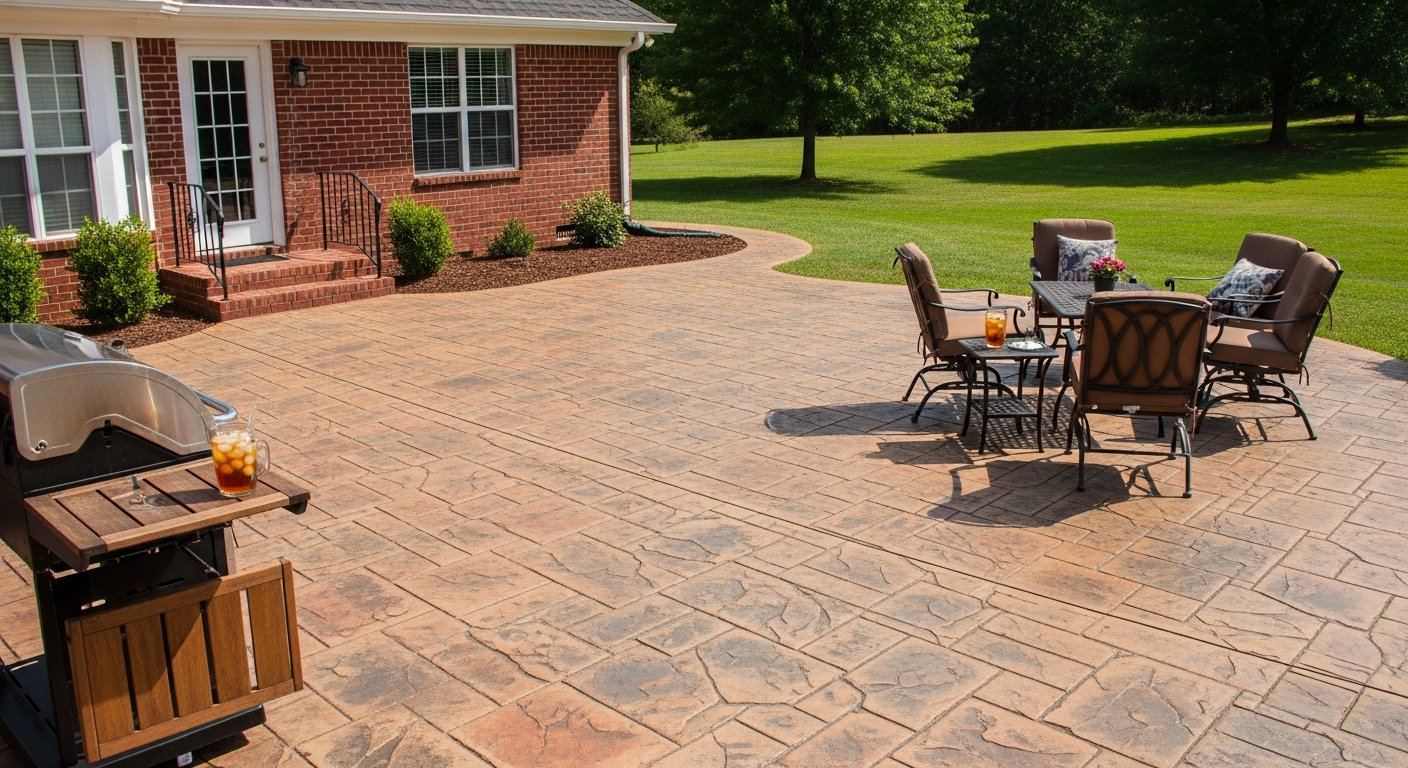
Imagine stepping into your backyard and onto a patio that looks like authentic flagstone, cobblestone, or even wood planks, yet feels smooth and cool underfoot. That is the magic of stamped concrete, a decorative technique that has transformed outdoor living spaces across Arkansas. For homeowners in Batesville and the surrounding areas, stamped concrete offers a way to enjoy the beauty of high-end materials without the high-end price tag. Whether you are hosting a summer barbecue or enjoying a quiet evening overlooking the White River, a well-designed stamped concrete patio becomes the foundation of your outdoor lifestyle. But with so many patterns and colors available, how do you choose the right combination for your Arkansas home? This guide walks you through the most popular stamped concrete patterns and colors for Arkansas patios, helping you make an informed decision that complements your home and withstands the local climate.
Why Stamped Concrete Is Ideal for Arkansas Patios
Arkansas weather presents unique challenges for outdoor surfaces. Summers bring intense heat and humidity, while winters deliver freeze-thaw cycles that can crack ordinary concrete. Stamped concrete, when properly installed and sealed, handles these conditions remarkably well. The process involves pouring a concrete slab, adding color, and then pressing patterns into the surface before it hardens. The result is a durable, slip-resistant surface that mimics natural stone or brick at a fraction of the cost.
Another advantage is the seamless nature of stamped concrete. Unlike paver patios that can shift or settle over time, stamped concrete is a single, continuous slab. This eliminates weed growth between joints and reduces maintenance. For Arkansas homeowners who want a beautiful patio without constant upkeep, stamped concrete is an excellent choice. In our guide on stamped concrete patio vs pavers Arkansas which wins, we compare these two popular options in detail to help you decide which is right for your property.
Popular Stamped Concrete Patterns for Arkansas Patios
Selecting the right pattern is one of the most exciting parts of designing a stamped concrete patio. The pattern you choose sets the tone for your entire outdoor space. Here are the most popular patterns among Arkansas homeowners, along with tips on where they work best.
Ashlar Slate Pattern
The ashlar slate pattern mimics natural cut stone with irregular, rectangular shapes. It is one of the most versatile patterns available and works well with both traditional and contemporary home styles. In Arkansas, this pattern pairs beautifully with the natural landscape, especially in homes surrounded by trees and native plants. The irregular lines of the ashlar slate pattern help hide minor imperfections and wear over time, making it a practical choice for high-traffic areas like patios and walkways.
This pattern is also forgiving if your patio has a slight slope for drainage. The random stone shapes distract the eye, so the surface looks natural rather than geometric. For homeowners in Batesville who want a rustic, earthy look, the ashlar slate pattern in warm browns or grays is a timeless option.
European Fan Cobblestone
The European fan cobblestone pattern creates a classic, old-world look with fan-shaped stone arrangements. This pattern is ideal for larger patios where you want to make a bold statement. It adds a sense of history and elegance to outdoor spaces. In Arkansas, this pattern works particularly well with Mediterranean or European-style homes, but it can also add charm to a ranch-style house.
One consideration with this pattern is that it has more grout lines and detailed shapes, which can make the surface appear busier. It is best suited for patios that are not too small, as the pattern needs space to be fully appreciated. If you have a sprawling backyard in the Batesville area and want a patio that feels like a European courtyard, this pattern is worth exploring.
Running Bond Brick Pattern
The running bond brick pattern replicates the look of traditional brick pavers laid in a staggered, overlapping arrangement. This pattern is straightforward and clean, making it a favorite for patios that connect to brick or stone homes. In Arkansas, where many homes feature brick exteriors, this pattern creates a seamless transition from the house to the outdoor living area.
This pattern is also one of the most cost-effective options because it is relatively simple to stamp and requires less intricate detailing. It works well for straight, rectangular patios and pathways. If you want a classic, no-fuss look that complements your home’s existing brickwork, the running bond brick pattern is a solid choice.
Flagstone Pattern
The flagstone pattern mimics large, irregular natural stone slabs. It is a popular choice for Arkansas patios because it blends so well with the state’s natural beauty. The flagstone pattern gives a relaxed, organic feel that suits homes in wooded or rural settings. It also provides excellent traction, which is important for patios near pools or in areas that stay damp.
Because the flagstone pattern has wide, natural-looking joints, it can be combined with different color accents to create a more realistic stone appearance. This pattern is forgiving for DIY installations or projects where the concrete surface may not be perfectly level, as the irregular shapes hide imperfections.
Best Colors for Stamped Concrete in Arkansas
Color choice is just as important as pattern selection. The right color enhances your home’s architecture and complements your landscaping. Arkansas’s climate, with its bright sun and occasional storms, also influences which colors perform best. Here are the top color trends for stamped concrete patios in Arkansas.
Earthy tones dominate the Arkansas market. Warm terracotta, sandstone, and adobe shades are popular because they reflect the region’s natural soil and rock colors. These hues also hide dirt and pollen better than lighter colors, which is a practical advantage during Arkansas’s high-pollen seasons. A terracotta-colored stamped concrete patio with an ashlar slate pattern creates a warm, inviting space that feels connected to the land.
Gray tones, from light charcoal to warm slate, are another favorite. They offer a modern, sophisticated look that pairs well with contemporary home designs and stainless steel outdoor kitchens. Gray is also a versatile neutral that allows your furniture and plants to stand out. For homeowners who want a patio that feels like an extension of their indoor living space, a soft gray flagstone pattern is an elegant choice.
For those who prefer a more natural stone appearance, blends of multiple colors are available. Integral color is mixed into the concrete before pouring, while release agents and stains add depth and highlights after stamping. A common technique is to use a base color of warm beige with a brown or charcoal release agent. This creates subtle variations that mimic real stone. Many Arkansas homeowners choose a custom blend that includes hints of ochre, rust, and cream to match their home’s exterior.
Factors to Consider When Choosing Patterns and Colors
Before finalizing your stamped concrete patio design, consider these important factors that affect both aesthetics and durability in Arkansas.
- Home architectural style: Your patio should complement your house, not clash with it. A modern home looks best with clean, geometric patterns like running bond brick or large-format slate, while a rustic cabin pairs well with flagstone or cobblestone patterns in earthy colors.
- Sun exposure: Darker colors absorb more heat, which can make the patio uncomfortably hot during Arkansas summers. Lighter colors reflect heat and stay cooler underfoot. If your patio receives full afternoon sun, consider a medium to light shade rather than a deep charcoal or dark brown.
- Maintenance and staining: Sealed stamped concrete is low maintenance, but lighter colors may show stains from dropped food or bird droppings more easily. Medium tones offer the best balance of heat reflection and stain resistance.
- Local landscape: Look at the colors of native stone, soil, and vegetation in your area. Choosing a pattern and color that harmonize with the natural surroundings creates a cohesive, grounded look. For example, the red clay common in parts of Arkansas pairs beautifully with warm terracotta or adobe-colored concrete.
Taking the time to evaluate these factors ensures your stamped concrete patio not only looks great on day one but continues to perform well for years. A professional contractor can help you test color samples and pattern mock-ups on your actual site to see how they interact with your home’s lighting and surroundings.
The Installation Process: What to Expect
Understanding the installation process helps you appreciate the craftsmanship involved and ensures you know what to expect from your contractor. The process begins with site preparation, which includes excavating the area, adding a gravel base, and compacting the soil. Proper drainage is critical in Arkansas, where heavy rains are common. The base must slope away from your home to prevent water pooling near the foundation.
Next, the concrete is poured and leveled. A color hardener is broadcast onto the wet surface and troweled in to create a rich, permanent color that will not fade or wear away. After the concrete reaches the right consistency, the stamping tools are pressed into the surface using a release agent that prevents sticking and adds subtle color contrasts. The stamps are carefully aligned to create a consistent pattern without visible seams or mismatches.
After the concrete cures for about 24 to 48 hours, the surface is cleaned to remove excess release agent. Then, a sealer is applied to protect the concrete from moisture, UV rays, and stains. In Arkansas, a high-quality sealer with UV inhibitors is essential to prevent fading from the intense summer sun. The sealer also enhances the color and gives the patio a subtle sheen that makes the pattern pop. Most contractors recommend resealing every two to three years to maintain the patio’s appearance and durability.
Cost and Value of Stamped Concrete Patios in Arkansas
The cost of a stamped concrete patio in Arkansas varies based on pattern complexity, color choices, and site conditions. On average, homeowners can expect to pay between $8 and $15 per square foot for a professionally installed stamped concrete patio. This includes materials, labor, and sealing. Intricate patterns like European fan cobblestone or custom color blends may cost more, while simpler patterns like running bond brick are at the lower end of the range.
Compared to natural stone or high-end pavers, stamped concrete offers significant savings. A natural stone patio can cost $20 to $30 per square foot or more. Stamped concrete delivers a similar aesthetic at roughly half the cost. Additionally, because stamped concrete is a single slab with no joints, it requires less maintenance over time. You will not need to replace shifted pavers or re-sand joints, which adds to the long-term value.
For Arkansas homeowners, a stamped concrete patio also boosts property value. Real estate agents often highlight well-designed outdoor living spaces as a key selling point. A beautiful patio extends your home’s usable square footage and creates an inviting area for entertaining. When you invest in quality materials and professional installation, you can expect a strong return on investment.
Maintenance Tips for Long-Lasting Beauty
Keeping your stamped concrete patio looking its best requires minimal effort, but consistency matters. Here are practical maintenance tips tailored to Arkansas conditions.
Regular cleaning is the first line of defense. Sweep the patio weekly to remove leaves, dirt, and debris. In the fall, when leaves are abundant, more frequent sweeping prevents organic stains from developing. A garden hose with a spray nozzle is sufficient for most light cleaning. For deeper cleaning, use a mild detergent and a soft-bristle brush. Avoid pressure washing at high settings, as it can damage the sealer and the concrete surface.
Resealing is the most important maintenance task. Arkansas’s UV rays can break down the sealer over time, leading to fading and increased porosity. Plan to reseal your patio every two to three years. Before resealing, clean the surface thoroughly and allow it to dry completely. Apply a high-quality acrylic or polyurethane sealer specifically designed for decorative concrete. This restores the color, adds a protective layer, and makes future cleaning easier.
During winter, use plastic shovels or snow blowers to remove snow and ice. Avoid metal shovels that can scratch the surface. If you use ice melt, choose a product that is safe for concrete, such as calcium magnesium acetate. Traditional rock salt can damage the sealer and cause surface scaling. With proper care, your stamped concrete patio will remain beautiful for decades, even through Arkansas’s challenging weather.
In conclusion, stamped concrete offers Arkansas homeowners an affordable, durable, and beautiful way to create a stunning patio. By selecting the right pattern and color combination, and working with an experienced local contractor, you can transform your backyard into a space you will enjoy for years. Whether you prefer the rustic charm of flagstone or the elegance of cobblestone, stamped concrete patterns and colors give you the freedom to design a patio that is uniquely yours.