
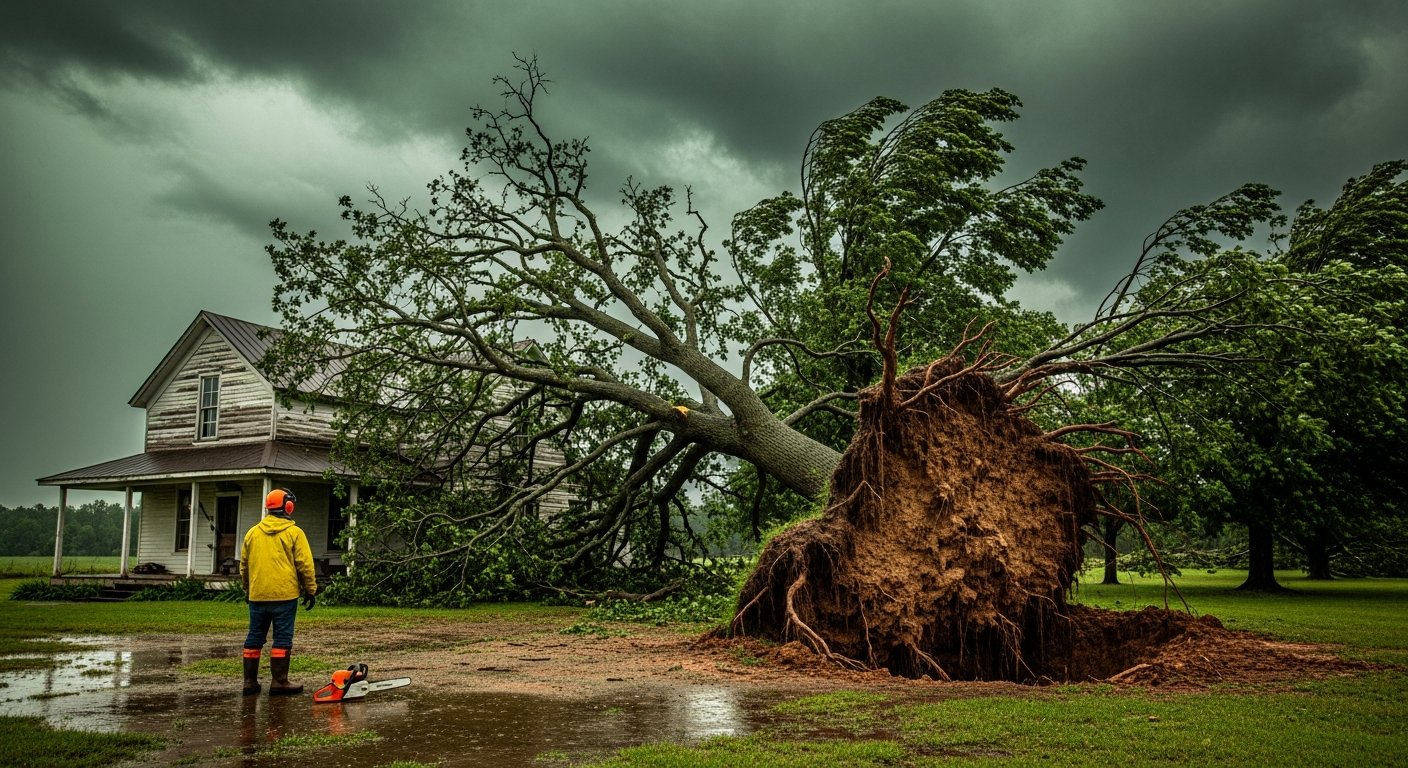
When the sky turns green and the wind starts howling across the Arkansas delta, every homeowner knows that familiar knot in their stomach. Storms in Arkansas are not a matter of if but when. From the tornado corridors that sweep through Independence County to the severe thunderstorms that roll off the Ozarks, the trees surrounding your home can become dangerous projectiles in seconds. Having a plan for emergency tree service storm preparedness Arkansas residents trust can mean the difference between a close call and a catastrophic loss. This guide walks you through exactly what to do before the storm hits, how to spot danger, and who to call when minutes matter.
Why Arkansas Homes Face Unique Tree Risks
Arkansas sits in a geographic sweet spot that produces some of the most volatile weather in the country. The state averages over 60 days of thunderstorm activity each year, and the warm, humid air from the Gulf of Mexico collides with cooler continental systems to create violent wind events. For homeowners in Batesville and surrounding areas, this means the mature oaks, hickories, and pines that shade your property can become serious liabilities.
The soil composition in north-central Arkansas also plays a role. Many properties sit on clay-heavy soils that expand and contract with moisture changes. This constant shifting weakens root systems over time, making trees more susceptible to uprooting during high winds. Combine that with the region’s freeze-thaw cycles in late winter and early spring, and you have a recipe for trees that look healthy but are structurally compromised below ground level.
Another factor that Arkansas homeowners often overlook is the prevalence of invasive pests like the emerald ash borer and the Asian longhorned beetle. These insects have been moving through the region, weakening trees from the inside out. A tree that appears fully leafed out in summer may have extensive internal decay that only becomes obvious when a storm puts it to the test. This is why proactive assessment is a cornerstone of responsible emergency tree service storm preparedness Arkansas property owners should practice year-round.
Pre-Storm Tree Assessment: What to Look For
Before you can prepare for an emergency, you need to know what hazards exist on your property. Walk your yard with a critical eye at least twice a year, ideally in early spring before storm season peaks and again in late fall after the leaves drop. The following warning signs indicate a tree may fail during a storm:
- Dead or hanging branches: These are often called widow makers for a reason. Any limb larger than two inches in diameter that is dead or detached from the main trunk should be removed immediately.
- Fungal growth on the trunk or roots: Mushrooms or conks growing at the base of a tree signal advanced internal rot. The structural integrity of that tree is compromised.
- Cracks or splits in the trunk: Vertical fissures that run deep into the wood indicate the tree is under stress and may split apart under wind load.
- Leaning trees: A tree that suddenly develops a lean, especially if soil is mounded on the opposite side, has likely lost root anchorage and is a high-risk candidate for failure.
- Multiple trunks with tight V-shaped crotches: These included bark unions are structurally weak and frequently separate during storms.
If you identify any of these issues, call a certified arborist or professional tree service for an evaluation. Do not attempt to remove large hazardous limbs yourself, especially near power lines or structures. The cost of professional pruning or removal is far less than the expense of storm damage repair to your home.
It is also wise to document the condition of your trees with photos and notes. This documentation can be invaluable when filing insurance claims after a storm. Many homeowners are surprised to learn that some policies require proof of proactive maintenance to cover tree-related damage. Keeping a record shows you took reasonable steps to prevent loss.
Creating Your Storm Response Plan
Having a written plan for storm response eliminates panic when time is short. Start by identifying which trees on your property pose the greatest threat to structures, driveways, and access routes. Prioritize those closest to your home, garage, and any outdoor living spaces like decks or patios. If you have a deck built by our team at The Real Deal of Batesville, you already know the value of quality construction, but even the best-built deck cannot withstand a direct hit from a falling oak.
Next, compile a contact list of verified emergency services. Your list should include at least two tree service companies that offer 24/7 emergency response, your insurance agent’s direct line, and the local utility company for power line issues. Store these numbers in your phone and post them on your refrigerator or inside a cabinet door. In the chaos of a storm aftermath, you do not want to be searching for contact information.
Establish a clear chain of decision-making. If a tree falls on your home, the first call should always be to emergency services if anyone is injured or if gas lines are compromised. The second call should be to your insurance company to start the claims process. Only after those steps should you contact a tree service for removal. Many companies can dispatch a crew within hours, but they need to know the site is safe to enter.
For those who have recently completed a construction or remodeling project, it is worth reviewing the structural resilience of your home. In our comprehensive guide on building in Arkansas, we emphasize how proper construction techniques and material selection can improve your home’s ability to withstand severe weather. This knowledge is directly applicable to storm preparedness.
What Emergency Tree Service Looks Like in Action
When you call for emergency tree service after a storm, the response is different from routine tree work. Emergency crews prioritize safety above all else. They arrive with specialized equipment including cranes, bucket trucks, and heavy-duty chainsaws designed to handle trees under tension. These professionals are trained to assess structural instability in damaged trees and remove them without causing additional harm to your property.
The typical emergency process follows these stages. First, the crew conducts a hazard assessment from a safe distance. They look for downed power lines, gas leaks, and structural damage to buildings. Once the scene is declared safe to enter, they begin with the most critical removals, usually trees that are leaning on a structure or blocking access for emergency vehicles. They work systematically from the top down, removing weight in sections to control the direction of fall.
After the immediate hazard is cleared, the crew will discuss disposal options with you. Some companies include hauling and disposal in their emergency rate, while others charge separately. Ask about this when you call. You may also need to coordinate with your insurance adjuster before allowing any debris to be removed, as the adjuster will want to document the scene for your claim.
One common misconception is that emergency tree service is only for trees that have already fallen. In reality, many emergency calls are for trees that are leaning dangerously, have large hanging limbs, or are showing signs of imminent failure. If you have a tree that looks like it could fall in the next storm, do not wait for it to come down. A proactive emergency removal is safer and often less expensive than dealing with the aftermath of a collapse.
Insurance and Financial Considerations
Understanding your homeowners insurance policy before a storm strikes can save you thousands of dollars. Most standard policies cover tree removal if the tree damages a covered structure like your house, garage, or fence. However, coverage for tree removal alone, when no structure is damaged, varies widely. Some policies pay up to $500 or $1,000 per tree for removal, while others offer nothing.
Review your policy declarations page and look for language about debris removal, tree removal, and wind damage. If you are unsure about your coverage, call your agent and ask specifically: Does my policy cover tree removal if a tree falls but does not hit my house? What is the sublimit for debris removal? Do I need to pay a separate deductible for tree claims? Getting clear answers now prevents confusion later.
Another financial factor is the cost of emergency service itself. Emergency tree removal typically costs 50 to 100 percent more than scheduled work because of the after-hours response and the increased complexity of working in hazardous conditions. Rates in Arkansas generally range from $300 to $1,500 per tree for emergency removal, with larger trees or difficult access situations costing more. Some companies offer membership programs or annual inspection discounts that can reduce emergency rates for existing customers.
If you are facing a major storm cleanup, ask your tree service provider about payment plans or financing options. Many reputable companies understand that storm damage creates unexpected financial strain and are willing to work with homeowners on payment schedules. Never pay the full amount upfront for emergency work. A reasonable deposit of 25 to 30 percent is standard, with the balance due upon completion.
Long-Term Prevention: Keeping Your Property Safe
While you cannot control the weather, you can dramatically reduce your risk through ongoing tree maintenance. The most effective strategy is to have all trees on your property inspected by a certified arborist every two to three years. This inspection should include a visual assessment of the canopy, trunk, and root zone, as well as a sounding test where the arborist taps the trunk with a mallet to listen for hollow spots that indicate decay.
Regular pruning is equally important. Proper pruning removes dead, diseased, and weakly attached branches before they become hazards. It also improves the tree’s overall structure by promoting a strong central leader and well-spaced lateral branches. In Arkansas, the best time for pruning is late winter while trees are dormant. This timing minimizes stress on the tree and reduces the risk of pest infestation.
For homeowners who are planning new landscaping, think carefully about tree placement. Plant trees at least 20 feet away from your home’s foundation and at least 15 feet from driveways and walkways. Choose species that are well-suited to Arkansas’s climate and have strong, wind-resistant wood. Native oaks, hickories, and bald cypress are generally more resilient than fast-growing species like silver maple or Bradford pear, which are notorious for splitting in storms.
Finally, consider the condition of your property’s drainage. Poor drainage leads to soil saturation, which weakens root systems and increases the likelihood of uprooting during storms. If you notice water pooling around the base of your trees after heavy rain, consult a landscaping professional about improving drainage. This simple step can extend the life of your trees and reduce your storm risk significantly.
Storm season in Arkansas is relentless, but you do not have to face it unprepared. By assessing your trees now, creating a response plan, and building a relationship with a trusted emergency tree service, you protect not just your property but also your peace of mind. When the next warning siren sounds, you will know exactly what to do.