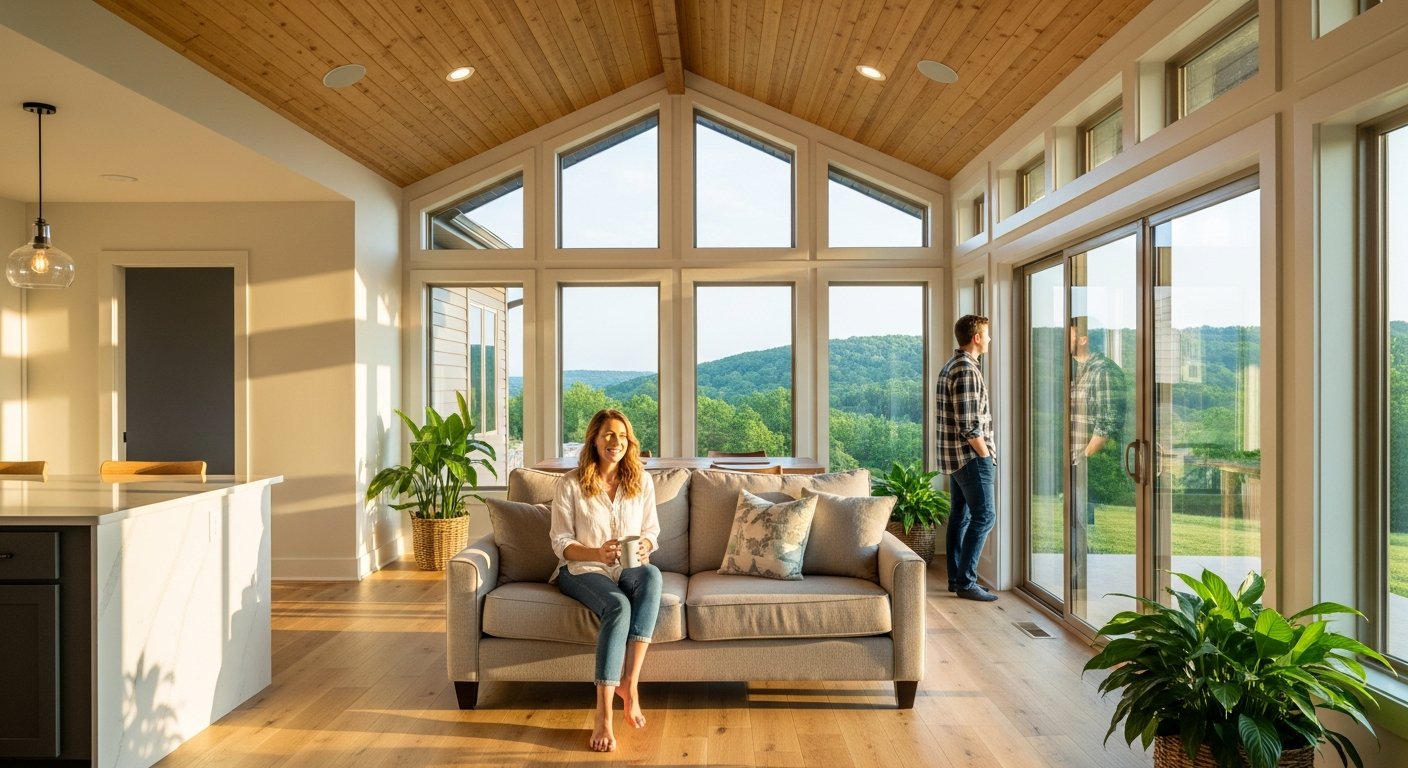
You love your Arkansas home, but unwanted noise from nearby roads, active family members, or even the neighbor’s lawn equipment can turn your living room from a sanctuary into a source of stress. If you have ever wished for a quieter space to relax or entertain, you are not alone. Many homeowners in Batesville and across the state are discovering that soundproofing their living room is one of the most rewarding home improvements they can make. By applying targeted soundproof living room techniques Arkansas homes can achieve a dramatic reduction in noise, improving comfort, privacy, and even property value. The key is knowing which methods work best for your specific situation and budget.
Arkansas presents unique challenges for soundproofing. Our humid summers and freeze-thaw winters mean that materials must perform well under stress. The open floor plans popular in modern Arkansas homes can also allow sound to travel freely between rooms. Whether you live in a historic Batesville home with thin walls or a newer construction with standard insulation, this guide will walk you through proven strategies to create a quieter living room. From simple DIY fixes to advanced construction methods, we will cover everything you need to know. And for major projects like adding mass-loaded vinyl or resilient channels, working with a trusted local contractor like The Real Deal Batesville ensures professional results that last.
Why Soundproof Your Living Room in Arkansas?
Noise pollution is more than an annoyance. Studies show that chronic exposure to unwanted sound can raise stress levels, disrupt sleep, and reduce overall quality of life. In the living room, where families gather and guests are entertained, peace and quiet are essential for meaningful connection. Arkansas homeowners often cite traffic noise, loud HVAC systems, and sound traveling through shared walls as top complaints. Addressing these issues with soundproof living room techniques Arkansas homes can adopt will transform your daily experience.
Beyond comfort, soundproofing adds tangible value to your home. A quiet living room is a major selling point for potential buyers. It also allows you to enjoy home theater systems or music without disturbing other rooms. In our guide on living room accent wall ideas Arkansas homes love, we discuss how design and function can work together. Soundproofing is a natural extension of that philosophy, blending acoustic performance with aesthetic appeal.
Top Soundproof Living Room Techniques for Arkansas Homes
Before diving into specific methods, understand that soundproofing works on a simple principle: mass, damping, and decoupling. Adding mass blocks sound waves. Damping materials convert sound energy into heat. Decoupling separates layers to prevent vibration from traveling. The most effective approach combines all three. Here are the techniques that work best in Arkansas homes.
1. Add Mass to Existing Walls
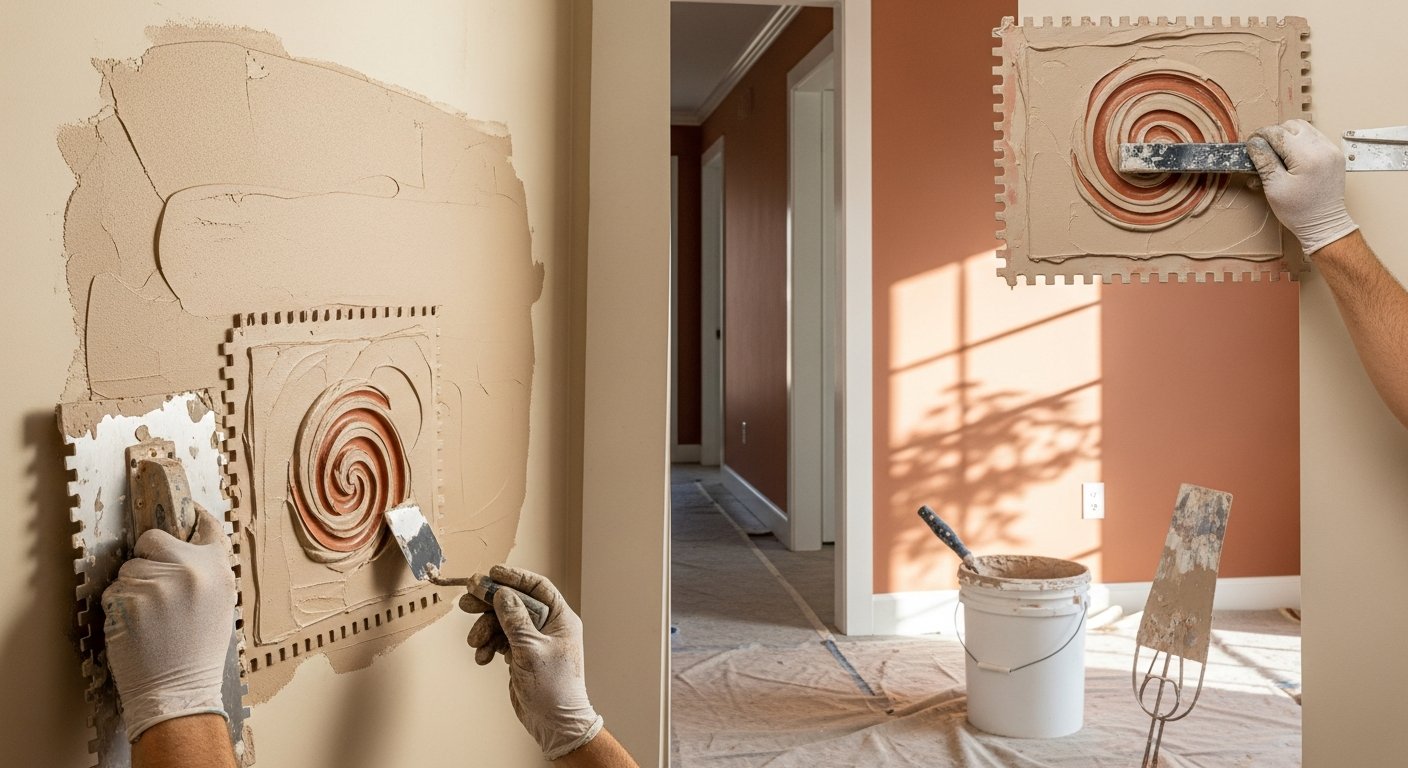
The easiest way to block sound is to make your walls heavier. Standard drywall is a decent barrier, but adding a second layer of 5/8-inch drywall can cut noise transmission by up to 50 percent. For even better results, use a sound-damping compound like Green Glue between the layers. This viscoelastic material converts sound energy into a small amount of heat, dramatically reducing vibration.
In Arkansas homes, moisture-resistant drywall is a smart choice for this application, especially in rooms near bathrooms or kitchens. The added mass also improves thermal insulation, helping your Batesville home stay comfortable year-round. If you are planning a remodel, consider replacing standard drywall with acoustic drywall, which is denser and formulated for sound control.
2. Seal Air Gaps and Cracks
Sound travels through the smallest openings. Electrical outlets, light switches, baseboards, and window frames are common leak points in Arkansas homes. A simple tube of acoustic caulk can seal these gaps effectively. Unlike standard caulk, acoustic sealant remains flexible and does not harden or crack over time.
For outlets and switches, install putty pads behind the cover plates. These dense foam pads block sound that would otherwise pass through the hollow wall cavity. Weatherstripping around doors and windows also makes a significant difference. In older Batesville homes, these gaps are often larger, so a thorough inspection is worth the effort. This is one of the most cost-effective soundproof living room techniques Arkansas homes can implement immediately.
3. Install Resilient Channels
For maximum sound isolation, resilient channels are a game-changer. These metal strips are attached to the wall studs, and drywall is then screwed into the channels instead of the studs. This creates a decoupled assembly where sound vibrations cannot easily transfer from one side of the wall to the other.
Resilient channels are especially effective in new construction or during major remodels. They add minimal thickness to the wall but provide a significant boost in Sound Transmission Class (STC) rating. In Arkansas, where open layouts are common, using resilient channels on shared walls between the living room and kitchen or bedrooms can restore much-needed privacy. Professional installation is critical, as improper fastening can short-circuit the decoupling effect. The Real Deal Batesville has extensive experience with this technique, ensuring your project meets code and performs as expected.
4. Upgrade Your Windows and Doors
Windows are often the weakest link in a soundproofing strategy. Single-pane windows, common in older Arkansas homes, offer almost no noise reduction. Replacing them with double-pane or triple-pane windows with different glass thicknesses can reduce outside noise by 50 percent or more. The air gap between panes acts as a buffer, while laminated glass adds mass and damping.
If replacement is not in your budget, consider interior storm windows or heavy acoustic curtains. These are less effective than new windows but still provide noticeable improvement. For doors, solid-core options are far better than hollow-core models. Install a door sweep and weatherstripping to seal the bottom and edges. In Batesville, where historic homes often feature original wood doors, adding a sweep is a simple upgrade that preserves character while improving acoustics.
5. Treat the Floor and Ceiling
Sound does not only travel through walls. Footsteps from upstairs or noise from a basement home theater can invade your living room. Adding carpet with a thick pad is one of the most effective floor treatments. The soft fibers absorb impact noise, and the pad adds a layer of decoupling. For hard surfaces like hardwood or tile, area rugs with dense rubber backings serve a similar purpose.
On the ceiling, acoustic tiles or panels can reduce sound transmission from above. If you have a second story, consider adding insulation between the floor joists. Blown-in cellulose or fiberglass batts both work well. In Arkansas homes with open trusses, this is a relatively straightforward project that a contractor can complete in a day.
6. Use Acoustic Panels and Bass Traps
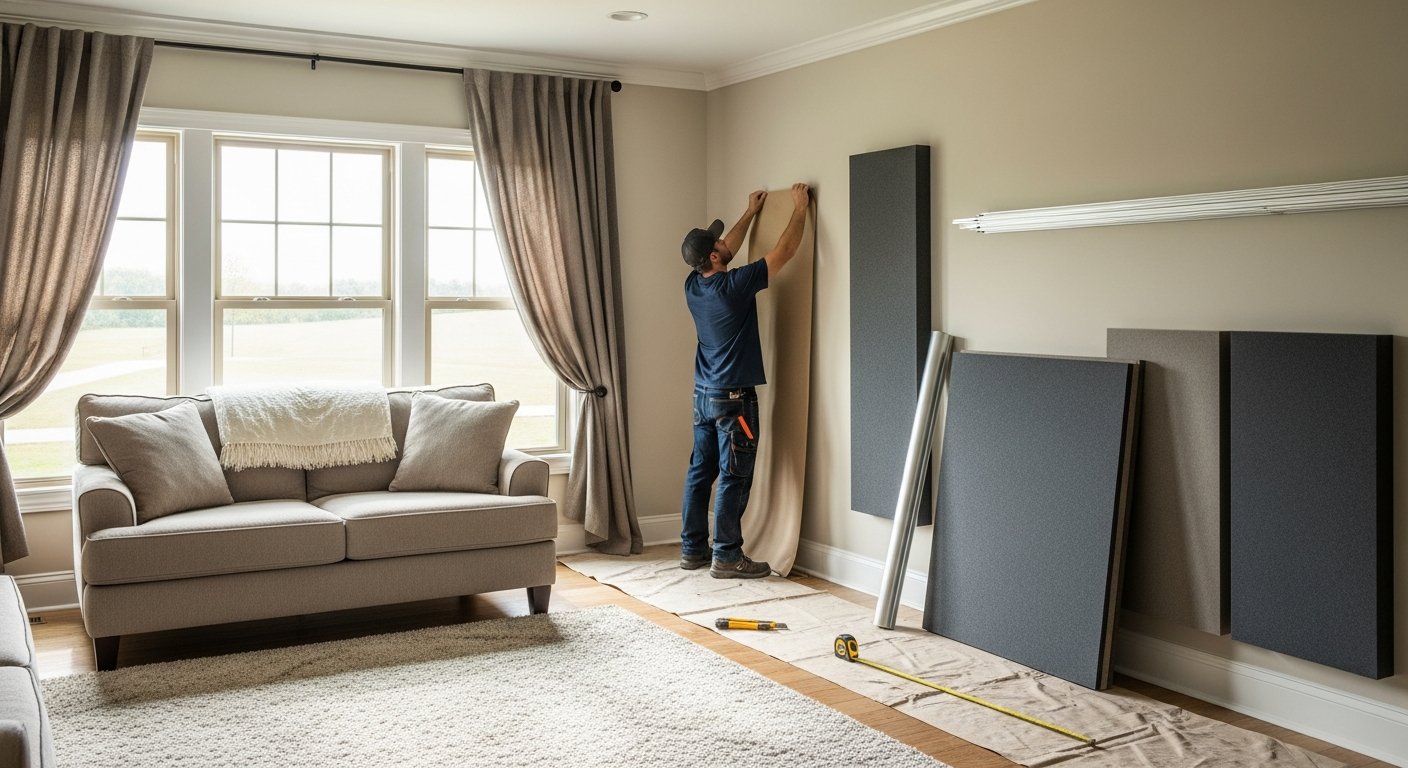
While adding mass and decoupling blocks sound from entering or leaving a room, acoustic panels reduce echo and reverberation inside the space. This is especially important for home theaters or music rooms. Panels are made from compressed fiberglass or foam and come in various colors and designs. They can be mounted on walls or ceilings to absorb mid and high-frequency sounds.
Bass traps target low-frequency noise, which is harder to control. These are typically placed in corners where bass waves accumulate. For Arkansas living rooms with vaulted ceilings, strategic placement of panels can dramatically improve sound clarity. Many homeowners appreciate that modern acoustic panels resemble artwork, blending function with decor. This approach complements other soundproof living room techniques Arkansas homes use for a complete solution.
- Mass-loaded vinyl (MLV): A dense, flexible sheet that can be sandwiched between drywall layers or hung as a curtain. It adds significant mass without taking up much space.
- Green Glue compound: A damping material applied between layers of drywall, plywood, or other rigid surfaces. It converts sound energy into heat.
- Acoustic caulk: A non-hardening sealant for gaps around outlets, baseboards, and window frames. It remains flexible to maintain its seal over time.
- Resilient channels: Metal furring strips that decouple drywall from studs, reducing vibration transfer. They require precise installation for maximum effectiveness.
- Soundproof drywall: Pre-manufactured panels that combine dense gypsum with viscoelastic polymers for high STC ratings. They are more expensive but save labor time.
Each of these materials serves a specific role in a comprehensive soundproofing plan. For most Arkansas homes, a combination of mass, damping, and sealing provides the best return on investment. Your choice depends on your budget, the level of noise you are fighting, and whether you are building new or retrofitting an existing room.
Common Soundproofing Mistakes to Avoid
Even well-intentioned projects can fall short if key details are overlooked. One frequent error is using only acoustic foam panels on walls, expecting them to block sound. In reality, foam absorbs echo but does little to stop sound from passing through the wall. Another mistake is failing to seal electrical boxes. A single uncovered outlet can negate the benefits of expensive wall treatments.
In Arkansas, humidity can cause certain materials to degrade. Standard caulk may crack, and some adhesives lose their grip in moist conditions. Always choose products rated for your climate. Additionally, DIY installation of resilient channels often leads to screws that contact the studs, creating a direct path for sound. This is why professional help from a company like The Real Deal Batesville is recommended for complex assemblies. They understand local building codes and environmental factors, ensuring your soundproofing performs as intended for years to come.
Integrating Soundproofing Into Your Remodel
If you are planning a larger living room renovation, soundproofing should be integrated from the start. This is the most cost-effective approach because walls are already open. Adding insulation, upgrading drywall, and installing resilient channels during a remodel costs far less than retrofitting later. It also allows you to address other concerns like energy efficiency and moisture control simultaneously.
For example, while adding insulation for sound, you can choose materials with high R-values to reduce heating and cooling costs. Spray foam insulation, while more expensive, provides excellent sound dampening and air sealing. In Batesville, where summers are hot and winters can be chilly, this dual benefit is especially valuable. Your contractor can help you select the right combination of products for your specific layout and budget.
One often-overlooked area is the ductwork. HVAC ducts can carry sound between rooms. Wrapping ducts with acoustic insulation or installing sound attenuators in the line can reduce this pathway. Similarly, ensuring that your system is properly sized and balanced prevents noisy airflow that can undermine your soundproofing efforts.
Budget-Friendly Soundproofing Options
Not every homeowner needs or can afford a full-scale acoustic renovation. Fortunately, several low-cost techniques can still make a meaningful difference. Start with the simplest fix: rearranging furniture. A large bookshelf filled with books against a shared wall adds mass and absorbs sound. Heavy curtains, thick area rugs, and upholstered furniture all help dampen noise.
For under $100, you can seal all gaps around outlets, baseboards, and door frames with acoustic caulk and weatherstripping. This alone can reduce sound leakage by 20 to 30 percent. Adding a door sweep and solid-core door is another affordable upgrade. If you are handy, building a simple frame filled with mineral wool insulation and covering it with fabric creates a movable acoustic panel. These panels can be placed where needed and stored when not in use.
For Arkansas homeowners on a tight budget, prioritize the noisiest wall first. Often, that is the wall shared with a busy street or a noisy room like the kitchen. Focusing your resources on one wall yields more noticeable results than spreading them thin across the entire room.
When to Call a Professional
While some soundproofing tasks are DIY-friendly, others require specialized knowledge and tools. If you are dealing with severe noise issues, such as traffic from a major road or sound from a home theater, professional assessment is wise. A contractor can measure the current STC rating of your walls and recommend targeted solutions.
Projects involving structural changes, like adding resilient channels or replacing windows, are best left to experts. Improper installation can void warranties, create safety hazards, or fail to deliver the promised sound reduction. In Batesville, The Real Deal Batesville has completed numerous soundproofing projects, from simple wall upgrades to full-room acoustic treatments. Their team understands the unique challenges of Arkansas homes and can provide a customized plan that meets your needs and budget.
Additionally, if your home was built before 1978, lead paint may be present. Disturbing walls without proper precautions can expose your family to health risks. A licensed contractor follows all safety protocols, including containment and disposal, giving you peace of mind.
Measuring Success: What to Expect
Realistic expectations are important. No soundproofing method can eliminate all noise, but a well-executed plan can reduce sound transmission by 50 to 80 percent. You will notice that conversations from the next room become muffled rather than clear. Outside traffic will sound distant rather than intrusive. These improvements translate directly to a more relaxing and enjoyable living space.
To measure progress, pay attention to specific sounds that bother you before and after the project. You can also use a smartphone decibel meter app to get rough numbers. For a professional assessment, some contractors offer before-and-after STC testing. This data can be valuable if you plan to sell your home, as it provides concrete proof of the upgrade.
Remember that soundproofing is an investment in your quality of life. In Arkansas, where we spend significant time indoors during hot summers and cold winters, a quiet living room is a true sanctuary. Whether you implement one technique or a full suite of solutions, every step brings you closer to the peace you deserve.
By applying these soundproof living room techniques Arkansas homes can achieve lasting comfort and value. Start with an audit of your space, identify the biggest noise sources, and choose the methods that fit your budget and skill level. For major work, trust a local expert like The Real Deal Batesville to ensure professional results. Your quieter, more peaceful living room is within reach.