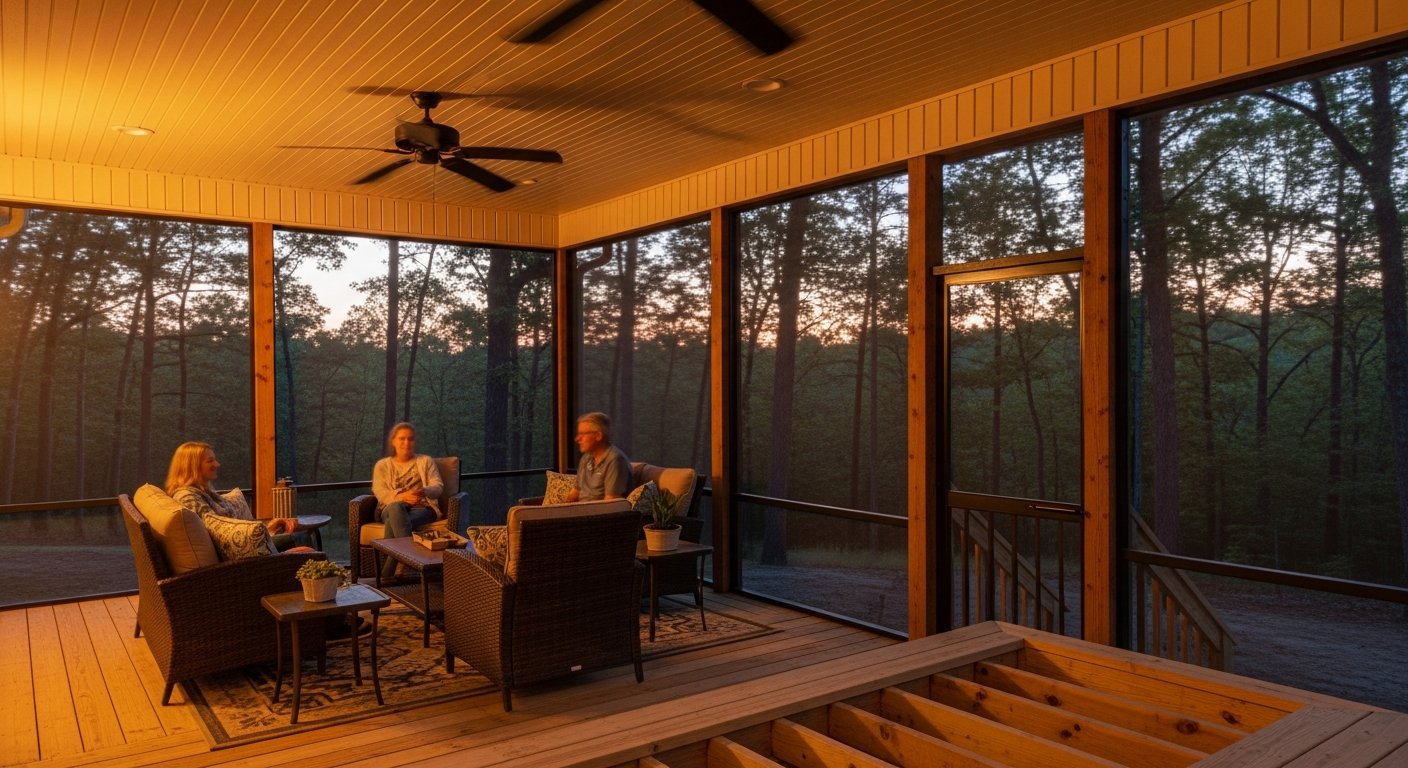
Imagine enjoying a cool Arkansas evening on your porch, free from mosquitoes and summer heat. A screened porch addition transforms how you experience your outdoor space, offering a comfortable retreat that extends your living area well beyond the walls of your home. In Batesville and across Arkansas, homeowners are discovering that a well-designed screened porch is one of the most practical and valuable home improvements they can make.
Why a Screened Porch Addition Works for Arkansas Homes
Arkansas weather presents unique challenges for outdoor living. High humidity, frequent rain, and an abundance of insects can make open decks and patios unusable for much of the year. A screened porch addition addresses these problems directly, creating a protected space where you can relax, dine, or entertain without battling the elements.
The climate in Arkansas demands materials that can withstand moisture, temperature swings, and intense sun. A professional screened porch addition uses treated lumber, corrosion-resistant fasteners, and durable screening that holds up to these conditions. When built correctly, this space becomes a true extension of your home, usable from early spring through late fall and even on mild winter days.
Designing Your Screened Porch for Arkansas Living
Before breaking ground, consider how you intend to use the space. A screened porch addition for Arkansas outdoor living should reflect your lifestyle while complementing your home’s architecture. Think about seating areas, dining space, ceiling fans, and lighting. Each element contributes to the overall comfort and functionality of the room.
Roof design is particularly important in Arkansas. A solid roof offers better protection from rain and sun than a screened top, making the space more versatile. Many homeowners choose to match the roof pitch and materials of their existing home, creating a seamless transition between indoor and outdoor spaces. Ceiling fans are essential for air circulation on still summer days, and they help keep insects away from the screened area.
Flooring and Foundation Choices
The foundation of your screened porch must handle Arkansas’s freeze-thaw cycles and heavy rainfall. Concrete slabs with proper reinforcement and drainage are a popular choice, providing a stable, level surface that resists moisture damage. Pressure-treated wood decks also work well, especially when built with composite decking that resists rot and insects. Consider these flooring options:
- Stained or stamped concrete for durability and design flexibility
- Composite decking for low maintenance and long life
- Tile or stone for a polished look that handles moisture
- Pressure-treated wood for a traditional, cost-effective choice
Each flooring material has specific installation requirements for Arkansas conditions. Concrete needs proper curing and sealing to prevent cracking. Wood requires adequate ventilation underneath to prevent rot. A local contractor familiar with regional building practices ensures your floor lasts for decades.
Permits and Regulations for Arkansas Screened Porches
Building a screened porch addition in Arkansas requires permits from your local jurisdiction. In Batesville, the city building department oversees residential construction to ensure safety and compliance with zoning codes. Permit requirements typically include site plans, foundation details, and structural calculations. Working with a licensed contractor simplifies this process, as they handle permit applications and inspections.
Setback requirements vary by property. Most lots require structures to be at least 10 feet from property lines, though this can differ based on your specific zoning. Your contractor should verify these measurements before construction begins. HOA restrictions may also apply, so review your neighborhood covenants before finalizing your design.
Materials That Perform in Arkansas Climate
Selecting the right materials is critical for a successful screened porch addition. Arkansas outdoor living spaces face intense UV exposure, high humidity, and occasional severe storms. Fiberglass screens are the standard choice, offering better durability than aluminum and resisting rust and corrosion. For even greater protection, some homeowners choose pet-resistant or solar screens that reduce glare and heat gain.
Structural materials must also be chosen carefully. Pressure-treated lumber is treated with preservatives that resist rot and insect damage, making it suitable for framing. For siding and trim, consider fiber cement or PVC products that won’t warp or peel in Arkansas’s humid conditions. These materials carry a higher upfront cost but save money on maintenance and replacement over time.
Integrating Your Screened Porch with Existing Outdoor Spaces
A screened porch should feel like a natural extension of your home, not an afterthought. Consider how it connects to your existing deck, patio, or backyard. In our guide on crafting timeless outdoor spaces with wood deck design, we explain how to create cohesive transitions between different outdoor zones.
Think about traffic flow between your kitchen, dining room, and the new porch. A door leading directly from the kitchen makes serving meals outdoors much easier. Large windows or French doors create a visual connection that makes the porch feel like part of the main living area. Landscaping around the porch should complement its style, using plants that thrive in partial shade and add privacy.
Cost Considerations for a Screened Porch Addition
The cost of a screened porch addition in Arkansas varies based on size, materials, and complexity. A basic 12×16 foot porch with a concrete foundation and standard screening typically ranges from $15,000 to $25,000. Higher-end designs with custom roofing, premium flooring, and built-in features can exceed $40,000. These figures include materials, labor, permits, and site preparation.
Several factors influence the final price. Site access and ground conditions affect foundation costs. Custom features like outdoor kitchens, fireplaces, or integrated lighting add expense but increase functionality. Roof complexity, such as matching a steep pitch or adding skylights, also impacts the budget. Get multiple quotes from licensed contractors to compare pricing and scope of work.
Return on Investment for Arkansas Homeowners
A screened porch addition typically recovers 60 to 75 percent of its cost when you sell your home. In Arkansas, where outdoor living is highly valued, this addition can make your property stand out in the market. Buyers appreciate a move-in ready outdoor space that requires no immediate maintenance or upgrades. The square footage gained also adds to your home’s appraised value, though a screened porch is usually considered a covered structure rather than finished living space.
Beyond resale value, the daily enjoyment of your screened porch provides intangible returns. Family meals outdoors, quiet mornings with coffee, and evening gatherings with friends become possible even during mosquito season. This quality-of-life improvement is often the primary motivation for homeowners considering this project.
Working with a Local Contractor in Batesville
Choosing the right contractor is essential for a successful screened porch addition. Look for a builder with experience in Arkansas outdoor living projects, specifically those familiar with local building codes and climate considerations. Ask for references from recent screened porch projects and visit completed work if possible. A reputable contractor provides a detailed contract outlining materials, timeline, payment schedule, and warranty terms.
In Batesville, the Real Deal of Batesville specializes in construction and remodeling projects that enhance homes throughout Independence County. Our team understands the unique challenges of building in Arkansas, from soil conditions to weather patterns. We work closely with homeowners to design and build screened porches that meet their needs and budget, handling every aspect from permits to final inspection.
A screened porch addition is an investment in your home and your lifestyle. With careful planning, quality materials, and professional construction, you create a space that serves your family for years to come. The combination of protection from the elements and connection to nature makes this one of the most rewarding home improvements you can undertake.