Planting a tree is one of the most rewarding investments you can make in your Arkansas property. A well-chosen native species can provide decades of shade, improve soil health, support local wildlife, and even increase your home’s value. But the difference between a tree that thrives and one that struggles often comes down to what you plant and how you plant it. This tree planting guide Arkansas native species focuses on the unique growing conditions of the Natural State, from the Ozark Mountains to the Mississippi Delta. Whether you are landscaping a new build or refreshing an existing yard, choosing the right tree and installing it correctly will save you time, money, and frustration.
Why Native Trees Matter for Arkansas Landscapes
Arkansas is home to a remarkable diversity of native trees, from the iconic flowering dogwood to the towering shortleaf pine. Native species have evolved alongside the state’s climate, soil types, and seasonal rainfall patterns. This means they typically require less watering, fewer fertilizers, and less pest control than non-native ornamentals. For homeowners in Batesville and surrounding areas, planting native trees also supports the local ecosystem by providing food and shelter for birds, butterflies, and pollinators. When you follow a tree planting guide Arkansas native species, you are choosing plants that are naturally resilient to our hot summers, humid springs, and occasional ice storms.
Native trees also help with stormwater management. Their deep root systems absorb runoff more effectively than shallow-rooted exotic species, reducing erosion and protecting your foundation. If you are planning a landscaping project alongside a deck build or concrete patio installation, thoughtful tree placement can enhance both the beauty and the structural integrity of your outdoor space. The Real Deal Batesville sees many properties where a well-placed native tree could have prevented future drainage or foundation issues.
Top Native Trees for Arkansas Yards
Large Shade Trees
If you have space for a canopy tree, consider the Northern Red Oak or the Tulip Poplar. These species grow relatively fast for hardwoods and provide excellent summer shade that can reduce your cooling costs. The Northern Red Oak displays brilliant fall color, while the Tulip Poplar produces unique tulip-shaped flowers in spring. Both are well-suited to the clay and loam soils common in Independence County.
Another excellent choice is the Swamp White Oak, which tolerates the periodic wet conditions found in many Arkansas yards. It offers dense shade and attractive peeling bark. For properties with full sun and good drainage, the Shortleaf Pine is the only pine native to much of Arkansas and provides year-round greenery and wind protection.
Small to Medium Ornamental Trees
For smaller yards or areas near patios and decks, the Flowering Dogwood is an Arkansas classic. It blooms in early spring with white or pink bracts and offers red berries that attract songbirds. The Redbud is another stunning option, producing magenta flowers along bare branches in March and April before the leaves emerge. Both species thrive in partial shade and well-drained soil.
The Serviceberry (also called Juneberry) is a multi-season standout. It flowers in spring, produces edible berries in early summer, and turns brilliant orange-red in autumn. It stays under 25 feet tall, making it ideal for planting near a deck or entryway. If you are working with a contractor on a deck building project, consider placing a Serviceberry where you can enjoy its seasonal changes from your outdoor seating area.
Understory and Evergreen Options
The Eastern Redcedar is a native evergreen that provides dense screening year-round. It grows well in poor soil and full sun, making it a low-maintenance choice for property borders. The American Holly offers glossy green leaves and red winter berries, adding color to the landscape when most trees are bare. Both species are drought-tolerant once established and require minimal supplemental watering.
How to Plant a Native Tree Step by Step
Proper planting technique is critical. Many trees die within the first three years not because of poor care, but because they were planted too deep or in a hole that was too narrow. Follow these steps from this tree planting guide Arkansas native species to give your tree the best start.
Start by selecting a healthy specimen from a local nursery. Look for trees grown in Arkansas or nearby regions, as they will be acclimated to our climate. Avoid trees with circling roots visible at the surface of the root ball or those that appear pot-bound.
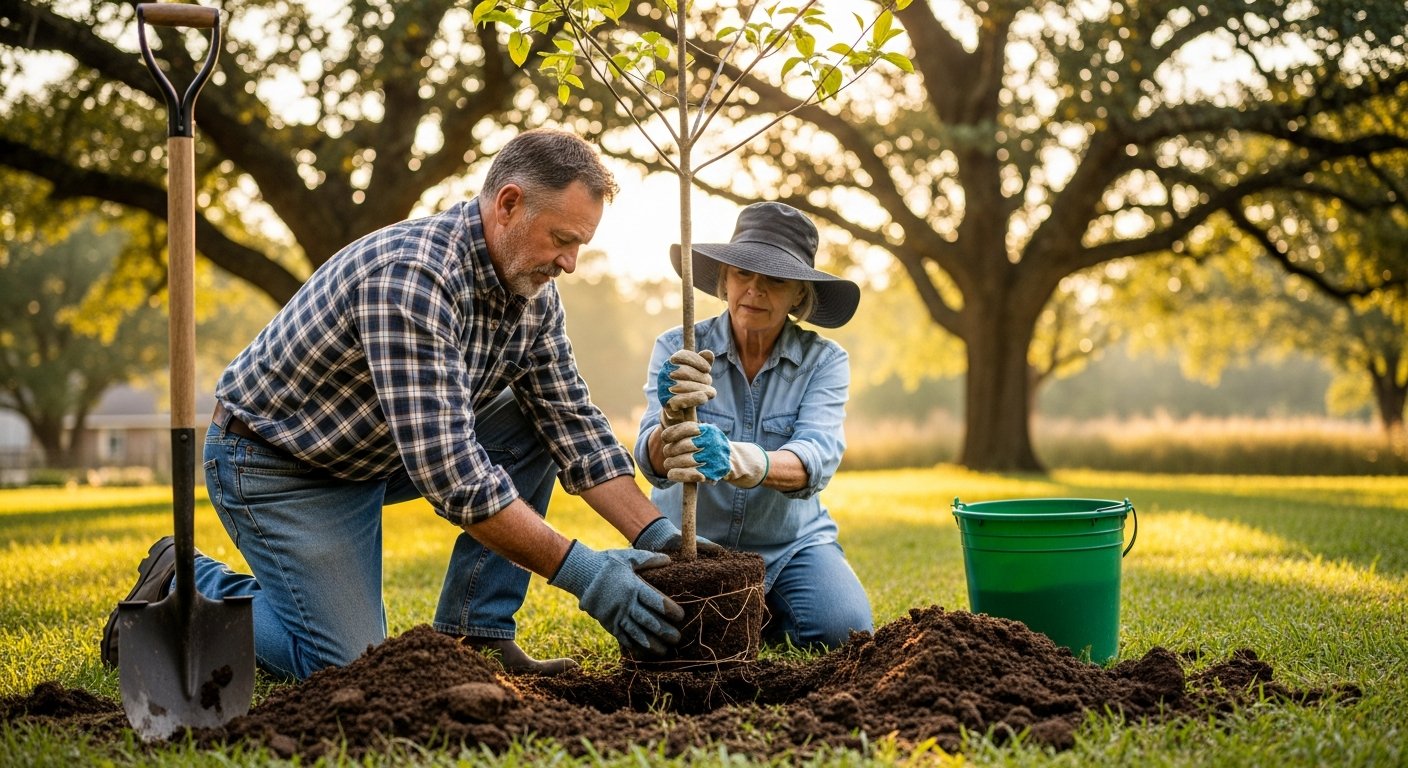
- Dig the right hole. The hole should be two to three times wider than the root ball but no deeper than the root ball itself. The top of the root ball should sit slightly above ground level to prevent settling and rot.
- Prepare the root ball. If the tree is container-grown, gently loosen any circling roots. For balled-and-burlapped trees, remove the wire basket and pull back the burlap from the top third of the root ball. Cut away any synthetic burlap completely.
- Backfill with native soil. Use the same soil you removed from the hole. Do not add compost, peat moss, or potting mix to the backfill, as this can create a barrier that discourages roots from spreading into the surrounding ground.
- Water thoroughly. Fill the hole with water after backfilling and allow it to drain. Then water again slowly to settle the soil. Create a shallow basin around the tree to hold water during the first growing season.
- Mulch, but do not volcano. Apply 2 to 4 inches of organic mulch (wood chips or shredded bark) in a circle around the tree, keeping the mulch at least 3 inches away from the trunk. Mulch piled against the trunk encourages rot and insect damage.
Staking is usually not necessary for native trees unless the site is very windy. If you do stake, use flexible ties and remove them after one growing season. Trees that are allowed to sway develop stronger trunks and root systems.
Timing and Aftercare for Arkansas Conditions
The best time to plant native trees in Arkansas is during the dormant season, from late fall through early spring. Planting between November and March gives the roots time to establish before the stress of summer heat. Container-grown trees can be planted successfully in spring and early summer if you commit to regular watering.
Watering is the most critical factor in the first two years. A newly planted tree needs about 1 to 2 inches of water per week during the growing season. Deep, infrequent watering is better than light daily sprinkling. A slow trickle from a garden hose placed at the base of the tree for 30 to 60 minutes once a week is ideal. During extended dry periods, increase watering frequency but avoid waterlogging the soil.
Fertilizing is generally not recommended at planting time. Native trees are adapted to local soils and do not need chemical stimulants. If you want to add nutrients, wait until the second growing season and use a slow-release organic fertilizer. Over-fertilizing can burn young roots and promote weak, rapid growth that is prone to storm damage.
Common Mistakes to Avoid When Planting Trees
Even experienced homeowners can make errors that shorten a tree’s lifespan. Here are the most common pitfalls identified by arborists and landscape professionals in Arkansas.
- Planting too deep. This is the number one cause of tree death. The root flare (where the trunk widens at the base) must be visible above the soil line. If the trunk looks like a telephone pole coming out of the ground, it is planted too deep.
- Over-mulching. A thick layer of mulch pressed against the trunk traps moisture and creates a perfect environment for fungi and boring insects. Keep mulch pulled back from the trunk.
- Choosing the wrong location. Do not plant large shade trees under power lines, too close to your house foundation, or above septic lines. A mature oak can have roots that extend 50 feet or more.
- Ignoring soil drainage. Arkansas clay soils can hold water for long periods. If your planting site stays soggy after rain, choose a species like Swamp White Oak or River Birch that tolerates wet feet.
Avoiding these mistakes will save you the cost of tree removal and replacement later. If you are planning a major landscape overhaul alongside a home remodeling project, consult with a local contractor who understands site conditions in Independence County.
Integrating Trees Into Your Overall Property Plan
Native trees should be part of a larger outdoor strategy that includes proper grading, drainage, and hardscaping. For example, if you are building a new deck or concrete patio, consider how tree roots will interact with the foundation. Trees planted too close to a concrete slab can eventually lift or crack it. Conversely, a well-placed shade tree can keep your deck cooler and extend the time you can comfortably use it during Arkansas summers.
The Real Deal Batesville works with homeowners to coordinate landscaping with construction projects. If you are adding a fence, building a deck, or pouring a new driveway, it is smart to plant trees before the hardscape is installed. This prevents the need to dig around existing structures and gives the tree a head start. A simple site plan drawn up with your contractor can help you position trees for maximum benefit without future conflicts.
Native trees also work well as natural privacy screens along property lines. Instead of building a tall fence on every side, you can create a living border with Eastern Redcedar or American Holly. This approach is often more cost-effective and provides habitat for birds. It also softens the look of your property compared to a solid fence line.
Finally, remember that trees are long-term investments. A tree planted today will provide shade, beauty, and ecological benefits for generations. By following this tree planting guide Arkansas native species, you are making a choice that enhances your home’s value and supports the natural heritage of the Natural State. Whether you are a first-time homeowner or a seasoned gardener, the principles are the same: select the right species for your site, plant it correctly, and give it consistent care during the establishment period.
If you need assistance with site preparation, grading, or integrating trees into a larger construction project, the team at The Real Deal Batesville can help. We specialize in deck building, concrete work, fencing, and home remodeling in Batesville and surrounding areas. Contact us to discuss how we can bring your outdoor vision to life while protecting your investment with smart planning and professional execution.