A shed is more than just extra storage; it is an investment in your property. Whether you plan to house lawn equipment, create a workshop, or store seasonal items, the longevity of that structure begins with what sits beneath it. In Batesville, Arkansas, where heavy spring rains, freeze-thaw cycles, and expansive clay soils are part of the landscape, a properly built shed foundation concrete pad is not optional. It is the difference between a level, dry building that lasts decades and a leaning, moisture-damaged structure that requires costly repairs. This guide walks you through the critical steps, materials, and local considerations for pouring a concrete pad that will support your shed for years to come.
Why a Concrete Pad Matters for Your Shed
Many homeowners consider gravel or skid foundations as cheaper alternatives, but these options often fail under the weight of a fully loaded shed. A concrete pad distributes the load evenly across the soil, preventing the uneven settling that causes doors to stick and walls to crack. In Batesville, the seasonal ground movement from wet winters and dry summers can shift a lightweight foundation by several inches. A reinforced concrete slab resists that movement, keeping your shed square and functional. Additionally, concrete acts as a barrier against moisture wicking up from the ground. This is especially important in Arkansas, where high humidity and rainfall can rot wooden floor joists within a few years if they sit directly on soil or gravel. A concrete pad provides a clean, dry surface that protects the shed’s contents and structure alike.
Understanding Local Soil and Climate Factors
Batesville sits in the Ozark foothills, where the soil composition varies widely from rocky, well-draining loam to heavy clay that expands when wet. Before you pour a shed foundation concrete pad in Batesville Arkansas, you must assess the soil on your specific site. A simple test involves digging a hole about 12 inches deep and filling it with water. If the water drains within a few hours, your soil has decent permeability. If it sits for a day or longer, you likely have clay soil that requires extra drainage measures. The freeze-thaw cycle in northern Arkansas can also heave a concrete slab if it is not poured below the frost line or properly reinforced. While a small shed pad does not typically require a deep foundation like a house, adding a gravel base and steel reinforcement helps the slab withstand the shifting forces that come with temperature swings. These local conditions make it essential to plan your pad with both drainage and reinforcement in mind.
Step-by-Step Process for a Durable Concrete Pad
Site Preparation and Excavation
Start by marking the dimensions of your shed with stakes and string. Add at least six inches to each side so the pad extends slightly beyond the walls. This overhang helps keep rainwater from splashing directly onto the shed’s siding. Excavate the area to a depth of about eight inches. This allows for a four-inch gravel base and a four-inch concrete slab. For larger sheds or those storing heavy equipment, increase the slab thickness to five or six inches. Remove all organic material, roots, and topsoil from the hole. The base of the excavation should be compacted thoroughly. A hand tamper or plate compactor works well for this step. Compaction prevents future settling that could crack the concrete.
Installing the Gravel Base
Spread a four-inch layer of crushed stone or gravel (typically 3/4-inch minus) across the excavated area. This gravel base serves two critical purposes: it provides drainage away from the slab, and it creates a stable platform that distributes weight evenly. Compact the gravel in two lifts, wetting it slightly to help the particles lock together. Use a plate compactor to achieve a firm, level surface. Check the grade with a long level or a string line. The finished gravel base should slope slightly (about 1/4 inch per foot) away from the center or toward one edge to encourage water runoff. In Batesville, where rain can be intense, this slight slope is a small detail that pays large dividends over time.
Forming and Reinforcing the Slab
Build a form using 2×4 or 2×6 lumber, depending on your desired slab thickness. Secure the boards with stakes driven into the ground outside the form. Make sure the top edges of the form are level and at the correct height. For reinforcement, place steel rebar or welded wire mesh inside the form. For a typical shed pad, use 1/2-inch rebar spaced 18 to 24 inches apart in a grid pattern. Support the rebar on small plastic chairs or stones so it sits in the middle of the slab thickness. This positioning gives the concrete tensile strength to resist cracking from ground movement. If you use wire mesh, pull it tight and overlap seams by at least six inches. Reinforcement is especially important in Batesville, where clay soils can shift dramatically between wet and dry seasons.
Pouring and Finishing the Concrete
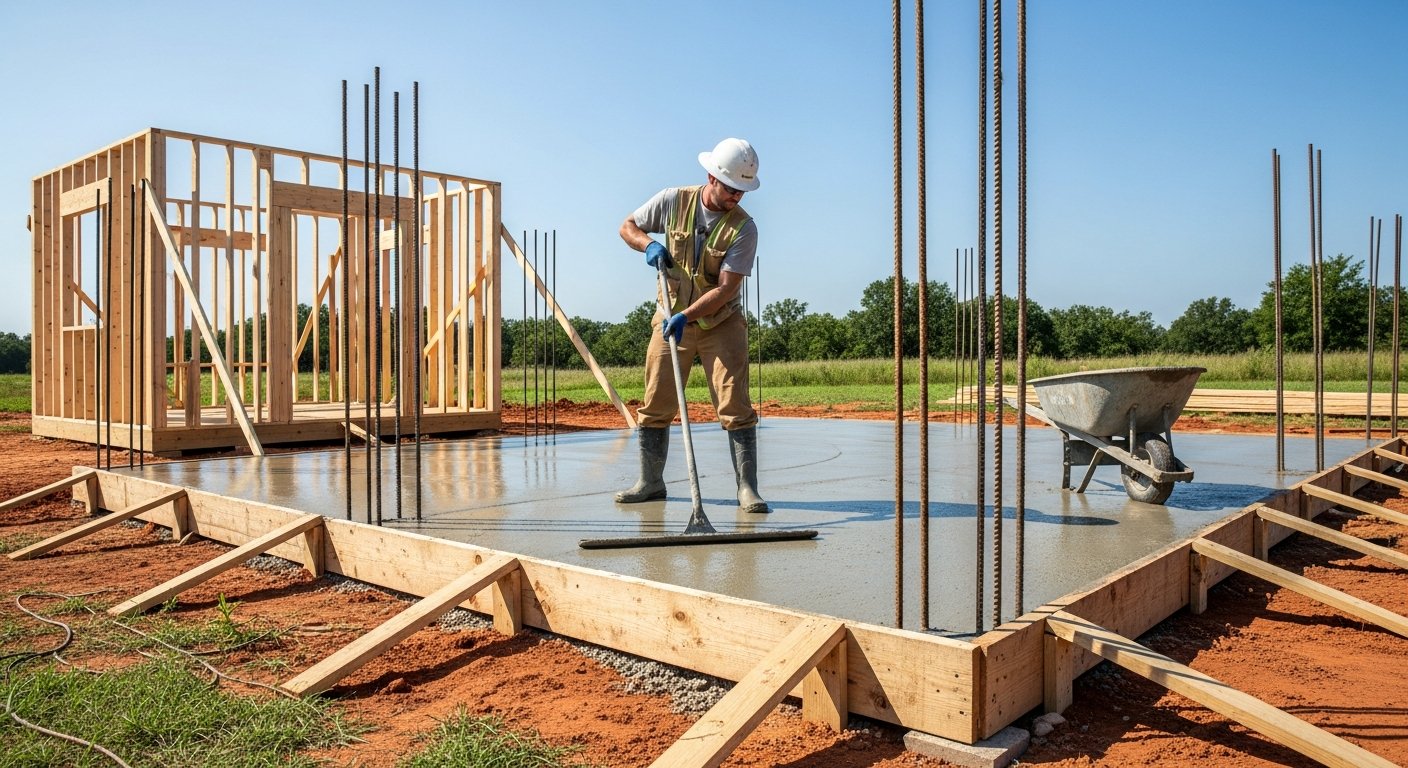
Order ready-mix concrete with a compressive strength of at least 3,500 psi. For a typical 10×12-foot shed pad four inches thick, you will need about 1.5 cubic yards of concrete. Have the truck discharge the concrete into the form, and use a shovel or rake to spread it evenly. A concrete vibrator helps remove air pockets, but for a small pad, you can achieve this by slicing a shovel through the concrete repeatedly. Screed the surface using a straight 2×4 board, pulling it across the forms in a sawing motion to level the concrete. After screeding, use a bull float to smooth the surface and bring the cream (fines) to the top. Once the water sheen disappears, use a magnesium float to finish the surface. If you want a non-slip texture, lightly drag a broom across the surface after floating. For a smooth finish, use a steel trowel instead. Let the concrete cure for at least seven days, keeping it moist by spraying it with water and covering it with plastic sheeting. Curing prevents surface cracks and ensures full strength development.
Drainage Considerations Specific to Batesville
Proper drainage is the single most important factor for a long-lasting shed foundation in this region. Arkansas receives an average of 50 inches of rain per year, and Batesville’s clay soils can hold water for days after a storm. If water pools around your shed pad, it can undermine the gravel base and cause the slab to settle unevenly. To prevent this, incorporate French drains or a gravel trench along the uphill side of the shed. Direct downspouts from the shed roof at least four feet away from the pad. You can also install a perforated drain pipe beneath the gravel base, running to a daylight outlet or a dry well. These measures are not overkill; they are standard practice for any shed foundation concrete pad in Batesville Arkansas that needs to withstand decades of weather.
Concrete Pad Sizing and Thickness Guidelines
The size and thickness of your pad depend on the shed’s dimensions and intended use. Use the following guidelines as a starting point for planning your project:
- Small sheds (6×8 to 8×10 feet): A four-inch thick slab with a gravel base works well for storing lawn mowers, garden tools, and bicycles. Reinforcement with wire mesh is adequate for these lighter loads.
- Medium sheds (10×12 to 12×16 feet): Increase the slab thickness to five inches and use rebar for reinforcement. These sheds can hold motorcycles, ATVs, or workshop equipment that adds significant weight.
- Large sheds (14×20 feet and larger): Pour a six-inch thick slab with a double layer of rebar. Consider adding a thickened edge or a small footing around the perimeter for extra stability. These structures often serve as home workshops or hobby studios with heavy machinery.
Always add a few extra inches to each dimension when excavating. The concrete pad should extend at least two inches beyond the shed walls on all sides. This overhang protects the shed’s base from splash-back during rainstorms and makes it easier to anchor the shed frame securely.
Professional vs. DIY: What Batesville Homeowners Should Know
Pouring a concrete pad is physically demanding work that requires precise timing and the right tools. While a skilled DIYer can handle a small slab, many factors can go wrong. Incorrect grading, inadequate compaction, or a bad concrete mix can lead to cracks and settling within the first year. Mixing concrete by hand for anything larger than a 6×8 pad is impractical; ordering ready-mix requires at least one cubic yard, which means you need to be prepared to place and finish the entire load quickly. Professional contractors bring experience with local soil conditions, access to commercial-grade compactors and finishing tools, and the ability to pour in any weather window. They also handle the permitting process if your shed exceeds local size limits. In Batesville, sheds over 200 square feet typically require a building permit, and the foundation must meet the city’s minimum standards. A professional crew ensures your foundation is code-compliant and built to last.
Anchoring the Shed to the Concrete Pad
Once the concrete has cured, you need to secure the shed to the pad. High winds from Arkansas thunderstorms and occasional tornadoes can lift an unanchored shed and toss it across the yard. Use expansion anchors or wedge anchors to bolt the shed’s floor frame to the concrete. Place anchors at each corner and every four feet along the walls. For sheds with wooden floors, drill through the floor joists and into the concrete, then insert the anchors and tighten them. Alternatively, you can embed J-bolts into the wet concrete at the correct locations before it sets. This method provides a stronger connection but requires precise layout ahead of time. Whichever method you choose, anchoring is a simple step that protects your investment and prevents serious property damage.
Maintenance and Long-Term Care
A concrete pad requires minimal maintenance, but a few simple steps keep it in top condition. Seal the concrete every two to three years with a penetrating sealer. This prevents water absorption, reduces dusting, and protects against oil stains from lawn equipment. Fill any small cracks with a concrete crack filler as soon as they appear; leaving them open allows water to seep under the slab and worsen the damage during freeze-thaw cycles. Keep the area around the pad clear of debris and ensure gutters and downspouts direct water away from the foundation. With proper care, your shed foundation concrete pad in Batesville Arkansas will remain level and solid for 30 years or more, giving you a reliable base for whatever you choose to store or build.
Building a shed is a rewarding project that adds functionality and value to your property. The foundation is the most critical part of that project, and a concrete pad is the gold standard for durability in the Batesville climate. By understanding the local soil, preparing the site correctly, using reinforcement, and managing drainage, you set yourself up for success. Whether you tackle the job yourself or hire a local contractor, the result is a shed that stays dry, level, and strong through every Arkansas season.