Creating a bathroom that works for every member of your household, regardless of age or mobility level, is one of the most rewarding home improvement projects you can undertake. For Arkansas homeowners, the need for accessible bathroom design is especially important as families often care for aging parents or plan for their own future comfort. The good news is that accessible bathroom design ideas all abilities Arkansas residents can use do not have to sacrifice style or break the bank. Whether you are remodeling a small guest bath or updating a master suite, the right design choices can make your bathroom safer, more comfortable, and more valuable for years to come.
In this guide, we will explore practical, stylish, and code-compliant approaches to creating a bathroom that welcomes everyone. From curbless showers to grab bars that look like designer fixtures, these ideas will help you plan a space that supports independence and dignity. As a trusted Batesville remodeling contractor, we have seen how thoughtful bathroom modifications can transform daily life for families across Independence County. Let us walk through the key features that make a bathroom truly accessible.
Understanding Universal Design in Arkansas Bathrooms
Universal design is the concept of creating spaces that are usable by people of all ages, sizes, and abilities without the need for adaptation or specialized design. In the context of accessible bathroom design ideas all abilities Arkansas homeowners can use, universal design means thinking ahead. It means installing features that work for a young parent bathing a toddler, a teenager recovering from a sports injury, and a grandparent using a walker.
The beauty of universal design is that it blends seamlessly with any aesthetic. You do not need a clinical, hospital-like bathroom to be accessible. With modern fixtures and thoughtful layout choices, an accessible bathroom can look like a spa retreat. For example, a curbless shower with a linear drain is both stylish and eliminates the tripping hazard of a traditional shower curb. Similarly, a comfort-height toilet is easier to use for everyone, not just those with mobility challenges.
When planning your remodel, focus on three core principles: safety, ease of use, and flexibility. Safety includes slip-resistant flooring and grab bars. Ease of use covers lever-style faucets and accessible storage. Flexibility means designing a space that can adapt as your needs change over time. By incorporating these principles, you create a bathroom that serves your family well today and tomorrow.
Key Design Features for an Accessible Bathroom
Barrier-Free Showers and Curbless Entries
The shower is often the most challenging area for someone with limited mobility. A traditional shower curb can be difficult or impossible to step over for a person using a wheelchair or walker. A barrier-free, curbless shower solves this problem by creating a seamless transition from the bathroom floor into the shower area. This design is a cornerstone of accessible bathroom design ideas all abilities Arkansas families should consider.
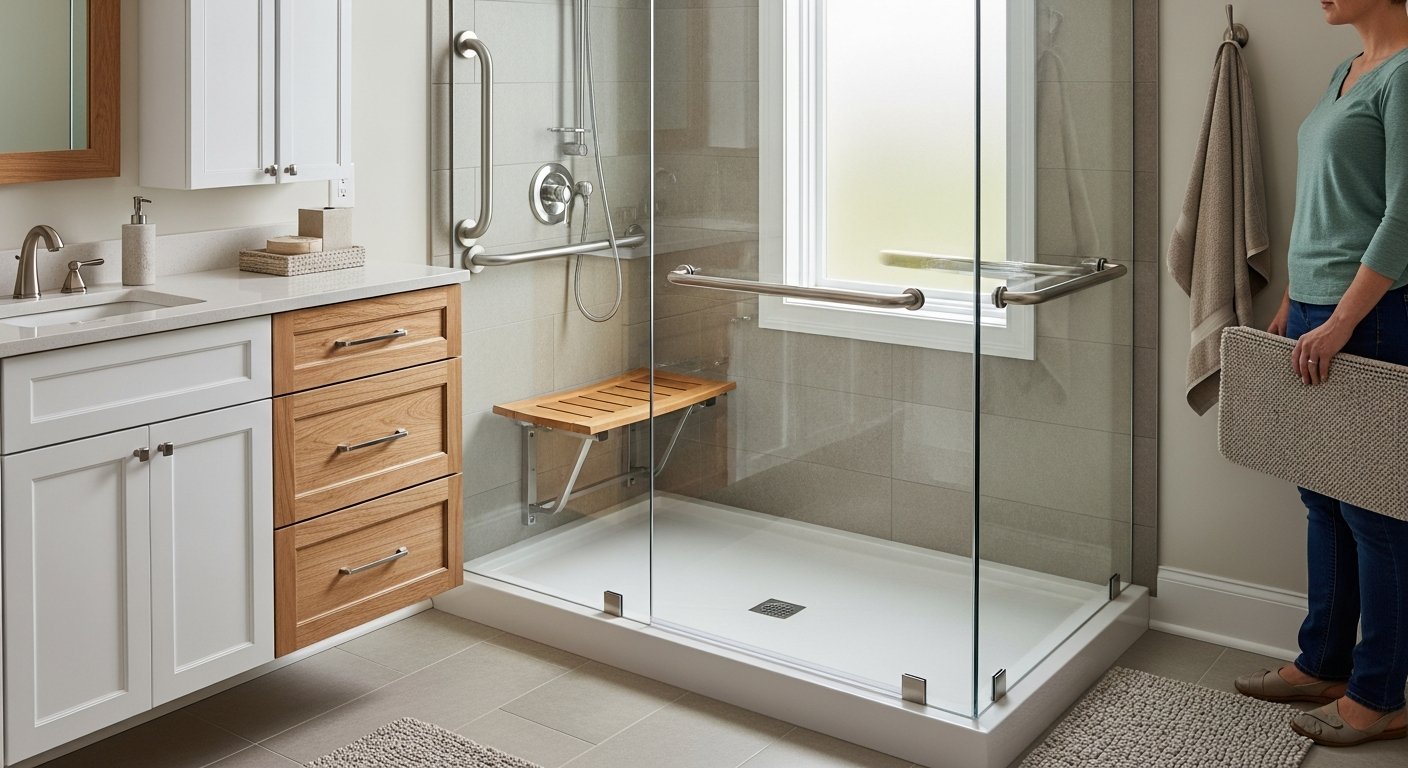
To make a curbless shower work, the bathroom floor must be sloped slightly toward a linear drain or a center drain. This requires careful planning during the construction phase to ensure proper drainage and waterproofing. The shower floor should be finished with slip-resistant tile or a textured surface to prevent falls. A fold-down shower seat, hand-held showerhead with a slide bar, and a niche for toiletries at reachable height complete the setup.
One common concern is water splashing outside the shower. A linear drain placed at the shower opening helps contain water, and a slight pitch in the floor directs water toward the drain. Some homeowners also add a frameless glass shower screen that provides a visual barrier without impeding access. The result is a shower that feels open, airy, and safe for everyone.
Grab Bars That Blend With Your Decor
Grab bars are essential for preventing falls, but they do not have to look institutional. Modern grab bars come in a variety of finishes, including brushed nickel, oil-rubbed bronze, and matte black, so they can match your faucets and towel bars. Some designs double as towel bars or toilet paper holders, providing support without adding clutter.
When installing grab bars, proper placement is critical. The most important locations are inside and outside the shower, next to the toilet, and near the bathtub if you have one. Grab bars must be anchored into wall studs or blocking to support up to 250 pounds of force. During a bathroom remodel, it is wise to install plywood blocking behind the wall surface in key areas, even if you do not install grab bars immediately. This future-proofs your bathroom and makes adding bars later much easier.
For Arkansas homeowners, the humid climate means choosing grab bars with corrosion-resistant finishes. Stainless steel or powder-coated aluminum are excellent choices. A professional contractor can help you select and install bars that meet both safety standards and your design preferences.
Comfort-Height Toilets and Accessible Vanities
A comfort-height toilet, also called an ADA-compliant toilet, has a seat height of 17 to 19 inches from the floor. This is higher than a standard toilet (approximately 15 inches) and makes sitting down and standing up much easier for people with knee or hip issues. Comfort-height toilets are now widely available in various styles, from classic two-piece designs to sleek one-piece models with elongated bowls.
For the vanity, consider a wall-mounted sink or a vanity with an open knee space underneath. A wall-mounted sink allows a wheelchair user to roll directly up to the sink without obstruction. If you prefer a vanity with storage, look for a model with a removable base cabinet or a raised toe kick that accommodates a wheelchair footrest.
Lever-style faucets are another simple upgrade that makes a big difference. They are easier to operate than twist knobs, especially for someone with arthritis or limited hand strength. Touchless faucets with motion sensors are even more convenient and help reduce the spread of germs.
Slip-Resistant Flooring for Safety
Bathroom floors get wet, and wet floors are dangerous. Slip-resistant flooring is a non-negotiable element of accessible bathroom design ideas all abilities Arkansas residents should prioritize. The best options include textured porcelain tile, luxury vinyl plank with a slip-resistant coating, and rubber flooring.
Porcelain tile with a matte or textured finish offers excellent traction and comes in countless styles that mimic natural stone or wood. Luxury vinyl is softer underfoot, warmer to the touch, and provides good slip resistance. It is also more forgiving if someone falls. Rubber flooring is often used in commercial settings but is gaining popularity in residential bathrooms for its durability and slip resistance.
Avoid highly polished marble or large-format tile with a glossy finish, as these become dangerously slippery when wet. If you prefer natural stone, choose a honed or tumbled finish for better grip. Also, use smaller tiles (12 inches by 12 inches or smaller) in wet areas, as more grout lines provide additional traction.
Lighting and Color for Visibility and Mood
Good lighting is essential for safety and comfort. A well-lit bathroom reduces the risk of falls and makes daily tasks easier. In an accessible bathroom, you want a combination of ambient lighting, task lighting, and accent lighting. Install bright, even ceiling lights and add task lighting at the vanity. Consider motion-sensor night lights that automatically illuminate the path to the toilet during the night.
Color contrast also plays a role in accessibility. A white toilet against a white floor can be hard to see for someone with low vision. Use contrasting colors for the toilet, vanity, and floor to make them more visible. For example, a dark toilet seat on a light toilet bowl, or a vanity in a different color than the wall, helps define the space. Similarly, grab bars should contrast with the wall color so they are easy to spot.
In our work across Batesville, we have found that soft, neutral colors with high-contrast accents create a calming yet functional bathroom. Warm beige walls with dark gray grab bars and a white toilet against a medium-toned floor provide excellent visibility without feeling cold or clinical.
Planning Your Accessible Bathroom Remodel in Arkansas
Before you start demolition, take time to plan your project thoroughly. Working with a local contractor who understands Arkansas building codes and climate considerations is invaluable. An experienced contractor can help you navigate permit requirements, recommend materials that hold up to Arkansas humidity, and ensure all accessibility features are installed correctly.
Here are some key steps to follow when planning your accessible bathroom remodel:
- Assess your current and future needs. Consider who uses the bathroom now and who might use it in the next 5 to 10 years. Think about mobility aids, storage needs, and daily routines.
- Set a realistic budget. Accessible features add some cost, but many upgrades like comfort-height toilets and lever faucets are surprisingly affordable. Prioritize safety features like grab bars and slip-resistant flooring.
- Measure your bathroom carefully. Accessible design requires adequate clear floor space for wheelchair turning. A minimum 60-inch diameter turning circle is recommended. If your bathroom is small, consult a designer about space-saving layouts.
- Choose materials that balance durability, safety, and style. Arkansas humidity demands moisture-resistant materials. Avoid porous surfaces that can harbor mold and mildew.
- Hire a licensed contractor with accessibility experience. The right contractor will ensure proper installation of grab bars, curbless shower systems, and waterproofing.
For more inspiration on creating a bathroom that serves your family well, see our guide on modern living room design trends Arkansas 2025 for ideas on how to extend accessible design principles throughout your home. The same focus on comfort, safety, and style applies to every room.
Overcoming Common Challenges in Arkansas Homes
Many Arkansas homes, especially older ones in Batesville and surrounding areas, have small bathrooms with limited square footage. Fitting all the necessary accessible features into a tight space can be challenging. However, with creative design solutions, even a small bathroom can be made accessible.
One strategy is to replace a standard bathtub with a walk-in shower. This frees up floor space and eliminates the need to step over a tub wall. A wall-mounted sink also opens up the room by creating visual and physical space. Pocket doors take up less room than swinging doors and make the bathroom easier to enter and exit. If you cannot widen a doorway to 32 inches (the minimum for wheelchair access), consider offset hinges that add a few inches of clearance.
Another challenge is the cost of modifying a bathroom. While some upgrades are expensive, there are budget-friendly options. A transfer bench for the tub, a raised toilet seat, and adhesive grab bars (for temporary use) are affordable solutions. For a permanent remodel, focus on the most impactful changes first: a curbless shower, slip-resistant flooring, and properly installed grab bars.
Arkansas homeowners may also qualify for financial assistance through programs like the Arkansas Department of Human Services or local nonprofit organizations that support aging in place. Check with your area agency on aging for resources that can help offset the cost of accessibility modifications.
Final Thoughts on Building a Bathroom for Everyone
An accessible bathroom is not just about accommodating a disability. It is about creating a space that is comfortable, safe, and convenient for everyone who uses it. Whether you are planning for your own future, caring for an aging parent, or simply want a more user-friendly home, the principles of universal design offer a path forward.
By incorporating accessible bathroom design ideas all abilities Arkansas homeowners can use, you invest in your home’s long-term value and your family’s well-being. From curbless showers to thoughtful lighting, every detail contributes to a bathroom that works for all ages and abilities. If you are ready to start your project, reach out to a local contractor who specializes in accessible remodels. With the right team and a clear plan, you can create a bathroom that is as beautiful as it is functional.