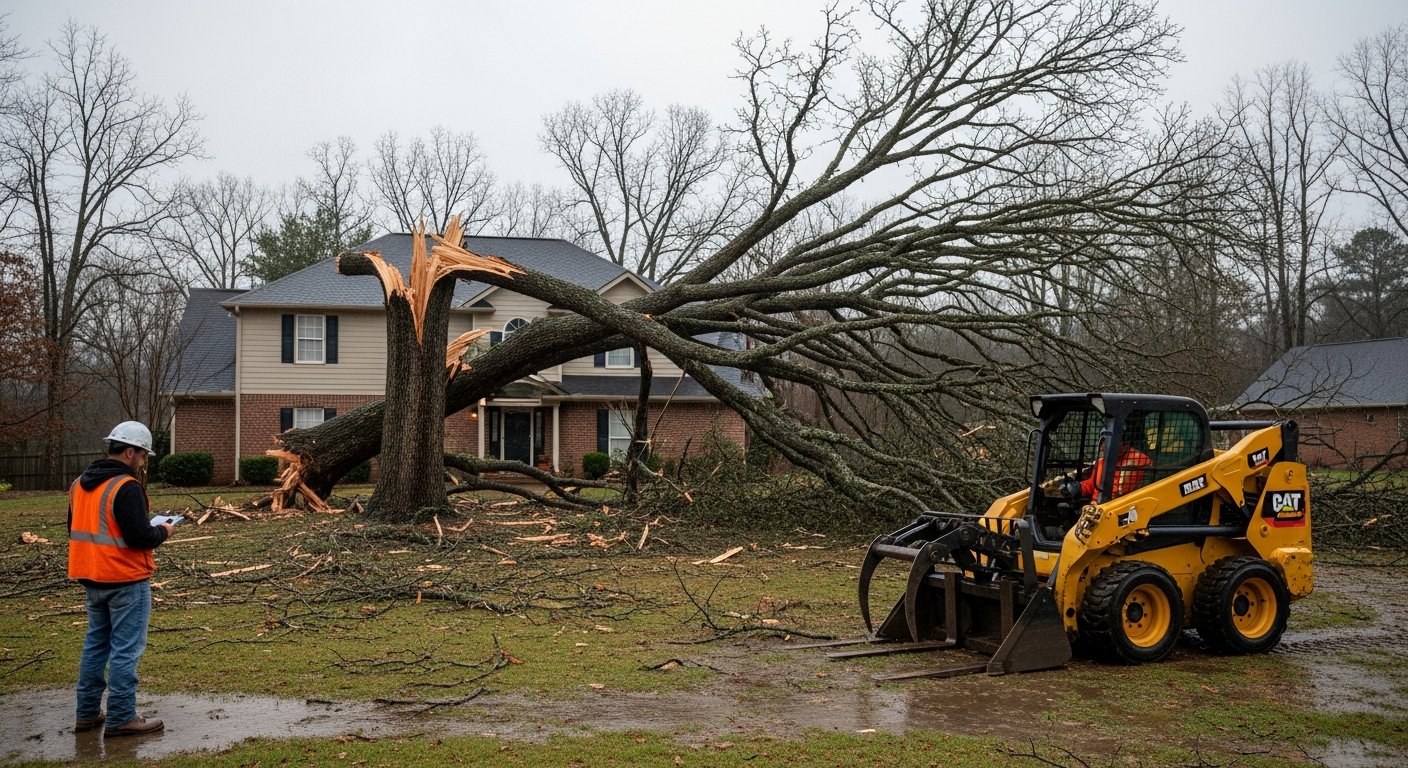
When severe weather rolls through Batesville, Arkansas, the aftermath can leave your property in a dangerous state. High winds, heavy rain, and lightning strikes from spring and summer storms often turn healthy trees into immediate hazards. A split trunk, a leaning oak, or a massive limb dangling over your home requires fast action. Emergency tree removal after storm damage in Batesville Arkansas is not just about aesthetics. It is about protecting your family, your roof, and your peace of mind. Waiting too long can turn a manageable situation into a costly structural repair.
Understanding what to do when a tree falls or when a limb threatens your home can save you time, money, and stress. This guide walks you through the immediate steps after storm damage, how to assess tree hazards safely, and why hiring a professional contractor who understands local conditions is critical. Whether you need urgent debris clearing or a full tree removal, knowing your options helps you make smart decisions under pressure.
Immediate Steps After Storm Damage Strikes
Minutes after a storm passes, your adrenaline is high and you want to assess the damage. However, safety must come first. Downed power lines, unstable trees, and wet ground create serious risks. The first step is to keep everyone, including pets, away from any tree that has fallen or is leaning. Do not attempt to move large branches or walk under a damaged canopy. The weight of a storm-damaged tree can shift without warning.
Once you have established a safe perimeter, document the damage with photos from a safe distance. These images will be valuable for insurance claims. Contact your insurance provider to report the incident and ask about coverage for emergency tree removal. Many policies cover removal if the tree has damaged a structure, such as your house, garage, or fence. If the tree fell in an open area without hitting anything, coverage may be limited. After documenting, call a local contractor who offers emergency tree removal storm damage Batesville Arkansas services. A quick response can prevent further damage from lingering debris.
Assessing Tree Hazards After a Storm
Not all storm damage is obvious. A tree that appears intact may have hidden structural issues. Cracks in the trunk, exposed roots, or soil heaving around the base are red flags. Branches that hang at odd angles or bark that has peeled away indicate internal stress. In Batesville, where clay soils and frequent rain can loosen root systems, even a partially damaged tree can fall days later.
Here are key signs that a tree needs immediate professional evaluation:
- Leaning trunk: A sudden lean of more than 15 degrees often means root failure.
- Large hanging limbs: Also called widow-makers, these can fall without warning.
- Trunk cracks or splits: Vertical cracks weaken the entire structure.
- Root damage: Exposed or severed roots reduce stability.
- Fungal growth: Mushrooms or conks near the base indicate internal rot.
If you spot any of these issues, keep a safe distance and call a professional. Attempting to remove a hazardous tree yourself with a chainsaw is extremely dangerous, especially if the tree is under tension from the storm. Trained crews have the equipment and experience to bring down damaged trees safely, piece by piece if necessary.
Why Professional Emergency Tree Removal Matters
Storm-damaged trees are unpredictable. A tree that looks stable can shift when cut, causing injury or property damage. Professional teams use rigging techniques, cranes, and specialized safety gear to control the fall of each section. They also carry liability insurance, which protects you if something goes wrong during the removal. In Batesville, many homeowners try to save money by handling removal themselves, only to end up with a damaged roof or a trip to the emergency room.
Another reason to hire a pro is the complexity of debris disposal. Storm cleanup often produces massive amounts of wood, branches, and leaves. A reputable contractor will haul everything away, grind the stump if needed, and leave your yard clean. This saves you days of labor and keeps your property from becoming a breeding ground for pests. For homeowners who need additional repairs after a tree strikes the house, a full-service remodeling contractor can coordinate both tree removal and structural fixes. In our guide on emergency tree service storm preparedness Arkansas, we explain how to build a plan before bad weather hits.
Working With Insurance After Tree Damage
Filing an insurance claim for storm damage can feel overwhelming, but it does not have to be. Start by reviewing your policy to understand your deductible and coverage limits. Most homeowners insurance covers tree removal if the tree damages a covered structure. Some policies also cover removal of a fallen tree that blocks a driveway or access path, even if no structure is hit.
Take these steps to streamline your claim:
- Photograph the damage from multiple angles before any cleanup begins.
- Keep receipts for any emergency work, including tree removal and temporary repairs.
- Do not make permanent repairs until the adjuster has inspected the property.
- Get a written estimate from your contractor to submit with the claim.
- Ask your contractor to meet the adjuster on-site to discuss the scope of work.
Many contractors in Batesville have experience working with insurance companies and can help you document the damage correctly. They can also provide a detailed scope of work that covers removal, stump grinding, and any necessary restoration to your landscape or structure. This collaboration often speeds up the claims process and ensures you receive fair compensation.
Preparing Your Property for Future Storms
After the emergency removal is complete, it is wise to think ahead. Batesville experiences severe weather year-round, from tornadoes in spring to ice storms in winter. Proactive tree care reduces the risk of future damage. Regular pruning removes dead or weak branches before they become projectiles. Thinning the canopy allows wind to pass through rather than pushing the tree over. Inspecting trees annually for disease or decay helps catch problems early.
Consider these preventive measures:
- Hire an arborist to assess large trees near your home every two years.
- Remove trees that are dead, dying, or have significant trunk damage.
- Trim branches that overhang the roof or touch the siding.
- Install lightning protection on valuable specimen trees.
- Keep trees properly watered during drought to maintain root strength.
Investing in preventive tree care now can save you thousands of dollars in emergency removal costs later. It also protects your home, your deck, and your fence from storm-related damage. A well-maintained landscape is safer and more resilient when the next storm hits.
Emergency tree removal after storm damage in Batesville Arkansas requires fast thinking and professional help. By knowing the signs of a hazardous tree, working with your insurance company, and hiring a trusted local contractor, you can restore your property safely and efficiently. Do not let a damaged tree become a bigger problem. Act quickly, stay safe, and rely on experts who understand the unique challenges of Arkansas weather.