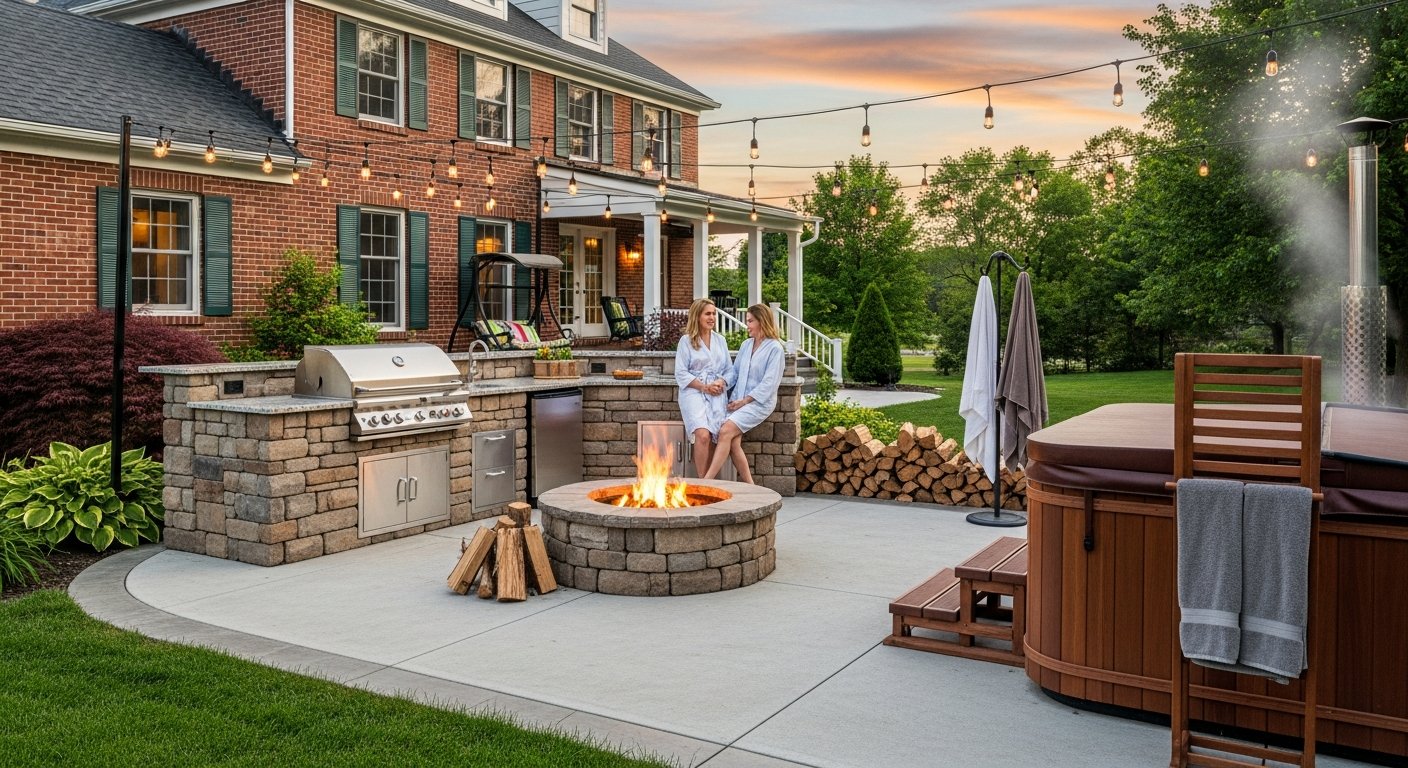
Imagine stepping into your backyard in Batesville, Arkansas, where the aroma of grilled food mingles with the gentle steam rising from a warm hot tub, all while a fire pit crackles nearby. This outdoor living dream is entirely achievable, but it requires a solid foundation. The key to this setup is a well-designed concrete pad that supports your outdoor kitchen, fire pit, and hot tub. Without a proper concrete pad, you risk uneven settling, drainage issues, and costly repairs. In this guide, we will walk you through everything you need to know about planning and building a concrete pad for your outdoor kitchen, fire pit, and hot tub in Batesville, ensuring your investment lasts for decades.
Why a Single Concrete Pad Makes Sense for Multi-Feature Outdoor Spaces
Many homeowners initially think about installing a separate pad for each feature. However, pouring one large, unified concrete pad for your outdoor kitchen, fire pit, and hot tub offers several advantages. First, it creates a cohesive look that ties your entire outdoor living area together. Second, it simplifies the construction process because you only need one pour and one curing period. Third, a single pad provides a consistent walking surface, eliminating trip hazards between different zones.
A unified concrete pad also simplifies drainage planning. You can slope the entire surface away from your house in one direction, preventing water from pooling around your hot tub or kitchen island. This is especially important in Batesville, where spring rains and freeze-thaw cycles can damage poorly drained concrete. By combining all features on one pad, you also reduce the amount of grass or gravel you need to maintain between zones, making your backyard easier to care for.
Designing Your Concrete Pad for an Outdoor Kitchen, Fire Pit, and Hot Tub
Before you call a contractor, you need a clear plan. The size and shape of your concrete pad depend on the specific equipment you choose. A standard hot tub requires a minimum pad size of 8 feet by 8 feet, but larger models may need 10 feet by 10 feet or more. Your outdoor kitchen might include a grill, counter space, a sink, and a mini-fridge, requiring a footprint of at least 10 feet by 12 feet. The fire pit zone can be smaller, but you should allow for seating around it. A good rule of thumb is to plan for a pad that is at least 20 feet by 20 feet to comfortably accommodate all three features with room for movement.
When designing the layout, consider traffic flow. You want easy access from your house to the outdoor kitchen, then to the fire pit seating area, and finally to the hot tub. Avoid placing the hot tub too close to the fire pit, as the heat from the fire can make the hot tub less comfortable during warm months. Also, think about wind direction. In Batesville, prevailing winds come from the south, so position your fire pit so smoke blows away from your outdoor kitchen and seating areas. For detailed specifications on the concrete pad itself, including thickness and reinforcement, you can refer to our Hot Tub Concrete Pad Requirements Arkansas Guide for a deeper dive into the technical standards that apply to your project.
Thickness and Reinforcement Requirements
Not all concrete pads are created equal. A standard patio pad might be 4 inches thick, but your multi-feature outdoor space will need more. For a hot tub, the concrete pad should be at least 4 to 6 inches thick, depending on the water capacity. A 6-inch thick pad with steel reinforcement is ideal for hot tubs holding over 300 gallons. Your outdoor kitchen, with heavy appliances and countertops, also benefits from a 6-inch thick pad. The fire pit area can be 4 inches thick, but since it is part of the same slab, the entire pad should be poured at 6 inches for uniformity and strength.
Reinforcement is critical in Batesville due to the expansive clay soils common in the region. Without reinforcement, concrete can crack as the ground shifts with moisture changes. Use a welded wire mesh or rebar grid to add tensile strength. Rebar spaced 18 inches apart in both directions provides excellent crack control. Your contractor should also include control joints cut into the concrete every 8 to 10 feet to direct any inevitable cracking along straight lines rather than random patterns.
Planning for Utilities: Gas, Water, and Electricity
An outdoor kitchen with a sink and a hot tub both require water and drainage. Your fire pit may need a gas line if you choose a gas-powered model instead of wood-burning. All of these utilities must be installed before the concrete is poured. This is where working with an experienced contractor in Batesville pays off. They can coordinate with plumbers and electricians to run the necessary lines beneath the pad.
Here are the key utility considerations for each feature:
- Outdoor Kitchen: Requires a dedicated water line for the sink, a drain line for wastewater, and a gas line for the grill. Electrical outlets are needed for appliances like a refrigerator or blender. All lines should be buried at least 12 inches deep to avoid freezing.
- Hot Tub: Needs a dedicated 220-volt electrical circuit, usually installed by a licensed electrician. Some hot tubs also require a water fill line. Plan for a drain line to empty the tub for maintenance.
- Fire Pit: If gas-powered, a gas line must be run from your home’s propane tank or natural gas supply. The line should have a shut-off valve accessible above ground.
Running utilities after the concrete is poured is expensive and disruptive. It is far better to over-plan and install capped conduits for future use. For example, you might run an extra empty conduit from your house to the pad, allowing you to add lighting or a sound system later without breaking the concrete.
Drainage and Grading for Batesville’s Climate
Batesville experiences significant rainfall, especially in spring and fall. Your concrete pad must be graded to shed water away from your home’s foundation. A slope of 1/4 inch per foot is standard for outdoor concrete surfaces. This means if your pad is 20 feet long, the far end should be 5 inches lower than the edge closest to your house. This gentle slope is hardly noticeable when walking but effectively directs water away.
In addition to grading, consider installing a perimeter drain or a French drain around the pad. This is especially important if your pad is located in a low area of your yard. A French drain collects groundwater and directs it away, preventing water from seeping under the concrete and causing heaving during freeze-thaw cycles. In Batesville, where temperatures can swing from below freezing to above freezing in a single day, proper drainage is not optional. It is essential for the longevity of your concrete pad.
Materials and Finishes for Your Concrete Pad
The concrete mix itself matters. For outdoor applications in Arkansas, use a mix with a compressive strength of at least 3,500 psi. A 4,000 psi mix is even better for high-traffic areas like a hot tub pad. The aggregate size should be no larger than 1 inch to ensure a smooth finish. Air-entrained concrete is highly recommended for freeze-thaw resistance. This type of concrete contains tiny air bubbles that allow water to expand without cracking the slab.
For the surface finish, you have several options. A broom finish provides good traction and is slip-resistant, which is important around a hot tub and outdoor kitchen where water and grease may be present. A smooth trowel finish looks elegant but can be slippery when wet. Stamped concrete can mimic stone or brick, adding a decorative touch that complements your outdoor kitchen design. However, stamped concrete requires a sealer to protect the color and pattern from UV fading and moisture penetration. Regardless of the finish you choose, always apply a high-quality concrete sealer every two to three years to protect your investment.
Permits and Local Regulations in Batesville
Before you break ground, check with the City of Batesville Building Department about permit requirements. A concrete pad larger than a certain size may require a building permit, especially if it includes electrical or plumbing work. The permit process ensures that your project meets local building codes, including setback requirements from property lines and easements. Your contractor should handle the permit application, but it is wise to confirm that they are licensed and insured to work in Independence County.
Additionally, if your property is in a subdivision with a homeowners association (HOA), review the HOA rules regarding hardscaping. Some HOAs restrict the amount of impervious surface on your lot or require specific finishes to match the neighborhood aesthetic. Failing to get approval can result in fines or a requirement to remove the concrete pad. A quick call to your HOA board can save you headaches later.
Hiring the Right Contractor in Batesville
Building a concrete pad for an outdoor kitchen, fire pit, and hot tub is not a DIY project for most homeowners. The combination of heavy loads, utility integration, and precise grading requires professional expertise. When hiring a contractor in Batesville, look for someone with specific experience in concrete pads for hot tubs and outdoor kitchens. Ask for references and photos of similar projects they have completed. A reputable contractor will also provide a detailed written estimate that includes materials, labor, permits, and cleanup.
Communication is critical. Discuss your vision for the outdoor space and ask the contractor how they plan to handle drainage, reinforcement, and curing. A good contractor will take the time to explain the process and answer your questions. They should also be willing to coordinate with other trades, such as electricians and plumbers, to ensure a seamless installation. Remember, the cheapest bid is not always the best. Quality concrete work that lasts for decades is worth the investment.
Maintaining Your Concrete Pad Over Time
Once your concrete pad is poured and cured, proper maintenance will extend its life. Clean the surface regularly with a broom or pressure washer to remove dirt, leaves, and debris. Avoid using deicing salts on the concrete during winter, as they can cause spalling. Instead, use sand or cat litter for traction on icy days. Reapply a concrete sealer every two to three years, especially in areas exposed to direct sunlight and rain.
Inspect the pad annually for cracks. Small hairline cracks are normal and cosmetic, but wider cracks may indicate a structural issue. If you notice uneven settling or water pooling, contact your contractor for an evaluation. Prompt repairs can prevent minor issues from becoming major problems. By caring for your concrete pad, you ensure that your outdoor kitchen, fire pit, and hot tub remain safe and enjoyable for years to come.
Creating a backyard oasis with an outdoor kitchen, fire pit, and hot tub is one of the best investments you can make in your Batesville home. It expands your living space, increases property value, and provides a gathering place for family and friends. The concrete pad is the unsung hero of this setup, providing a stable, durable foundation for everything else. By planning carefully, hiring the right professionals, and maintaining the concrete properly, you can enjoy your outdoor paradise without worry. Start planning today, and soon you will be hosting cookouts, soaking under the stars, and warming by the fire in your own backyard.