When the sun sets over the White River and the Arkansas evening settles in, your deck should not disappear into the darkness. A well-lit deck extends your living space well past dusk, creating a warm, inviting atmosphere while keeping every step secure. For homeowners in Batesville, where outdoor living is a cherished part of life, the right lighting transforms a simple wooden platform into a true outdoor room. Whether you are hosting a family gathering or enjoying a quiet evening, deck lighting ideas that balance ambiance safety Batesville outdoor living demand careful planning and quality installation.
Many homeowners focus entirely on the structure and materials of their deck, only to realize later that poor lighting limits how much they actually use the space. The truth is that lighting is one of the most impactful elements you can add to your deck. It defines the mood, highlights architectural features, and most importantly, prevents accidents on steps, edges, and changes in elevation. With the right approach, you can create a deck that feels both luxurious and completely safe after dark.
Understanding the Two Goals of Deck Lighting
Every successful deck lighting plan must serve two distinct purposes: creating a pleasant atmosphere and ensuring safe navigation. These goals are not in conflict; they work together when planned properly. Ambiance comes from soft, layered light that washes over surfaces and highlights textures. Safety comes from clear illumination of paths, stairs, and railings so that no one trips or missteps.
To achieve both, you need to think in layers. Ambient lighting provides the base level of illumination. Task lighting focuses on specific areas where you cook, eat, or read. Accent lighting draws attention to features like planters, columns, or the view beyond your yard. And safety lighting specifically targets stairs, railings, and the perimeter of the deck. When these layers are combined, the result is a deck that feels cohesive and intentional rather than a collection of random fixtures.
Here are the key principles to keep in mind as you plan your deck lighting:
- Prioritize stair and step lighting first. Falls on stairs are the most common deck injury. Install lights on every riser or along the stringer to clearly mark each step.
- Use low-voltage LED fixtures for efficiency and longevity. LEDs use far less energy than halogen bulbs and last years longer, which matters in the humid Arkansas climate.
- Position lights to avoid glare. Fixtures should illuminate the surface you are walking on, not shine directly into your eyes. Shielded lights and downward-facing fixtures are best.
- Create zones for different activities. The dining area needs brighter light than the lounge seating. Separate switches or dimmers let you adjust the mood.
By following these principles, you can avoid the common pitfalls of harsh overhead lights or scattered fixtures that create dark spots. A thoughtful plan ensures that every corner of your deck is both beautiful and functional after sunset.
Top Deck Lighting Ideas for Batesville Homes
Post Cap Lights: Simple and Effective
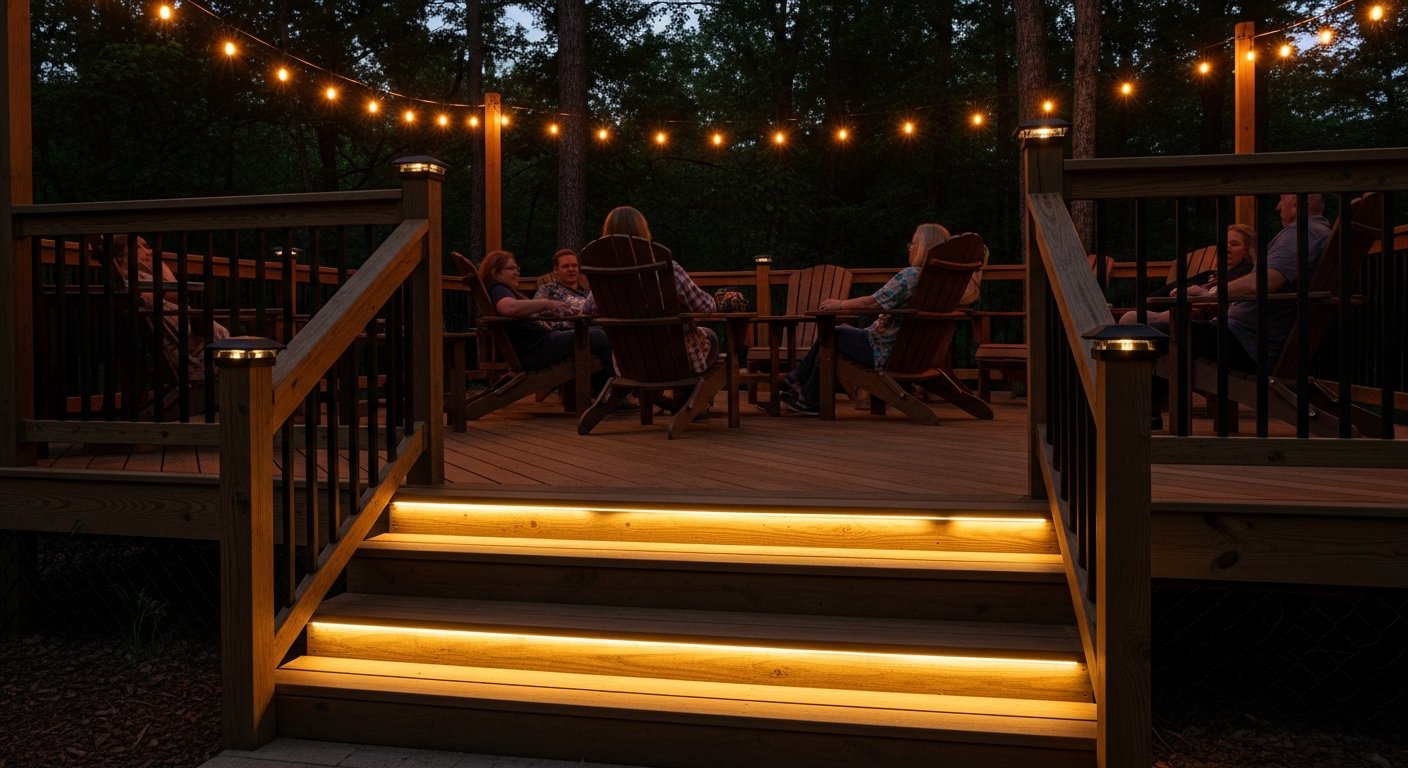
Post cap lights are one of the most popular deck lighting ideas for good reason. They sit on top of each railing post, casting a soft glow downward and outward. This creates a gentle perimeter of light that defines the edge of your deck without blinding anyone. In Batesville, where evenings often include conversations on the deck, post cap lights provide enough illumination to see faces and move around safely while keeping the atmosphere relaxed.
These fixtures come in a wide range of styles, from classic frosted glass to modern metal designs with clean lines. Many are solar-powered, which eliminates the need for wiring and reduces installation complexity. However, for consistent performance through Arkansas cloudy days and shaded areas, low-voltage wired post caps are more reliable. They also allow for dimming and integration with smart home systems if you want to control your deck lights from your phone.
Under-Rail Lighting: Clean and Modern
For a sleek, contemporary look, under-rail lighting is hard to beat. These linear LED strips mount to the underside of the handrail or the top of the bottom rail, casting light downward onto the deck floor. The effect is a clean, architectural glow that highlights the texture of the decking material and eliminates dark shadows along the edges.
Under-rail lighting works especially well for decks with glass or cable railing systems, where you want to maintain an unobstructed view. The light source is hidden, so the deck appears to glow from within. This approach also provides excellent safety lighting because it illuminates the walking surface without creating glare. For Batesville homes with multi-level decks, under-rail lights on each level help guests distinguish between different platforms and avoid missteps.
Stair Riser Lights: Safety Where It Matters Most
Stairs are the most dangerous part of any deck, and they deserve dedicated lighting. Stair riser lights install directly into the vertical face of each step, casting light onto the tread below. This makes every step clearly visible, even in complete darkness. The lights can be round puck fixtures or linear strips, depending on the look you prefer.
When installing stair lights, aim for even spacing and consistent brightness. Each step should receive the same amount of illumination so that your eyes do not have to adjust between bright and dark areas. Warm white LEDs (2700K to 3000K) are ideal for stairs because they feel natural and inviting, while still providing enough contrast to see the edge of each step clearly.
In-Deck Lights: Subtle and Integrated
In-deck lights are small fixtures that mount flush with the surface of the deck boards. They can be placed along pathways, at the edges of landings, or around features like hot tubs and planters. Because they sit level with the deck surface, they are completely flush and present no tripping hazard. This makes them an excellent choice for areas where you want light without any physical obstruction.
These fixtures work best when used sparingly as accent points rather than as primary lighting. A few well-placed in-deck lights along a long walkway or at the top and bottom of steps can guide the eye and improve safety without overwhelming the space. They also pair well with post cap and under-rail lights to create a layered effect.
Choosing the Right Fixtures for the Arkansas Climate
Batesville experiences hot, humid summers and occasional freeze-thaw cycles in winter. Not all lighting fixtures are built to handle these conditions. When selecting deck lights, look for fixtures rated for wet or damp locations. Wet-rated fixtures can withstand direct rain and moisture, while damp-rated fixtures are suitable for covered or partially protected areas. For outdoor use, always choose wet-rated fixtures to be safe.
Materials matter as well. Stainless steel, marine-grade aluminum, and durable polymers resist corrosion and UV damage better than cheaper metals or plastics. Brass fixtures age beautifully and develop a natural patina over time, but they come at a higher cost. For most homeowners, powder-coated aluminum offers the best balance of durability, appearance, and value.
LED bulbs are the clear choice for outdoor deck lighting. They last tens of thousands of hours, handle temperature swings well, and produce very little heat. This means you can install them in enclosed spaces under railings or inside post caps without worrying about overheating. Look for LEDs with a color rendering index (CRI) of 90 or above to ensure that colors appear natural and true under the light.
Installation Tips for Safety and Longevity
Proper installation is just as important as fixture selection. Even the best lights will fail prematurely if they are not installed correctly. Here are a few critical considerations for Batesville homeowners:
First, use a dedicated outdoor-rated transformer for low-voltage systems. The transformer converts standard household voltage (120V) to safe low voltage (12V or 24V) and should be installed in a dry, protected location like a garage or under a deck overhang. Choose a transformer with enough capacity to handle all your fixtures plus 20% extra for future additions.
Second, bury all wiring at least 6 inches deep in conduit to protect it from lawn equipment, pests, and weather. In areas where the ground freezes, bury the conduit below the frost line or use flexible PVC conduit that can handle slight movement. Always use waterproof wire connectors and seal every junction with silicone to prevent moisture intrusion.
Third, test the entire system before finalizing the installation. Turn on all lights at night and walk the deck to check for dark spots, glare, or misaligned fixtures. Adjust as needed before burying wires or sealing fixtures. This step saves time and frustration later.
If you are planning a deck renovation or new construction, consider integrating lighting into the design from the beginning. This allows you to run wiring inside the framing and hide all components cleanly. Retrofitting lights onto an existing deck is possible, but it often requires more visible wiring and compromises the finished look.
For more inspiration on creating outdoor spaces that work with your home’s architecture, explore our guide on multi-level deck design for sloped yards in Batesville, which covers how to handle challenging terrain while maximizing both function and beauty.
Creating Zones for Different Activities
A deck should serve multiple purposes: dining, relaxing, cooking, and sometimes even working or exercising. Each activity benefits from a different lighting approach. By dividing your deck into zones and lighting each one appropriately, you can make the space feel larger and more versatile.
For the dining area, a pendant light or chandelier above the table provides focused illumination for meals. Choose a fixture with a dimmer so you can adjust from bright for serving to soft for conversation after dinner. For the cooking zone, task lighting under a pergola or over a grill area ensures you can see what you are doing without casting shadows. Under-counter lights on an outdoor kitchen counter work well here.
The lounge area calls for the lowest light levels. Post cap lights, string lights, or a small fire pit with integrated LED ring lights create a cozy, intimate atmosphere. If you have a hot tub or seating nook, consider a dimmable wall sconce or a lantern-style fixture on a side table. The goal is to create pockets of light that invite people to gather without washing the entire deck in harsh brightness.
For pathways leading from the house to the deck and from the deck to the yard, use path lights or low-profile step lights. These guide movement and connect the outdoor spaces visually. When the lighting zones are well-defined, guests naturally gravitate to the areas that suit their mood, and the deck feels like a true extension of your home.
Smart Controls and Automation
Modern deck lighting can be more than just on and off. Smart controls let you program your lights to turn on at sunset, dim automatically at a certain hour, or respond to motion sensors. This adds convenience, improves security, and extends the life of your fixtures by reducing unnecessary runtime.
Motion sensors are particularly useful for safety. Place them near stairs or at the entrance to the deck so that lights activate as soon as someone approaches. This eliminates the need to fumble for a switch in the dark and ensures that steps are always illuminated when someone is walking on them. Some motion sensors can be set to stay on for a few minutes after detecting movement, then turn off automatically.
Smart dimmers and timers give you full control over the ambiance. You can set the deck lights to brighten gradually as the sun goes down, then dim to a soft glow after 10 PM. If you are away from home, you can even program the lights to simulate occupancy as a security measure. Many smart lighting systems integrate with voice assistants like Alexa or Google Assistant, so you can adjust your deck lights without leaving your seat.
When planning your smart lighting system, work with a professional who understands both low-voltage lighting and home automation. The integration must be reliable and weather-resistant to handle outdoor conditions. A well-designed system pays for itself in energy savings, bulb longevity, and the sheer convenience of never having to think about your deck lights again.
Your deck is one of the most valuable spaces in your Batesville home. With the right lighting plan, it becomes a place where you can relax, entertain, and enjoy the beauty of Arkansas evenings in complete comfort and safety. By combining thoughtful fixture selection, proper installation, and smart controls, you create an outdoor environment that works as hard as you do.