
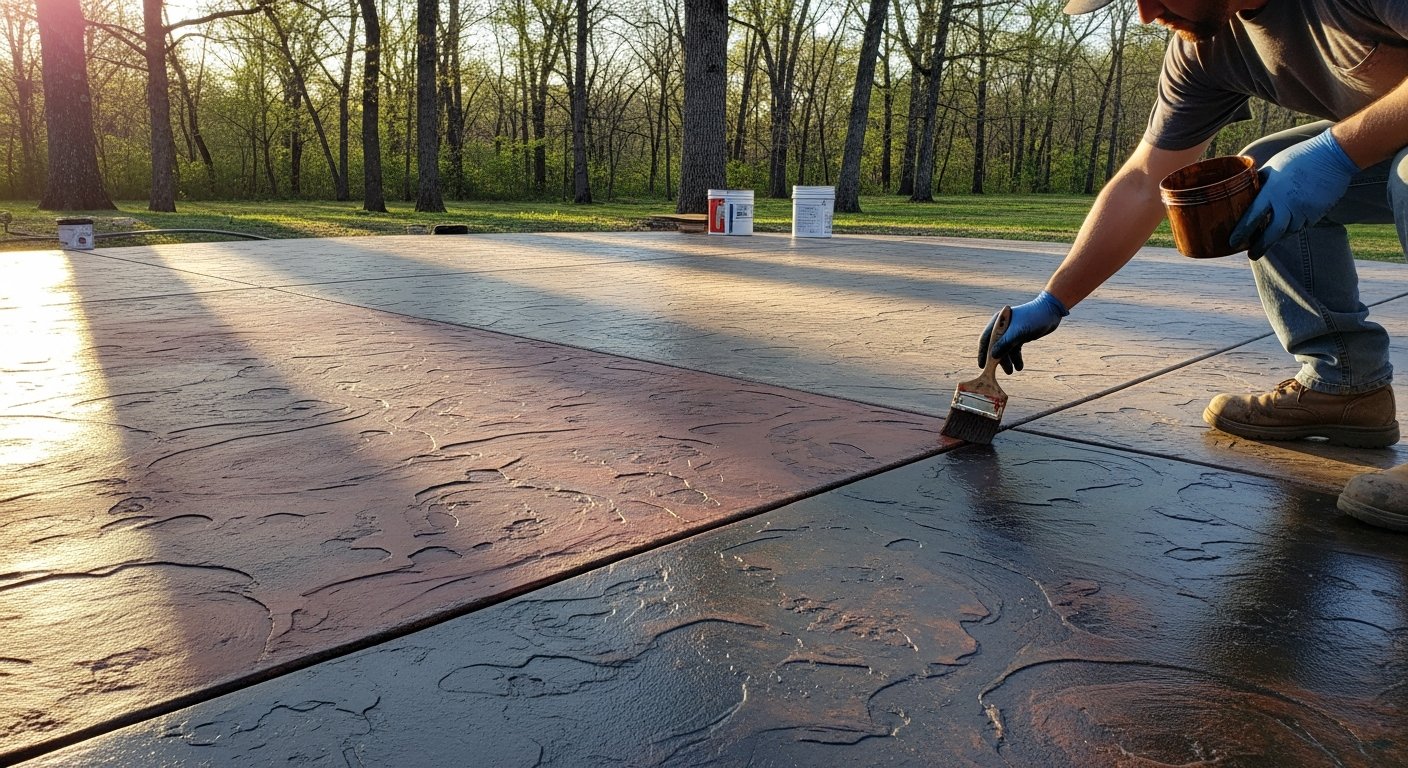
Imagine stepping into your backyard and seeing a patio that looks like rich, natural stone without the high cost of quarrying or shipping heavy slabs across the country. That is the promise of decorative concrete acid stain for an Arkansas patio. This technique transforms ordinary gray concrete into a one-of-a-kind surface with deep, translucent colors that mimic marble, slate, or even aged leather. For homeowners in Batesville and the surrounding areas, acid staining offers a durable, low-maintenance way to elevate outdoor living spaces while standing up to the region’s humid summers and occasional freeze-thaw cycles. Unlike paint or topical coatings that can peel or fade, acid stain chemically reacts with the concrete to create a permanent bond that will not chip or wear away. When you work with a professional concrete contractor, you get a patio that is both beautiful and built to last for decades.
How Decorative Concrete Acid Stain Works
Acid staining is a chemical process, not a surface application. The stain contains metallic salts and a mild acid solution that opens the pores of the concrete and allows the metallic particles to penetrate and react with the lime in the cement. This reaction creates rich, variegated colors that are unique to each slab. You cannot predict exactly how the stain will react because every concrete mix, age, and surface condition is different. That unpredictability is part of the appeal. No two patios will ever look exactly alike.
The process begins with a clean, properly prepared concrete surface. The concrete must be cured for at least 28 days to ensure the chemical reaction works correctly. After cleaning, the stain is applied in a controlled manner using sprayers, brushes, or sponges. The applicator can create patterns, swirls, or layered effects by applying multiple coats or using resist techniques. After the stain reacts for several hours or overnight, the surface is neutralized with a baking soda solution, rinsed thoroughly, and allowed to dry. A clear sealer is then applied to protect the color and add a subtle sheen. The final result is a patio that looks organic and timeworn, as if the earth itself created the colors.
Why Arkansas Homeowners Choose Acid-Stained Patios
Arkansas weather presents unique challenges for outdoor surfaces. High humidity, heavy rain, and temperature swings from summer heat to winter frost can damage ordinary concrete or pavers. Acid-stained concrete handles these conditions exceptionally well because the color goes all the way into the surface. There is no top layer to peel or bubble. The sealer protects against moisture penetration, but the color remains even if the sealer eventually needs reapplication after several years.
Another major benefit is the aesthetic flexibility. Acid stains come in a range of earth tones. Tan, brown, terracotta, rust, deep green, and blue-gray are common choices that complement the natural landscape of Arkansas. A patio stained in warm ochre tones can blend beautifully with the red clay soil and lush green foliage common to the region. For homeowners looking to create an outdoor kitchen, fire pit area, or seating zone, an acid-stained concrete patio provides a seamless, elegant foundation that ties the entire space together.
Cost is also a deciding factor. Acid staining is significantly more affordable than natural stone, slate, or high-end pavers. When you compare the price per square foot of stained concrete versus quarried materials, the savings are substantial. And because the concrete base is already a structural element, you are not paying for an additional surface layer. This makes decorative concrete acid stain an Arkansas patio solution that delivers high-end looks on a reasonable budget.
Key Benefits at a Glance
Before diving deeper into the installation process, consider these standout advantages that make acid staining a top choice for Arkansas patios:
- Permanent color that will not fade or peel. The chemical bond means the color is part of the concrete, not a coating on top.
- Unique, artistic finish every time. No two slabs react the same way, so your patio is genuinely one of a kind.
- Excellent durability in Arkansas climate. Resists humidity, rain, and freeze-thaw cycles without delaminating.
- Low maintenance over the long term. Occasional resealing and gentle cleaning keep the patio looking fresh.
- Cost-effective alternative to natural stone. Get a high-end look for a fraction of the price.
These benefits explain why more Batesville homeowners are requesting decorative concrete acid stain for their patio projects. The finish adds real estate value and creates an inviting outdoor space that feels both luxurious and natural.
Planning Your Acid-Stained Patio Project
Successful acid staining starts with proper planning. First, decide whether you are staining an existing concrete slab or pouring new concrete specifically for this finish. New concrete gives you more control over the mix design and surface quality, which can lead to better stain results. If you have an older patio that is structurally sound but looks dull, acid staining can breathe new life into it. However, the existing concrete must be free of cracks, spalling, or previous coatings. A professional contractor can assess the condition and recommend the best approach.
Next, think about the design. Do you want a single, uniform color or a multi-tonal effect with patterns? Some homeowners prefer a classic look with subtle color variations that mimic natural stone. Others want bold, dramatic contrasts with overlapping stain colors. The contractor can show you sample boards or even test small areas to help you choose. Keep in mind that the final color will depend on the concrete’s porosity and age. Test patches are essential for setting expectations.
Budget planning is also crucial. The cost of acid staining includes the concrete slab preparation, the stain materials, labor, and sealing. While staining itself is less expensive than stone, the overall project cost depends on the size of the patio, the complexity of the design, and the condition of the existing concrete. Always get a detailed quote from a licensed contractor who specializes in decorative concrete. In our guide on stamped concrete patio vs pavers Arkansas, we explain how different finishes compare in terms of cost and durability. Acid staining offers a similar value proposition with its own unique aesthetic.
The Installation Process Step by Step
Understanding the installation process helps you know what to expect and ensures you ask the right questions when hiring a contractor. Here is a typical sequence for a decorative concrete acid stain Arkansas patio project:
Step 1: Surface Preparation. The concrete must be clean and free of dirt, grease, sealers, or curing compounds. Contractors often use a pressure washer or a mild acid etch to open the pores. Any cracks or imperfections are repaired before staining begins.
Step 2: Application of Acid Stain. The stain is mixed according to the manufacturer’s instructions and applied using a pump sprayer, brush, or sponge. The applicator works in sections to maintain a wet edge and avoid lap marks. Multiple coats can be applied to deepen the color.
Step 3: Chemical Reaction and Dwell Time. The stain is left to react with the concrete for 4 to 24 hours, depending on the desired intensity and ambient temperature. During this time, the metallic salts create the characteristic color variations.
Step 4: Neutralization and Rinsing. A solution of water and baking soda is applied to stop the chemical reaction. The surface is then rinsed thoroughly with clean water and allowed to dry completely.
Step 5: Sealing. A high-quality concrete sealer is applied to protect the stain and enhance the color. The sealer also provides resistance to stains, moisture, and UV rays. Some sealers add a glossy finish, while others offer a matte look. Your contractor can help you choose the right sheen.
Step 6: Curing and Final Inspection. The sealer needs time to cure, usually 24 to 48 hours before light foot traffic and up to a week for full durability. The contractor will inspect the finished surface and address any touch-ups.
Maintaining Your Acid-Stained Patio
One of the best features of an acid-stained concrete patio is how easy it is to maintain. Regular cleaning with a mild detergent and a soft brush or mop is usually enough to keep the surface looking great. Avoid harsh chemicals or abrasive cleaners that could damage the sealer. For Arkansas patios that see a lot of outdoor cooking or entertaining, prompt cleanup of spills like grease or wine is recommended to prevent staining.
The sealer will need to be reapplied every 2 to 4 years, depending on sun exposure and foot traffic. A simple water test can tell you when it is time. Pour a small amount of water on the surface. If it beads up, the sealer is still working. If it soaks in quickly, it is time for a new coat. Many homeowners in Batesville schedule resealing as part of their spring outdoor maintenance routine. The cost of resealing is minimal compared to the protection it provides.
Over time, minor scratches or wear marks may appear in high-traffic areas. Because the color is integrated into the concrete, these marks are less noticeable than they would be on a painted surface. If needed, a contractor can spot-treat areas with stain and sealer to restore uniformity.
Choosing the Right Contractor in Arkansas
The success of your decorative concrete acid stain Arkansas patio project depends heavily on the skill of the contractor. Acid staining requires experience and an artistic eye. A professional knows how to prepare the surface correctly, apply the stain evenly, and manage the chemical reaction for the best color development. They also understand how Arkansas’s climate affects curing times and sealer performance.
When interviewing contractors, ask for examples of previous acid stain work, especially outdoor patios. Request references and read online reviews. Verify that the contractor is licensed and insured for work in Arkansas. A reputable company will provide a written contract that outlines the scope of work, materials, timeline, and payment schedule. They should also offer a warranty on the stain and sealer application.
Local contractors who specialize in decorative concrete often have relationships with suppliers and can source high-quality stains and sealers that perform well in the local environment. They can also advise on design trends specific to the Arkansas market, such as popular color palettes that complement the region’s natural beauty.
Frequently Asked Questions About Acid Stain
Many homeowners have questions about the safety and practicality of acid staining. The acid used in the stain is dilute and safe when handled properly by professionals. During application, the area should be ventilated, and the contractor will use protective gear. Once the stain is neutralized and sealed, the surface is completely safe for children and pets.
Another common question is whether acid-stained concrete gets slippery when wet. Like any smooth concrete surface, it can be slippery. However, the contractor can add a non-slip additive to the sealer or use a textured finish to improve traction. For pool surrounds or areas near water features, this is an important consideration.
Some homeowners worry about fading in direct sunlight. Quality acid stains are UV-resistant, but prolonged exposure to intense Arkansas sun can cause slight color changes over many years. Choosing a sealer with UV inhibitors helps maintain the original appearance. Regular resealing also protects against UV damage.
Final Thoughts on Your Patio Transformation
A decorative concrete acid stain Arkansas patio is more than just a surface. It is a design statement that combines artistry with durability. The rich, earthy colors reflect the natural landscape of the Ozarks and create an outdoor space that feels grounded and inviting. Whether you are building a new patio from scratch or revitalizing an existing one, acid staining offers a cost-effective way to achieve a high-end look that stands up to Arkansas weather. By working with a trusted local contractor and planning your project carefully, you can enjoy a beautiful, low-maintenance patio for years to come. Your backyard can become the gathering spot for family barbecues, quiet morning coffees, and evening conversations under the stars. All it takes is the right finish and the right team to bring it to life.