Your property in Batesville is surrounded by the natural beauty of the Arkansas landscape, and mature trees are often the centerpiece of that charm. They provide shade, improve curb appeal, and offer a sense of permanence. But when a tree becomes a hazard, that same asset can quickly turn into a serious liability. Knowing exactly when to call professional tree removal Batesville homeowners trust can mean the difference between a routine service call and a catastrophic emergency that threatens your home, your family, or your neighbors.
Many property owners struggle with the decision to remove a tree. It feels permanent, and there is often an emotional attachment to a tree that has stood for decades. However, delaying the call can lead to expensive structural damage, injury, or even legal liability if a falling tree damages a neighboring property. This guide walks through the critical warning signs that demand immediate professional attention, helping you make an informed decision before a small problem becomes a major disaster. Whether you are planning a home renovation or simply maintaining your landscape, understanding these red flags is essential for protecting your investment.
Visible Signs of Disease and Structural Weakness
The most obvious reason to call for professional tree removal Batesville is when a tree shows clear signs of disease or structural failure. These indicators are often visible if you know what to look for, but they require an expert eye to assess the true risk. A tree that looks healthy from a distance may have internal decay that makes it a ticking time bomb.
Look for large dead branches that have no leaves during the growing season. These are called widowmakers for a reason. Fungal growth on the trunk or at the base, such as mushrooms or conks, is a strong indicator of internal rot. Cracks or splits in the main trunk or where large branches attach to the trunk are another serious red flag. If the tree has a lean that has noticeably increased over time, the root system may be failing.
How Disease Compromises Tree Stability
Diseases like oak wilt, root rot, and various fungal infections weaken the wood from the inside out. A tree affected by these conditions loses its structural integrity long before the leaves show distress. In Arkansas’s humid climate, these diseases spread quickly, especially after a wet spring. If you notice thinning foliage, discolored leaves, or sections of bark peeling away, the tree is under significant stress. Professional arborists use tools like resistographs to measure internal decay, something a homeowner cannot do by eye. When disease has compromised more than 30 percent of the trunk’s structure, removal is almost always the safest course of action.
Storm Damage and Post-Weather Assessment
Batesville experiences its share of severe weather, including thunderstorms, ice storms, and occasional tornadoes. After any major weather event, a thorough inspection of your trees is critical. Even if a tree remains standing, the stress from high winds or ice accumulation can create hidden fractures that cause the tree to fail weeks or months later. This is a classic scenario where homeowners hesitate, but it is exactly when to call professional tree removal Batesville experts recommend acting quickly.
Storm-damaged trees often have split trunks, hanging limbs, or exposed root systems. A tree that has lost a major limb may be unbalanced and prone to falling in the next windstorm. Ice storms are particularly damaging because the weight of the ice can cause branches to snap and trunks to split. After the storm passes, walk your property and look for these indicators. If you see any damage that affects more than 25 percent of the canopy, the tree’s structural integrity is compromised.
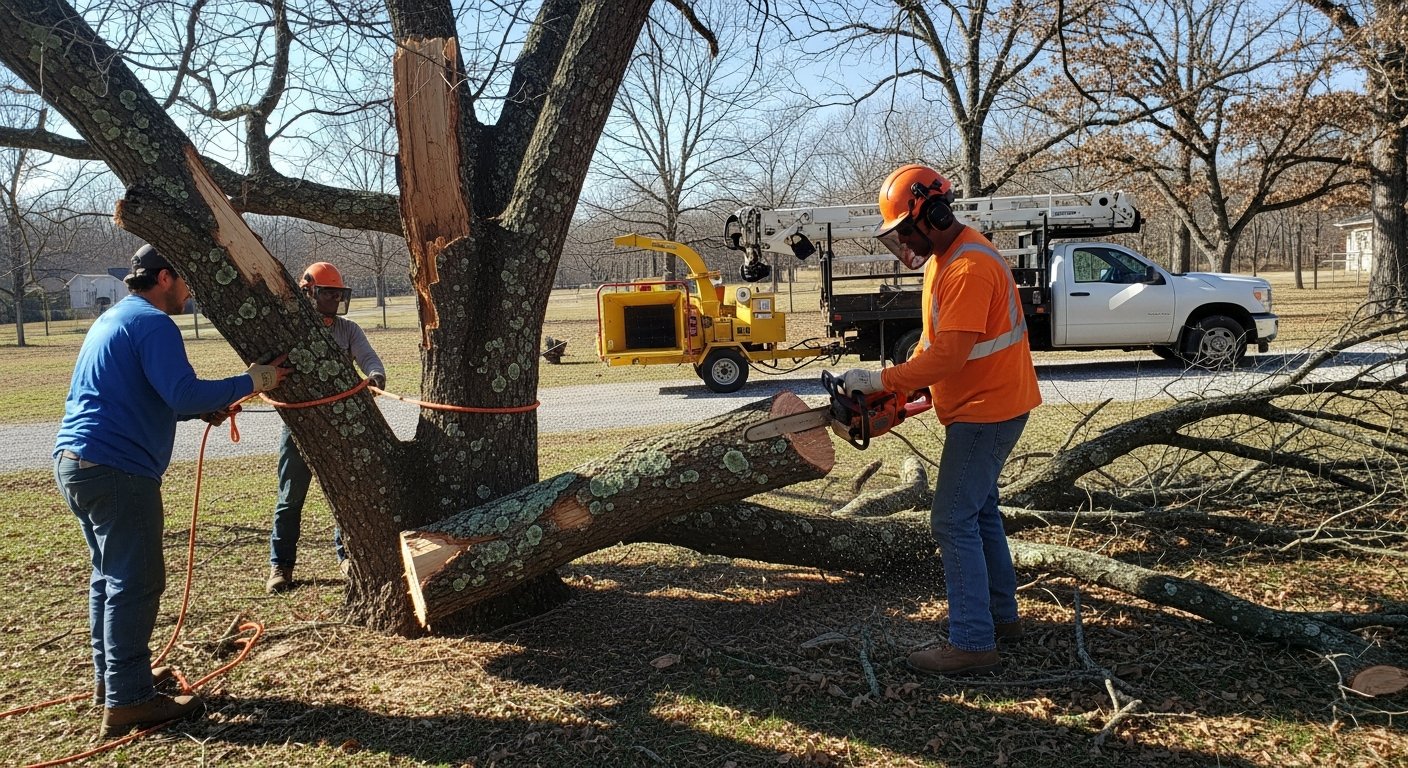
Do not attempt to trim hanging limbs or remove storm-damaged trees yourself. The wood is under extreme tension, and a seemingly stable branch can snap unexpectedly. Professional crews have the equipment and training to safely dismantle these dangerous trees piece by piece. In our guide on how tree trimming benefits tree health in Arkansas, we explain how regular maintenance reduces storm risk, but after significant damage, removal is often the only safe option.
Root System Failure and Soil Issues
A tree’s root system is its foundation. When the roots fail, the entire tree becomes unstable. Root problems are often invisible until it is too late, but there are warning signs you can spot. If you see soil heaving around the base of the tree, or if the ground is cracking in a circle around the trunk, the roots may be pulling up. This is a clear signal that your tree is at imminent risk of falling.
Other signs of root failure include:
- Fungal growth or mushrooms growing directly from the root flare at the base of the tree.
- Exposed roots that appear decayed, soft, or hollow when pressed.
- Recent construction near the tree, such as driveway installation, foundation work, or trenching for utilities.
- Large roots that have been cut during landscaping or excavation projects.
Construction activity is a leading cause of root damage in Batesville. When we build decks, pour concrete, or install fences, roots are often severed. A tree can survive root loss of up to 20 percent, but beyond that, its stability is compromised. If you have recently completed a home renovation or outdoor project near a large tree, have a professional assess the root health. Waiting for the tree to fall on your newly built deck is not a strategy; it is a disaster waiting to happen.
Proximity to Structures and Utility Lines
The location of a tree relative to your home, garage, shed, or power lines is a major factor in the decision to remove it. A healthy tree in an open field poses little risk. The same tree growing within 10 feet of your house is a serious hazard. When considering when to call professional tree removal Batesville, the proximity to valuable structures should accelerate your timeline significantly.
Trees that overhang roofs are particularly concerning. Falling branches can puncture shingles, damage gutters, and even break through the roof decking. In severe cases, a large limb or entire tree can collapse onto a bedroom or living area. Beyond the immediate structural damage, falling trees can rupture gas lines, knock down power lines, and block driveways, preventing emergency vehicles from accessing your property.
If a tree is growing close to your foundation, the roots can also cause damage by disrupting drainage, cracking basement walls, or creating pathways for water to seep into your crawl space. Removing a problematic tree before it causes these issues is far more cost-effective than repairing the damage afterward. A professional can assess the tree’s potential reach and recommend removal if the risk outweighs the aesthetic benefit.
Dead Trees and Rapid Decline
A dead tree is not a matter of if it will fall, but when. Once a tree has died, the wood begins to dry out and lose flexibility. Dead branches become brittle and break easily. The entire tree becomes a hazard, especially during wind events. If you have a tree on your property that has not leafed out in the spring, or that has lost most of its bark, it is time to act.
Dead trees attract pests like termites, carpenter ants, and wood-boring beetles. These insects can then migrate to your home, causing additional damage and costly extermination treatments. A dead tree near your house is essentially an open invitation for pests to find their way into your walls. Professional removal eliminates this threat and protects your home’s structural integrity.
Rapid decline is another scenario that requires immediate attention. If a tree that appeared healthy last year is now showing significant dieback, it may be suffering from a disease or pest infestation that is progressing quickly. Do not wait to see if it recovers. In most cases, trees in rapid decline cannot be saved, and delaying removal only increases the danger. Call a professional as soon as you notice a dramatic change in the tree’s health.
When to Call Before a Home Renovation or Construction Project
If you are planning a home renovation, deck building, or any construction project on your Batesville property, tree removal should be part of your pre-construction checklist. Construction equipment can damage trees, and trees can interfere with the construction process. Removing a tree before work begins is safer and more efficient than dealing with a damaged tree after the fact.
Consider these scenarios:
- You are building a deck, and a large tree is located where the deck will be. The tree’s roots will be damaged during excavation, and the tree may eventually die or become unstable.
- You are adding a room or expanding your home, and a tree is too close to the new foundation.
- You are installing a concrete driveway or patio, and tree roots will be cut during the grading process.
In each of these cases, removing the tree before construction saves money and prevents future problems. Professional tree removal crews can work with your contractor to schedule the removal at the optimal time, ensuring your project stays on track and your landscape remains safe.
By recognizing these warning signs and acting decisively, you protect your home, your family, and your investment. When the risk is clear, hesitation is the only wrong answer.