Every fence in Batesville faces the same two enemies: humidity and time. After a few Arkansas summers, a fence that once framed your yard beautifully can start leaning, fading, or shedding boards. The real question is not whether the fence looks tired. The real question is whether you should pay to repair it or invest in a full replacement. This Fence Repair vs Replacement Batesville Property Decision Guide gives you a clear framework so you can make a confident call without overpaying for work you do not need or ignoring damage that will only get worse.
To understand the answer, you first have to understand the conditions that damage fences in this region. Batesville summers bring high humidity and intense sun, while winters push soil through repeated freeze-thaw cycles. Combined with the clay-heavy ground common around Independence County, those conditions put pressure on fence posts and panels from every direction. A fence built with treated lumber can survive for decades, but even the best installation will eventually show wear.
Why Batesville Weather and Soil Matter for Fences
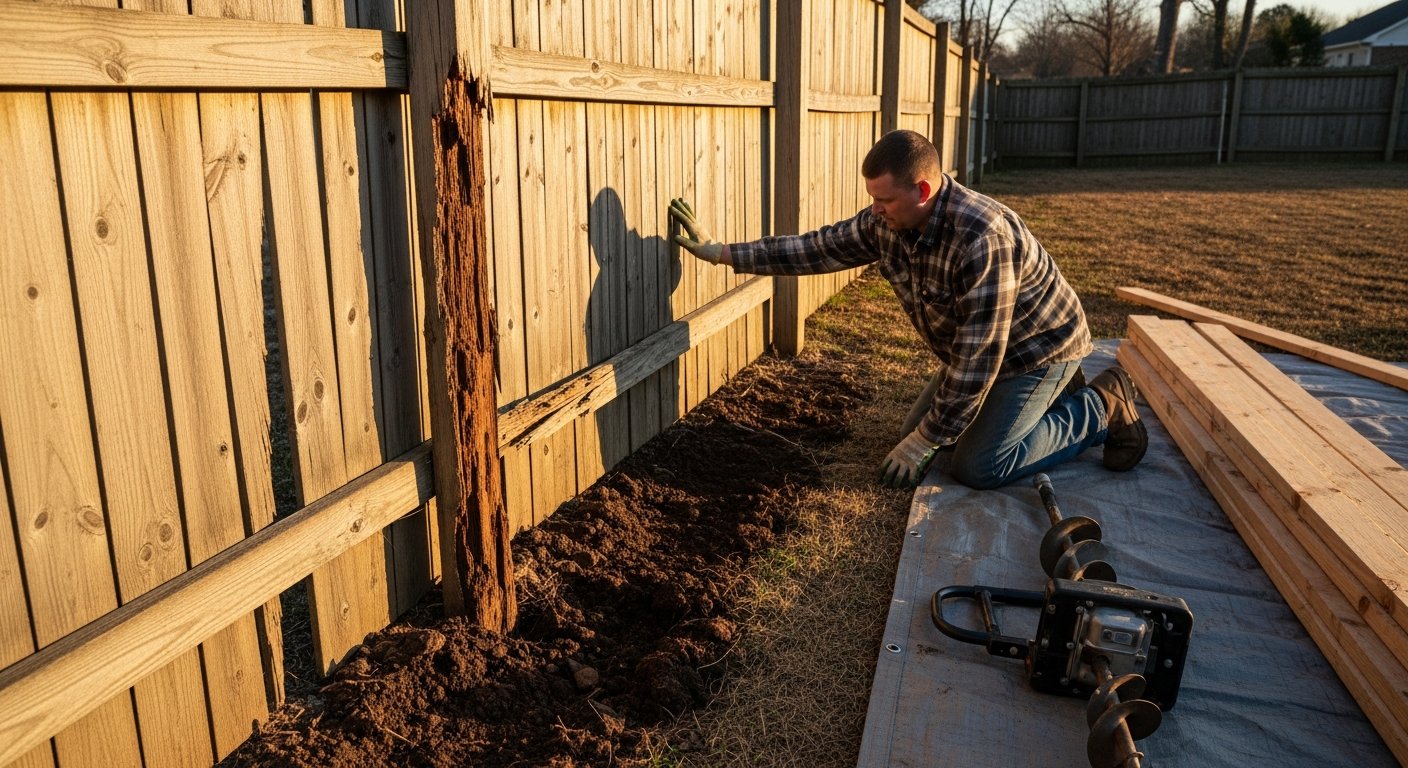
Wood fences are especially vulnerable in Batesville because moisture soaks into the grain and accelerates rot. Posts set in clay soil hold water around the base, which is the first place decay appears. You may see a fence that looks solid from the house, but the moment you push on a post near the ground, it moves. That movement is a warning that the structural connection between post and panel has been compromised.
Vinyl and aluminum fences handle moisture better, but they are not indestructible. Vinyl can become brittle after years of UV exposure and crack during a hard winter. Aluminum can develop dents from lawn equipment, and its powder coat can fade. When you evaluate a fence, you have to look at the local conditions that caused the damage, not just the damage itself. The same storm that knocks over a few pine pickets might leave a metal fence almost untouched, and that difference changes the repair versus replacement math.
Drainage matters just as much as material. A fence line that sits in a low spot or next to a downspout will fail faster than one on well-drained ground. If your soil stays soggy for days after rain, repairing a single post may not solve the problem. The post will shift again because the ground around it cannot support the load. That is why a site evaluation should include a look at grading, gutter output, and plant growth, not just the fence boards.
The Fence Repair vs Replacement Decision Framework
A practical way to decide is to answer four questions. What is the extent of the damage? What is the age and material of the fence? What are your long-term goals for the yard? What is your budget for this season? The answers will point you toward a quick fix or a full rebuild.
Isolated damage usually signals a repair. A single broken picket, a gate that drags, or one leaning post can all be corrected without tearing down the entire fence. Widespread damage signals replacement. If every other panel is wobbly and the posts are rotting below grade, spending money on individual repairs is like patching a tire that has blowouts on both sides. You will be back in the same spot within a year.
Age is another strong indicator. A pressure-treated pine fence in Arkansas often lasts 10 to 15 years, while cedar can last 15 to 20 years with care. Vinyl fences can last 20 to 30 years, and aluminum can last longer in a coastal climate than in the Arkansas countryside where branches fall and farm equipment bumps the line. Once a fence passes the middle of its expected life and starts failing at multiple points, replacement is usually the smarter investment.
Signs Your Fence Can Be Repaired
Before you commit to a full tear-out, inspect the fence for these repair-friendly signs:
- One or two loose pickets or broken boards
- A single leaning post that can be reset or braced
- Rusted hinges or latches on gates
- Fading paint or stain with sound wood underneath
- Small cracks that have not led to rot or structural looseness
When damage is isolated, repair is usually a fraction of replacement cost. A Batesville contractor can often fix a section in a day, which keeps your yard usable and your expenses low. Repairs also make sense when the fence is structurally sound but visually tired. A fresh stain, new trim board, or replacement picket can restore the look without the disruption of a full demolition.
Signs Your Fence Needs Full Replacement
There are moments when repair becomes a money pit. Watch for these replacement red flags:
- More than 30 to 40 percent of the boards or panels are cracked, warped, or rotted
- Posts are loose across multiple sections, even after earlier repairs
- Wood is soft, punky, or crumbling at ground level
- Vinyl is brittle and cracking in several areas
- The fence is more than 15 to 20 years old and has already been patched more than once
- Storm damage has twisted the framework or knocked entire panels out of alignment
Frequent repairs are a clear sign that the fence is living on borrowed time. Every nail you drive into rotted wood only gives you a short reprieve. If you are scheduling a fence repair twice a year, the cost adds up quickly. A full replacement gives you a clean start with modern materials, upgraded hardware, and a warranty that covers defects.
Cost Comparison: Repair vs Replacement in Batesville
Cost is usually the deciding factor, so let us look at realistic numbers. Repairing a fence typically costs $150 to $600 per section, depending on material, post condition, and labor. Replacing a single post might run $100 to $300 if the concrete base has to be broken out. Replacing a full fence in Batesville often lands between $20 and $45 per linear foot for wood, $25 to $40 for vinyl, and $30 or more for aluminum. Custom gates, taller heights, and difficult terrain push those numbers higher.
Comparing cost per repair event can mislead you. A cheap fix saves money today, but if you replace three sections this year and four more next year, the total will exceed the cost of a new fence. Use a simple guideline: if the repair bill is greater than half the cost of replacement, choose replacement. If the fence is structurally sound and the repair is small, choose repair.
Financing changes the picture too. A full fence replacement is a larger upfront investment, but it often adds more curb appeal and functional value to a Batesville property than a series of patch jobs. Buyers and appraisers notice a well-built fence that encloses the yard properly. A fence held together with mismatched boards and braces does not have the same effect.
Local Codes, Permits, and Property Lines
Before any work begins, check local rules. Batesville has specific fence regulations that cover height, setbacks, and approved materials. A repair that stays in the same footprint often does not require a new permit, but a replacement along a different line or at a new height may need approval. Your survey or property records will show the exact boundary, and you should always confirm before setting posts. A fence that sits a few inches on a neighbor’s land can create a headache that no board replacement can cure.
Building codes also matter for posts. The soil in Batesville can shift, so a professional installer uses concrete footings set below frost depth and consistent with local practice. If your existing fence was installed with shallow posts and no concrete, that explains why it leans. A full replacement is the chance to do the job right, and that makes the higher cost easier to justify.
Why Professional Assessment Matters
Most homeowners are not trained to spot structural rot behind a coat of paint. A skilled contractor can probe posts, check the level of rails, and identify whether termites or carpenter ants are making the problem worse. This is especially important in Batesville, where summer humidity creates ideal conditions for wood-destroying insects. A professional eye can tell you the difference between a cosmetic annoyance and a structural failure, and you will not waste money on a repair that cannot hold.
At The Real Deal Batesville, we have built and repaired fences throughout Independence County. We start with an honest walk-through, and we give you a plain answer about whether a repair makes sense or a replacement is the better path. Similar to how homeowners use a drywall repair vs replacement decision guide for interior damage, fence owners need clear criteria for exterior damage. That is exactly what our local team provides. We consider material, age, soil, and intended use, and then we recommend the option that protects your budget and your property.
Making the Final Choice for Your Batesville Property
Start by walking the full fence line and taking notes. Push on posts near the ground, open and close every gate, and check the top and bottom rails for sag. Take photos so you can compare what you see on sunny days and after heavy rain. Then decide what you want from the fence: privacy, security, pet containment, or curb appeal. That goal will shape whether a few new boards are enough or whether you need a completely new structure.
A fence repair is often the right choice for newer fences with localized damage. A fence replacement is the right choice for aging fences with widespread rot, multiple leaning posts, or materials that have reached the end of their lifespan. In both cases, use a local contractor who knows Batesville soil, permitting, and the best materials for Arkansas weather.
Your fence should protect your property, not drain your budget. By using this decision guide, you can avoid surprise bills and make a plan that adds real value to your home. When you need a second opinion or a detailed estimate, reach out to The Real Deal Batesville, and we will help you choose the path that keeps your yard secure, beautiful, and functional for years to come.