Imagine stepping into your garage on a frigid January morning in Batesville, Arkansas, and feeling warm, comfortable air instead of the usual biting cold. A standard uninsulated concrete slab can turn your garage into an icebox, making it unusable during the winter months. For homeowners who want to turn their garage into a workshop, home gym, or even a heated storage space, radiant heating embedded in a concrete slab offers a transformative solution. This system runs hot water or electric cables through the slab, warming the concrete from below and radiating heat upward. It eliminates drafts, reduces energy waste, and provides a consistent, quiet warmth that forced-air systems simply cannot match.
What Is Radiant Heating in a Concrete Slab?
Radiant floor heating works by circulating heated fluid or electrical current through tubing or cables that are embedded directly into the concrete during the pour. The concrete mass acts as a thermal battery, absorbing the heat and releasing it evenly across the entire surface. In a garage, this means you can work on projects, exercise, or store temperature-sensitive items without worrying about freezing temperatures or cold floors.
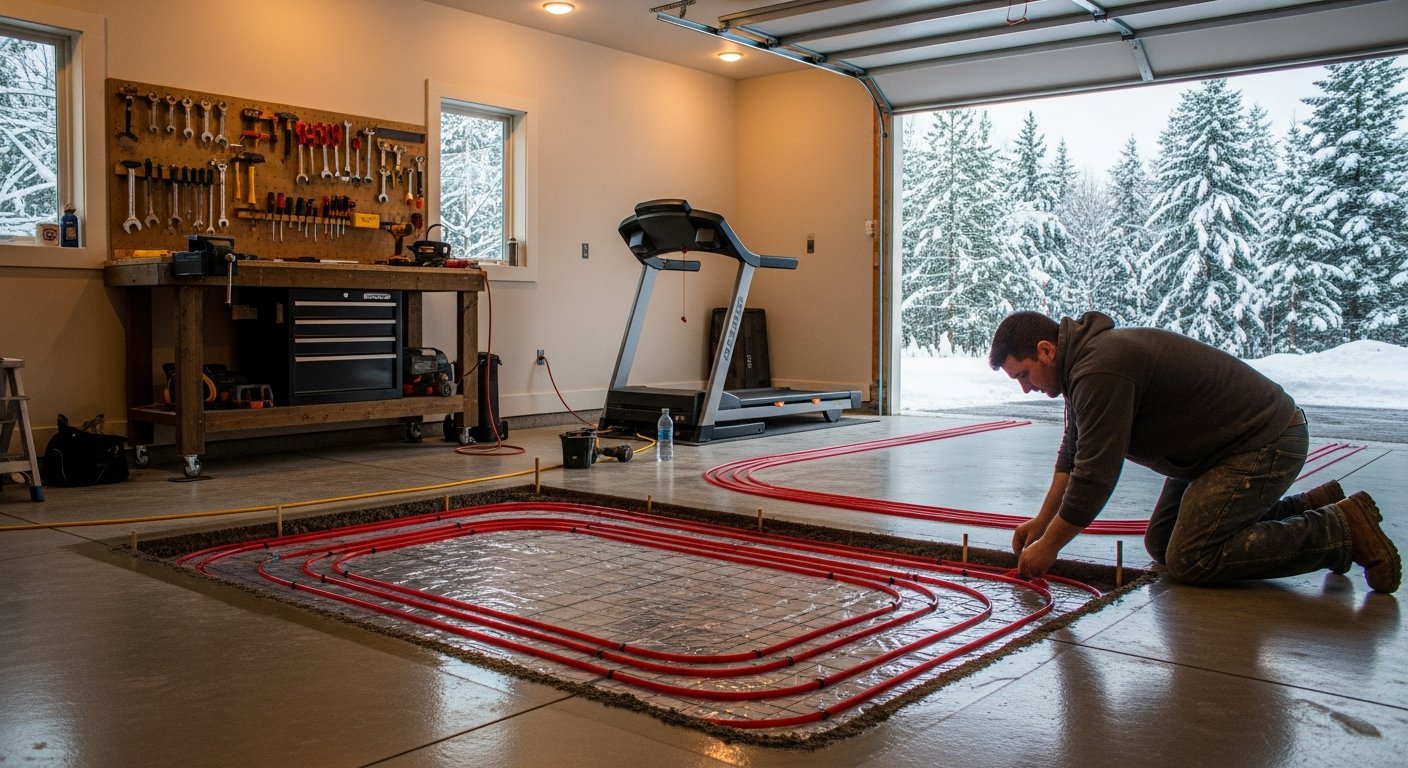
The two primary types of radiant heating for concrete slabs are hydronic (water-based) and electric. Hydronic systems use a boiler or heat pump to warm water, which is then pumped through PEX tubing laid in a serpentine pattern within the slab. Electric systems use resistance cables that generate heat when electricity passes through them. For larger garages, hydronic is often more cost-effective to operate, while electric systems are simpler to install and better suited for smaller spaces.
Key Benefits for Batesville Garage Owners
Batesville experiences all four seasons, with winter temperatures that frequently dip below freezing and summer humidity that can make a concrete slab feel damp. Radiant heating addresses both comfort and practicality. Here are the primary advantages:
- Consistent warmth without drafts: Unlike forced-air heaters that blow hot air and leave cold spots, radiant heat rises evenly from the floor, eliminating chilly corners and keeping your entire workspace comfortable.
- Energy efficiency: Because water retains heat far better than air, hydronic systems require less energy to maintain a set temperature. Electric systems also offer zone control, allowing you to heat only the area you are using.
- Moisture control: A warm slab naturally reduces condensation, which helps prevent rust on tools, mildew on stored items, and slippery floors.
- Quiet operation: No noisy fans, compressors, or blowers. The system operates silently, making your garage a more pleasant space for hobbies or relaxation.
These benefits are especially valuable for homeowners who use their garage as an extension of their living space. Whether you are restoring a classic car, running a home business, or simply want to protect your vehicles from extreme cold, a radiant heated slab adds year-round usability and property value.
Installation Process: From Excavation to Pour
Installing radiant heating in a garage slab requires careful planning and execution. The process typically involves several distinct stages, all of which must be done correctly for the system to perform efficiently. A local contractor with experience in both concrete work and radiant systems is essential for a successful project.
First, the site is excavated to the required depth, usually 6 to 8 inches below the final slab grade. A well-compacted gravel base is laid to promote drainage and prevent soil movement. A vapor barrier is then placed over the gravel to block moisture from rising into the slab. Next, rigid foam insulation is installed around the perimeter and beneath the slab to direct heat upward into the garage rather than into the ground below. This step is critical for energy efficiency. As we explain in our guide on building a shed foundation concrete pad in Batesville Arkansas, proper sub-base preparation prevents cracking and settling, a principle that applies directly to radiant heated slabs.
Once the insulation is in place, the PEX tubing or electric cables are laid in evenly spaced loops and secured to a wire mesh or specialized clips. The layout must avoid crossing over expansion joints and should be planned to provide uniform heat distribution. A pressure test is performed on hydronic systems to ensure no leaks exist before the concrete is poured. Finally, the concrete is carefully poured, vibrated to eliminate air pockets, and finished with a smooth or broom surface. After curing, the system is connected to a boiler or electrical panel and filled with antifreeze solution if hydronic.
Why Hire a Local Batesville Contractor for Your Radiant Slab?
Installing a radiant heating system inside a concrete slab is not a standard DIY project. It demands expertise in concrete pouring, knowledge of local building codes, and familiarity with heating system components. A Batesville contractor who handles both concrete services and home remodeling understands the local climate and soil conditions. They can recommend the right slab thickness, reinforcement, and insulation levels to withstand Arkansas freeze-thaw cycles.
By working with a local team like The Real Deal of Batesville, you also benefit from coordinated project management. The same crew that pours the foundation can handle the radiant system installation, electrical work, and final finishes. This reduces scheduling conflicts, simplifies communication, and ensures that every phase of the job is completed to a high standard. Whether you are building a new garage or retrofitting an existing one, trusting a proven local contractor protects your investment and guarantees a warm, durable floor for decades.
Cost Considerations and Energy Savings
The upfront cost of a radiant heated concrete slab garage in Batesville varies depending on garage size, system type, and site conditions. On average, hydronic systems run between $6 and $12 per square foot for the tubing, boiler, and labor, while electric systems are slightly less expensive to install but may have higher operating costs. The concrete slab itself adds another $5 to $8 per square foot, depending on thickness and finish.
Despite the initial investment, the long-term energy savings can be substantial. Radiant systems operate at lower water temperatures than forced-air systems, typically 85 to 110 degrees Fahrenheit. This makes them highly compatible with heat pumps and condensing boilers, which achieve peak efficiency at these lower temperatures. Additionally, because the heat is delivered directly to the floor and not lost through ducts or open windows, you can often lower your thermostat by 5 to 10 degrees without sacrificing comfort. Over the life of the system, these savings can offset the higher installation cost.
Another financial advantage: a heated garage slab increases your home’s resale value. Buyers in Batesville recognize the utility of a conditioned garage space, especially one that can serve as a workshop, home gym, or additional living area. The investment pays off both in day-to-day comfort and when it comes time to sell.
For homeowners planning to use their garage year-round, radiant heating is arguably the most efficient and comfortable option available. It eliminates the need for space heaters, reduces moisture problems, and creates a versatile environment that adapts to your lifestyle. With the right contractor and proper installation, a radiant heated concrete slab can become one of the best upgrades you make to your Batesville property.