
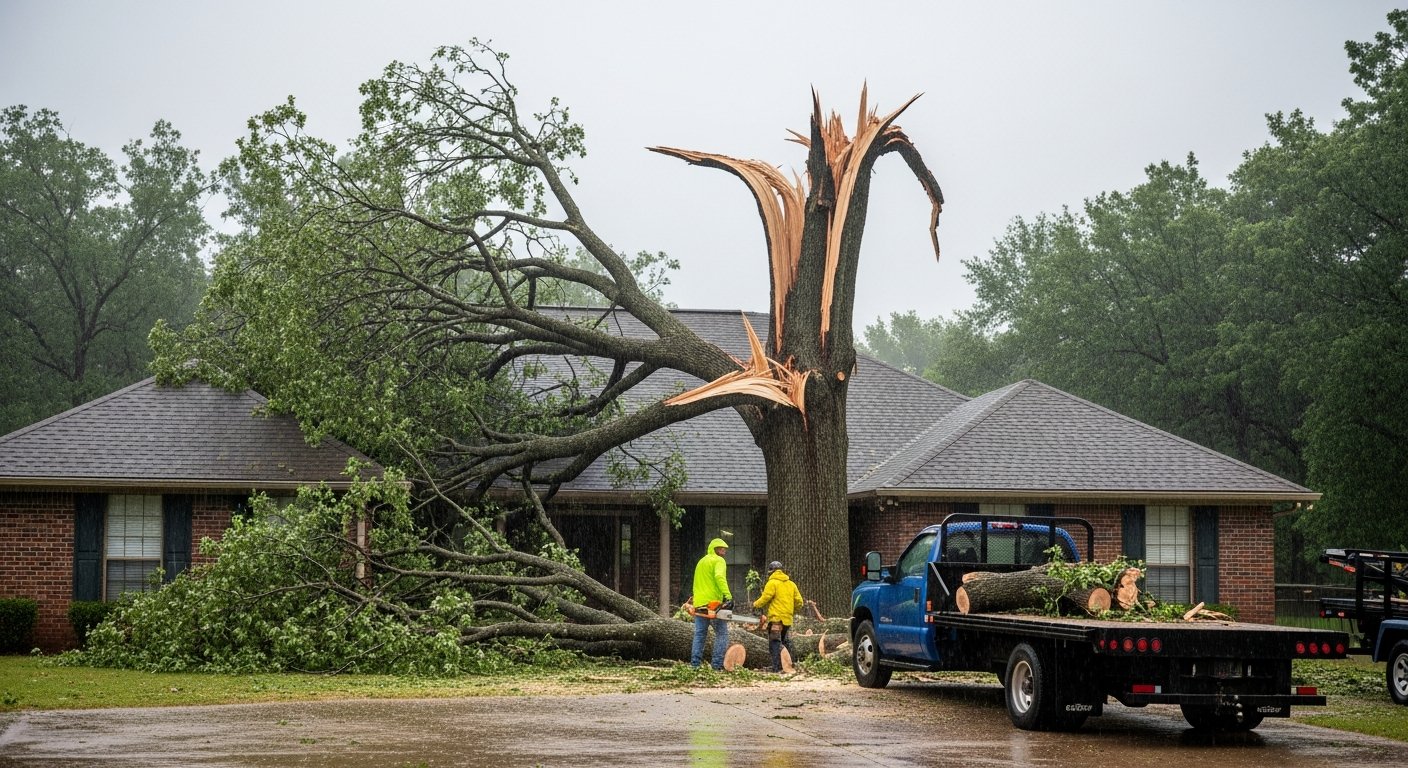
When a severe thunderstorm or tornado tears through Arkansas, the most immediate threat to your home often comes from above. A mature oak or hickory tree that has stood for decades can become a dangerous projectile in seconds. Having a plan for emergency tree removal is not just about convenience. It is about protecting your family, your home, and your financial stability. This emergency tree removal preparedness guide Arkansas homeowners need will help you act fast when every minute counts.
Arkansas weather is notoriously unpredictable. Spring and early summer bring powerful storms that can snap trunks and uproot healthy trees. Even well-maintained trees can fail under the force of straight-line winds or a tornado touchdown. The difference between a manageable situation and a catastrophic loss often comes down to how prepared you were before the storm hit. Preparation allows you to secure your property, contact help quickly, and navigate the insurance process without added stress.
Understanding the Risks to Arkansas Homes
Arkansas sits in a region prone to severe weather events. The combination of heavy clay soils, frequent rainfall, and high winds creates conditions where trees are more likely to fail. Many homes in Batesville and surrounding areas are surrounded by mature trees that provide shade and beauty. However, those same trees can become liabilities during a storm. A tree that has internal rot, a shallow root system, or heavy lean is a prime candidate for failure.
When a tree falls on a structure, the damage can be devastating. Roofs collapse, walls buckle, and foundations crack. Beyond the structural damage, a fallen tree often blocks driveways, traps vehicles, and prevents emergency responders from reaching your home. This is why proactive inspection and maintenance are critical components of any preparedness plan. You cannot predict every storm, but you can reduce the risk by identifying hazardous trees before they become a problem.
Assessing Your Property Before the Storm
A thorough assessment of the trees on your property should happen at least twice a year. Look for signs of decay, such as fungal growth at the base, dead branches in the canopy, or cracks in the trunk. Trees that lean significantly after heavy rain may have compromised root systems. In Arkansas, the freeze-thaw cycle can also damage roots, making trees less stable.
If you notice any of these warning signs, call a professional for a detailed evaluation. An arborist can identify internal decay using resistograph testing or visual inspection. They can recommend cabling, bracing, or removal before the next storm season. This proactive step is far less expensive than emergency removal after a collapse. In our guide on storm prep emergency tree service Arkansas guide, we explain how to identify high-risk trees and schedule inspections that fit your property’s needs.
Creating Your Emergency Tree Removal Plan
A written plan ensures you and your family know exactly what to do when a tree falls. Start by identifying safe zones in your home where you can take shelter during a storm. These should be interior rooms on the lowest level, away from windows and large trees. After the storm passes, your plan should include these steps.
First, ensure everyone in your household is safe and accounted for. Do not approach a fallen tree if it is tangled with power lines. Downed power lines are extremely dangerous and can electrocute anyone who touches them or the surrounding ground. Call the electric utility immediately and keep everyone at least 30 feet away. Second, assess the damage from a safe distance. Take photos of the tree, the damage to your home, and any other affected structures. These photos will be essential for your insurance claim.
Third, contact a professional emergency tree removal service. Do not attempt to cut the tree yourself. A fallen tree under tension can spring back violently or shift suddenly, causing serious injury. Professionals have the equipment and training to remove trees safely, even in tight spaces near your home. Fourth, secure the area to prevent further damage. If the tree has created a hole in your roof, cover it with a tarp to keep rain out. This temporary measure can prevent water damage while you wait for repairs.
Choosing the Right Emergency Tree Service
Not all tree removal companies are equipped to handle emergencies. When you need immediate help, you want a crew that can respond quickly and work safely under pressure. Here are the key factors to consider when selecting an emergency tree service in Arkansas.
- Response time: Ask how quickly they can arrive on site. A company that offers 24/7 emergency service is ideal for storm events that happen at night or on weekends.
- Insurance and licensing: Verify that the company carries liability insurance and workers compensation. This protects you if someone is injured on your property or if your home is damaged during removal.
- Equipment and experience: Emergency removal often requires cranes, bucket trucks, and rigging gear. Choose a company with experience handling complex removals near structures and power lines.
- Local knowledge: A company familiar with Arkansas tree species and soil conditions will understand the unique challenges of removal in this region.
Once you have identified a reliable service, save their contact information in your phone and place it on your refrigerator or emergency board. Having this number ready before a storm eliminates the need to search frantically when time is critical. Many reputable companies offer free estimates for non-emergency work, allowing you to establish a relationship before you need them.
Working With Insurance After Tree Damage
Navigating the insurance claims process after a tree falls on your home can be overwhelming, especially when you are dealing with the stress of damage. However, a few strategic actions can make a significant difference in the outcome of your claim. Start by documenting everything. Take wide-angle photos that show the entire scene, as well as close-ups of specific damage. Record the date and time of the storm if possible. This evidence helps your adjuster understand the scope of the loss.
Contact your insurance company as soon as it is safe to do so. Most policies cover tree removal if the tree has damaged a covered structure, such as your home, garage, or fence. Some policies also cover the cost of removing a tree that blocks a driveway or prevents access to your home. However, policies vary widely. Some have specific limits for tree removal, while others may exclude certain types of damage. Reading your policy before a storm occurs will prevent unpleasant surprises later.
Do not begin permanent repairs until the adjuster has inspected the damage. However, you can and should take temporary measures to prevent further damage. Cover holes in the roof with tarps, board up broken windows, and remove standing water if it is safe to do so. Keep all receipts for these temporary repairs. Your insurance company will typically reimburse reasonable costs for protecting your property from additional damage.
Preventive Measures to Reduce Future Risk
While you cannot stop every storm, you can take steps to make your property more resilient. Regular tree maintenance is the most effective way to reduce the risk of a tree failing. Pruning removes dead or weak branches that could break off and damage your home. Thinning the canopy allows wind to pass through the tree more easily, reducing the force exerted on the trunk and roots.
Consider planting trees that are more resistant to wind damage. In Arkansas, species like live oak, bald cypress, and American holly have stronger wood and deeper root systems than some fast-growing varieties. Avoid planting trees too close to your home. A general rule is to plant trees at least 15 to 20 feet away from the foundation, depending on the mature size of the tree. This distance reduces the chance of a falling tree reaching your house.
Soil health also plays a role in tree stability. Clay soils common in Arkansas can become waterlogged during heavy rain, reducing root anchorage. Aerating the soil around trees and avoiding excessive irrigation near the trunk can help maintain root health. If you have a tree with a known lean or structural weakness, consult an arborist about cabling or bracing. These systems can provide extra support and extend the life of a valued tree.
Staying Safe During and After a Storm
Your personal safety is the top priority during any severe weather event. When the National Weather Service issues a tornado warning or severe thunderstorm warning for your area, take shelter immediately. Do not wait until you see the tree falling. Have a battery-powered weather radio or a smartphone app that provides alerts even when power is out. This ensures you know when it is safe to emerge after the storm passes.
After the storm, be extremely cautious when moving around your property. Fallen trees can hide downed power lines, sharp debris, or unstable ground. Wear sturdy boots and gloves if you must clear a path. Never use a chainsaw unless you have been trained and are wearing proper safety gear. The majority of storm-related injuries occur during cleanup, not during the storm itself. Let professionals handle the heavy work.
If the tree has damaged natural gas lines, you may smell gas. Leave the area immediately and call the gas company from a safe location. Do not use any electrical switches or devices that could create a spark. Similarly, if you see water pooling near the foundation after a tree removal, it could indicate a broken water line. Turn off the water at the main shutoff valve if you can do so safely.
Final Thoughts on Preparedness
Taking the time to prepare now can save you thousands of dollars and countless hours of stress later. An emergency tree removal plan is not just about knowing who to call. It is about understanding the risks on your property, having the right information at your fingertips, and knowing how to work with your insurance company to recover quickly. For Arkansas homeowners, especially those in areas like Batesville with dense tree cover, this preparation is essential.
By assessing your trees, creating a written plan, and building a relationship with a trusted local contractor, you position yourself to handle any storm that comes your way. When the next severe weather event hits, you will not be scrambling. You will be ready, and that readiness can make all the difference between a minor inconvenience and a major disaster.