Arranging furniture in a living room can feel like solving a puzzle, especially when the room does not fit a perfect square or rectangle. Many Arkansas homes feature living rooms with unique dimensions, from long narrow spaces in historic Batesville houses to open concept great rooms in newer construction. The right furniture arrangement transforms how a family uses the space, making it feel larger, more functional, and welcoming. Instead of fighting the shape of your room, you can work with it by applying layout strategies that suit your specific floor plan. This guide covers furniture layout ideas for different living room shapes in Arkansas, helping you create a comfortable and stylish gathering space that fits your home and lifestyle.
Arranging Furniture in a Long Narrow Living Room
Long narrow living rooms are common in many Arkansas homes, particularly in craftsman-style bungalows and ranch houses. The primary challenge with this shape is avoiding a bowling alley effect where furniture lines both walls and leaves a narrow walkway down the center. Instead of pushing every piece against the wall, create distinct zones that break up the length of the room visually and functionally.
Start by placing your largest seating piece, such as a sofa or sectional, perpendicular to the longest wall. This divides the room into two separate areas rather than one tunnel-like space. For example, position a sofa facing the fireplace or TV with its back to the rest of the room. Behind the sofa, place a console table or a pair of armchairs to create a secondary conversation area or a reading nook. This technique, called floating furniture, makes the room feel wider and more intimate.
Another effective strategy for long rooms is to use area rugs to define each zone. Place one rug under the main seating group and a second rug near a window or at the far end of the room for a small desk or accent chairs. This visual separation helps the eye register two distinct spaces instead of one endless corridor. To learn more about structural changes that can open up a narrow room, read our guide on fireplace mantel remodel ideas for Arkansas living rooms, which can serve as a focal point to anchor the layout.
Lighting also plays a critical role in narrow rooms. Use multiple light sources at different heights, such as floor lamps, table lamps, and overhead fixtures, to draw attention to each zone. Avoid placing all lighting along one wall, as that can exaggerate the room’s length. Instead, spread light sources across the width of the room to create balance.
Furniture Layouts for Square Living Rooms
Square living rooms offer symmetry and flexibility, but they can feel boxy or empty if furniture is arranged poorly. The goal with a square room is to create a central gathering area that feels anchored and intentional. Start by identifying the focal point, which might be a fireplace, a large window with a view, or an entertainment center. Arrange your main seating to face this focal point directly.
For a square room, a sectional or a sofa with matching loveseat works well because it defines the seating area without leaving awkward gaps. Place the sofa parallel to one wall and add two armchairs on the opposite side of a coffee table. This creates a balanced U-shaped conversation area that fills the center of the room without crowding the walls. Leave at least 18 inches between the coffee table and seating for comfortable movement.
If your square living room has a fireplace in the center of one wall, consider placing two smaller sofas facing each other with a large coffee table between them. This layout encourages conversation and makes the fireplace the natural heart of the room. Add a console table behind one sofa for additional surface space and visual weight. Avoid pushing all furniture against the walls, as that leaves the center empty and makes the room feel like a waiting area rather than a cozy living space.
Rug size matters significantly in square rooms. Choose a rug large enough to fit all front legs of your seating pieces, typically 8×10 feet or larger for a standard square living room. A rug that is too small will make the furniture look disconnected and the room feel unfinished.
Open Concept Living Room Layouts
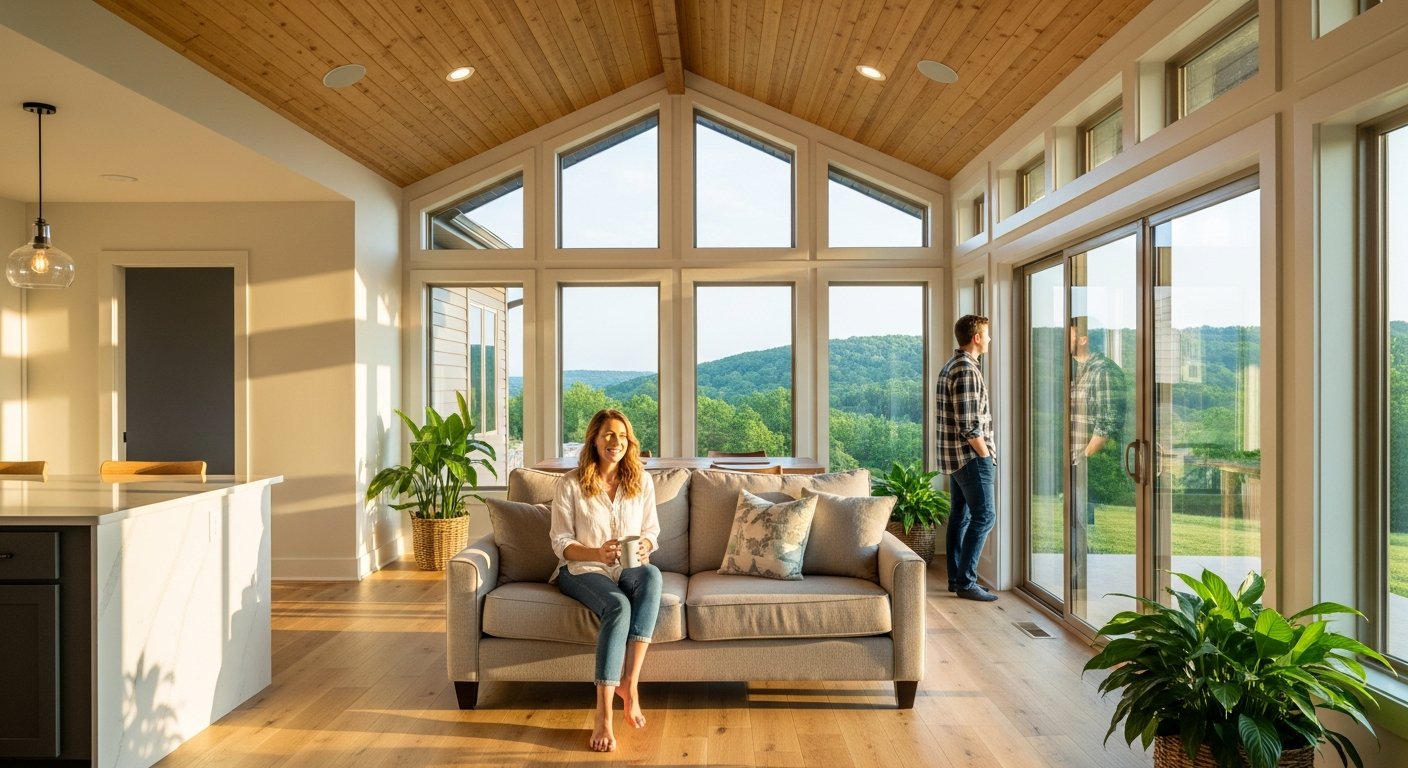
Open concept living rooms are popular in newer Arkansas homes, where the living area flows into the kitchen and dining space. The challenge here is defining the living room zone without walls to contain it. Furniture layout ideas for different living room shapes in Arkansas must account for sightlines and traffic flow between zones.
Use the back of a sofa or a console table to create a visual boundary between the living room and the dining area. Position the sofa with its back to the dining table, leaving a clear walkway of at least 36 inches behind it. This placement defines the living room as its own space while keeping the open feel intact. Add a tall bookshelf or a plant screen near the transition point to further delineate the areas.
In open concept rooms, consider using a sectional to create a L-shaped boundary that naturally separates the living area from the kitchen. Angle the sectional slightly toward the focal point, such as a TV mounted on a wall opposite the kitchen. This angled placement guides traffic around the seating group rather than through it, improving flow. Place a round coffee table in the center to soften the angular lines and make navigation easier.
Rug placement is essential in open concept layouts. Choose a rug that fits entirely within the living room zone, with all furniture legs on the rug. This anchors the living area and prevents it from visually bleeding into adjacent spaces. Coordinate rug colors with kitchen and dining area accents to create a cohesive look throughout the open floor plan.
Small Living Room Furniture Arrangements
Small living rooms require strategic choices to maximize every square foot without feeling cluttered. Many Arkansas homes, especially in older neighborhoods in Batesville, have compact living rooms that need smart furniture placement. Start by selecting furniture with a smaller footprint, such as a loveseat instead of a full sofa or armless chairs that take up less visual space.
Use multifunctional furniture to get more from your layout. An ottoman with storage can serve as a coffee table, extra seating, and a place to stash blankets. A slim console table behind the sofa provides surface space without adding bulk. Wall-mounted shelves keep floor space clear while offering storage and display area. Consider a corner sofa or a sectional with a chaise that fits snugly into a corner, leaving the rest of the room open for movement.
In small rooms, avoid blocking windows or doorways with large furniture. Place the sofa against the longest wall and use a narrow coffee table that allows easy passage. Mirrors on one wall can make the room feel larger by reflecting light and creating the illusion of depth. Keep window treatments minimal to let in natural light, which opens up the space visually.
Use vertical space to your advantage. Tall bookcases or floor-to-ceiling curtains draw the eye upward, making the ceiling feel higher and the room more spacious. Choose furniture with exposed legs to create a sense of openness underneath, rather than heavy pieces that sit directly on the floor.
L-Shaped Living Room Configurations
L-shaped living rooms are common in split-level homes and open concept designs where the living area wraps around a corner. The key to furnishing an L-shaped room is treating each leg of the L as a separate zone while maintaining visual harmony. Identify the larger section for the main seating area and use the smaller section for a secondary function, such as a home office, reading nook, or game table.
Place the sofa along the longest wall of the main zone, facing into the room rather than into the corner. Add a pair of armchairs or a loveseat perpendicular to the sofa to create a conversational grouping. In the smaller leg of the L, position a desk and chair for a workspace or a small table with two chairs for dining or puzzles. This dual-use approach makes the most of the awkward angle.
To connect the two zones visually, use matching color schemes and similar furniture styles. A consistent rug color or repeating accent pillows can tie the spaces together. Avoid placing a large piece of furniture in the corner where the two legs meet, as that can block traffic flow. Instead, leave that corner open or place a tall plant for visual interest without obstruction.
Lighting should be zoned as well. Use a pendant light or floor lamp in the main seating area and a task lamp in the secondary zone. This reinforces the separate functions while keeping the overall room cohesive.
Furniture Placement for Unusual or Awkward Shapes
Some Arkansas living rooms have unusual features like angled walls, bay windows, or multiple doorways that make standard layouts difficult. The best approach is to embrace the quirk rather than fight it. For rooms with angled walls, place furniture parallel to the angle rather than trying to align it with the main walls. This follows the natural lines of the room and makes the angle feel intentional.
Bay windows offer a perfect spot for a window seat, a pair of armchairs with a small table, or a built-in bench with cushions. This turns an awkward alcove into a cozy reading corner. For rooms with multiple doorways, avoid placing furniture directly in front of any door. Instead, create a clear path through the room by arranging furniture along the longest continuous wall. Use a narrow console table or a bench in front of a window to keep the floor plan open.
If your room has a fireplace on an angled wall, angle your sofa or sectional to face it directly. This creates a strong focal point and makes the angled wall the center of attention rather than an oddity. Add a rug that mirrors the angle of the sofa to reinforce the layout. Small accent tables and floor lamps can fill gaps without crowding the space.
Remember that furniture layout ideas for different living room shapes in Arkansas should prioritize function over perfection. A room that flows well and supports your daily activities is more important than one that follows rigid design rules. Experiment with furniture placement before committing, and don’t hesitate to rearrange until the layout feels right.
Final Thoughts on Living Room Layouts
Every living room shape presents its own set of opportunities and challenges. By understanding the principles of focal points, traffic flow, and zoning, you can create a furniture arrangement that makes your Arkansas living room feel spacious, comfortable, and inviting. Whether your room is long and narrow, perfectly square, or open concept, the right layout transforms how you and your family use the space. Start with the largest piece of furniture, define your zones with rugs and lighting, and let the unique shape of your room guide your decisions. With thoughtful planning, any living room shape can become a favorite gathering place in your home.