When you pull into a property, the driveway and walkways are the first things that greet you. A cracked, uneven surface can diminish curb appeal instantly, while a well-poured concrete slab adds a sense of permanence and quality. For homeowners across the Natural State, concrete driveways and sidewalks construction in Arkansas is more than a home improvement project. It is an investment in durability, safety, and property value. The climate here, with its freeze-thaw cycles and heavy summer rains, demands a specific approach to concrete work. A driveway or sidewalk built without considering local soil conditions and weather patterns will fail prematurely. This guide walks you through everything you need to know about planning, designing, and executing a concrete project that stands the test of time in Arkansas. Whether you are building a new home or replacing an old surface, understanding the process helps you make informed decisions and avoid costly mistakes.
Why Concrete Is the Right Choice for Arkansas Homes
Concrete remains the preferred material for driveways and sidewalks for good reason. It offers unmatched strength when properly mixed and poured. Unlike asphalt, which softens in extreme heat and requires regular sealing, concrete holds up well under the Arkansas sun. It also reflects light rather than absorbing it, which can help keep your property slightly cooler during those sweltering July afternoons. For sidewalks, concrete provides a stable, slip-resistant surface that is easy to maintain. But the real advantage lies in its longevity. A well-constructed concrete driveway can last 30 years or more with minimal upkeep. This is especially important in areas like Batesville and surrounding communities, where seasonal temperature swings can be dramatic. Concrete that is properly cured and sealed resists the cracking that comes from repeated freezing and thawing. When you invest in concrete driveways and sidewalks construction in Arkansas, you are choosing a material that works with the local climate, not against it.
Understanding Local Climate and Soil Conditions
Arkansas presents unique challenges for concrete construction. The soil in many parts of the state, particularly in the Ozark foothills around Independence County, contains clay that expands when wet and contracts when dry. This movement can cause significant stress on concrete slabs. If the base preparation is inadequate, your driveway or sidewalk will crack within the first few years. A professional contractor understands this and will prepare the subgrade carefully. This often involves removing topsoil, compacting the base material, and sometimes adding a layer of gravel to improve drainage. The freeze-thaw cycle is another critical factor. Water that seeps into small cracks freezes and expands, widening those cracks over time. The solution is two-fold: use air-entrained concrete that contains tiny air pockets to accommodate expanding water, and ensure the slab is sloped properly so water runs off rather than pooling. A contractor who specializes in concrete driveways and sidewalks construction in Arkansas will account for these variables in their mix design and installation methods.
Planning Your Concrete Project: Key Considerations
Before any concrete is poured, careful planning sets the stage for success. Start by defining the scope of your project. Are you replacing an existing driveway, installing a new sidewalk, or doing both? Measure the area accurately to estimate material needs and costs. Think about functionality. A driveway must support the weight of your vehicles, including trucks and SUVs common in rural areas. For sidewalks, consider traffic patterns. A path from the driveway to the front door should be wide enough for two people to walk side by side, typically 4 feet minimum. You also need to check local building codes and homeowners association rules. Some municipalities require permits for concrete work, and there may be setback requirements from property lines. In our guide on Building in Arkansas: A Guide to Local Construction Services, we explain how to navigate these local regulations. Planning also involves choosing a finish. Broom-finished concrete provides excellent traction for driveways. Exposed aggregate offers a decorative look for sidewalks. Stamped concrete can mimic the appearance of stone or brick. Each option has different cost and maintenance implications.
Budgeting for Your Driveway or Sidewalk
Concrete pricing in Arkansas varies based on several factors. The size of the project is the most obvious, but thickness also matters. A standard driveway is 4 inches thick for passenger vehicles, but you may need 6 inches for heavier trucks or RV parking. Reinforcement adds cost too. Most contractors recommend using wire mesh or rebar to control cracking, especially in areas with expansive soil. The type of finish affects the price as well. Basic broom finish is the most economical, while stamped or colored concrete can increase the cost by 30 to 50 percent. Labor rates in Arkansas are generally lower than the national average, but you still want to get multiple quotes. Be wary of bids that seem too low. They often indicate shortcuts in base preparation or mix quality. A reputable contractor will provide a detailed estimate that breaks down materials, labor, and any additional fees. Remember that investing in quality concrete driveways and sidewalks construction in Arkansas pays off over time through reduced repair costs and higher property value.
The Installation Process: Step by Step
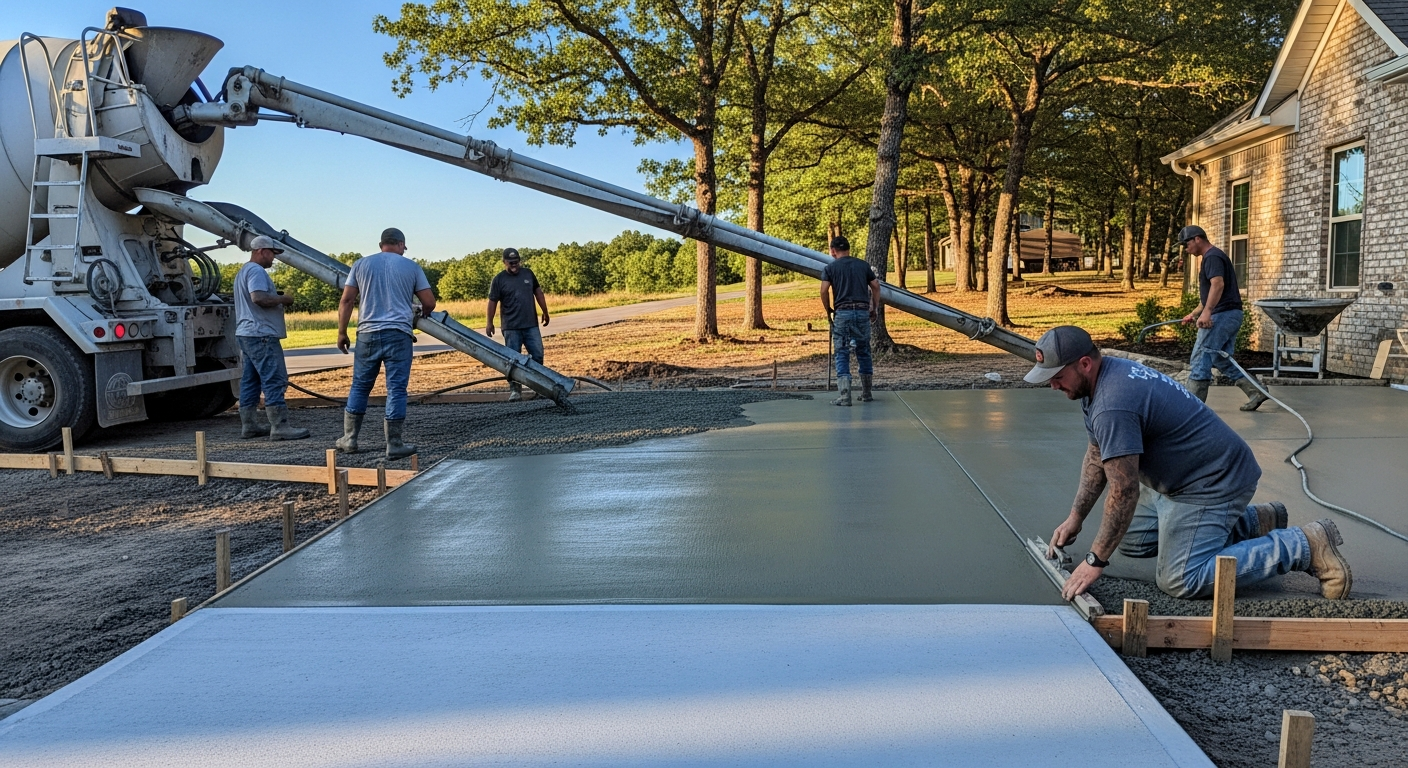
Understanding what happens during installation helps you monitor progress and ask the right questions. The process begins with excavation. The contractor removes the existing surface and digs down to allow for the base material and concrete thickness. For a driveway, this might mean excavating 8 to 10 inches deep. Next comes the base layer. Crushed stone or gravel is spread and compacted to create a stable foundation. This step is critical for drainage and preventing settling. Forms are then set along the edges to shape the concrete. The contractor installs reinforcement, either wire mesh or rebar, to add tensile strength. Concrete is delivered by truck and poured into the forms. Workers spread it with rakes and then use a screed to level the surface. After leveling, the concrete is floated to bring the cream to the top, then finished with a broom or other texture. Control joints are cut into the slab to create weak points where cracking can occur in a straight line rather than randomly. Finally, the concrete must cure for at least seven days. During this time, it should be kept moist to achieve maximum strength. Rushing the curing process is a common mistake that leads to surface dusting and reduced durability.
Choosing the Right Contractor in Arkansas
Selecting a contractor is the most important decision you will make. Not all concrete companies are created equal. Look for a contractor with experience in residential concrete work specifically. Ask for references and visit recent projects if possible. A good contractor will be happy to show you their work. Verify that they are licensed and insured. In Arkansas, general contractors are not required to hold a state license for residential work under a certain value, but many reputable companies carry liability insurance and workers compensation. This protects you if something goes wrong. Get everything in writing. A contract should include the scope of work, materials to be used, timeline, payment schedule, and warranty information. Most concrete contractors offer a one-year warranty on workmanship, but materials may be covered by the ready-mix supplier. Communication is key. A contractor who listens to your concerns and explains their process is more likely to deliver a result you are happy with. For homeowners in Batesville and Independence County, working with a local company means they understand the specific soil and climate challenges. Professional concrete driveways and sidewalks construction in Arkansas starts with finding the right partner.
Design Options and Decorative Concrete
Concrete does not have to be plain gray. Modern techniques allow for a wide range of decorative options that enhance your home’s appearance. Stamped concrete is one of the most popular choices. Patterns are pressed into the wet concrete to mimic materials like flagstone, cobblestone, or brick. This gives you the look of expensive stone at a fraction of the cost. Color can be added in several ways. Integral color is mixed into the concrete before pouring, providing consistent color throughout the slab. Surface-applied colorants are applied after the concrete cures and offer more variety. Exposed aggregate is another attractive option. The top layer of concrete is washed away to reveal the stones beneath. This creates a textured, slip-resistant surface that works well for pool decks and walkways. For driveways, consider a border treatment. A contrasting color or pattern along the edges adds visual interest without increasing the cost dramatically. Each decorative option requires specialized skills, so confirm that your contractor has experience with the technique you choose.
Maintenance and Longevity
Concrete is low maintenance, but it is not no maintenance. Sealing your driveway or sidewalk every two to three years helps protect against water penetration, stains, and UV damage. A good sealer also makes snow and ice removal easier. Speaking of ice removal, avoid using de-icing chemicals that contain ammonium nitrate or ammonium sulfate. These can react with the concrete and cause surface scaling. Calcium chloride and magnesium chloride are safer alternatives. Clean your concrete surface regularly. A garden hose and a stiff broom are often enough for routine cleaning. For oil stains from vehicles, use a degreaser designed for concrete. Pressure washing can remove built-up dirt and mildew, but use a wide tip and keep the nozzle moving to avoid etching the surface. Addressing cracks promptly is important. Small hairline cracks can be filled with a concrete crack filler. Larger cracks may indicate a structural issue and should be evaluated by a professional. With proper care, your investment in concrete driveways and sidewalks construction in Arkansas will continue to perform well for decades.
Cost Factors and Return on Investment
Understanding the costs involved helps you budget effectively. Here are the primary factors that influence the total price of a concrete project in Arkansas:
- Square footage: Most contractors charge by the square foot. Larger projects typically have a lower per-square-foot cost due to economies of scale.
- Thickness and reinforcement: A 6-inch driveway with rebar costs more than a 4-inch slab with wire mesh. Additional thickness is necessary for heavy vehicles.
- Finish type: Basic broom finish is the cheapest. Stamped, colored, or exposed aggregate finishes add significant cost due to extra labor and materials.
- Site preparation: If your property requires extensive grading, tree removal, or drainage work, these costs will be added to the base price.
- Accessibility: Projects that are difficult to reach with concrete trucks may require a pump truck, which adds to the expense.
Despite these costs, concrete driveways and sidewalks offer an excellent return on investment. A new driveway can recoup 60 to 80 percent of its cost when you sell your home. For sidewalks, the return is more about safety and curb appeal. A well-maintained concrete path signals to buyers that the property has been cared for. In competitive real estate markets like those in growing Arkansas communities, these details can make the difference between a quick sale and a listing that lingers. When you invest in concrete driveways and sidewalks construction in Arkansas, you are adding tangible value to your property.
Environmental Considerations
Concrete has environmental impacts, but there are ways to make your project more sustainable. The production of cement, a key ingredient in concrete, generates carbon dioxide. However, concrete itself is a durable material that lasts for decades, reducing the need for replacement. Some contractors offer concrete mixes that use recycled materials. Fly ash, a byproduct of coal-fired power plants, can replace a portion of the cement in the mix. This reduces waste and lowers the carbon footprint. Permeable concrete is another option for sidewalks and driveways. This special mix allows water to pass through the surface and soak into the ground below. It reduces stormwater runoff and helps recharge groundwater supplies. For Arkansas properties with drainage issues, permeable concrete can be a practical and eco-friendly solution. Discuss these options with your contractor to see if they are feasible for your project.
Concrete driveways and sidewalks construction in Arkansas is a significant undertaking, but one that rewards you with lasting performance and enhanced property value. By understanding the local climate, choosing the right materials, and working with a skilled contractor, you can achieve a result that looks great and functions perfectly for decades. Whether you are enhancing your home’s curb appeal or adding safe walkways for your family, the investment in quality concrete work is one of the smartest decisions you can make for your property.