
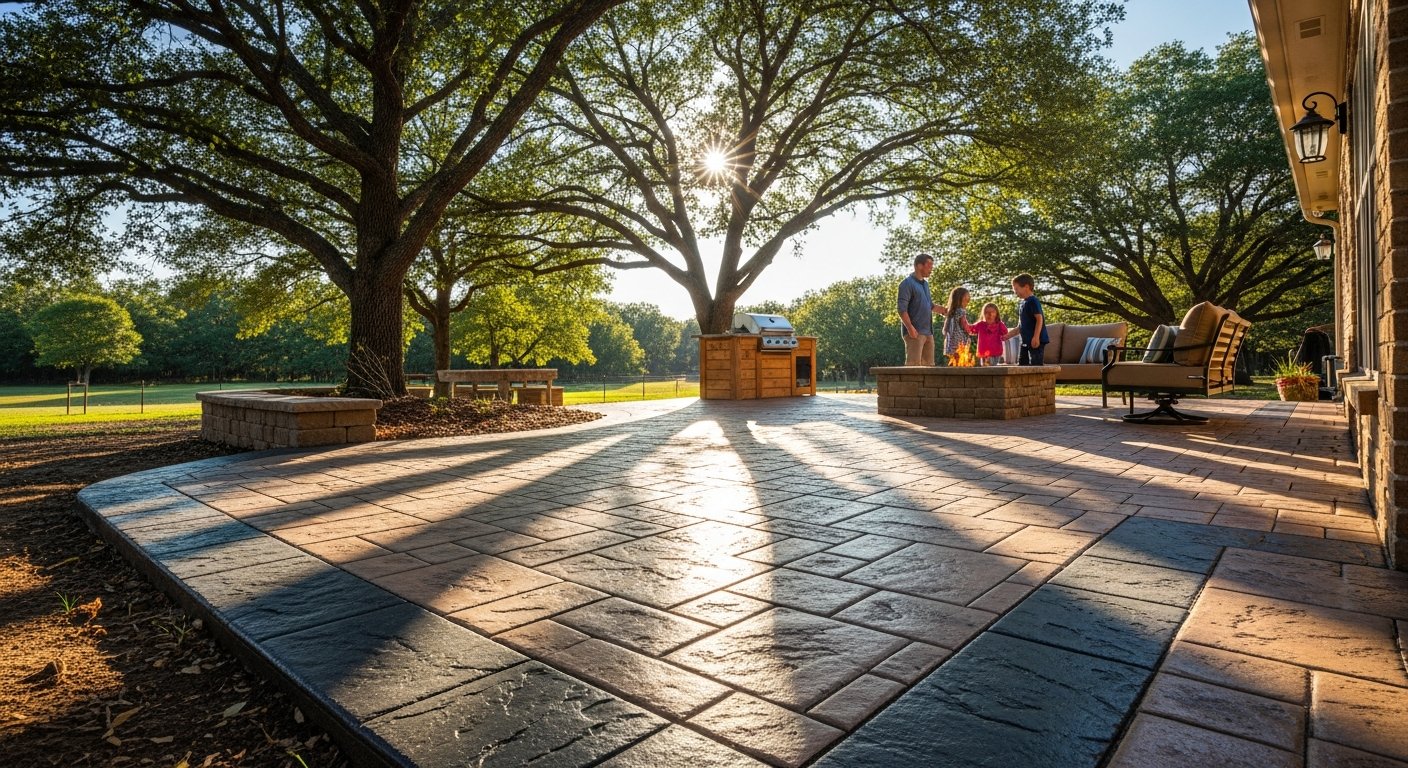
Your patio is more than a patch of concrete. It is an outdoor living room, a gathering space for family cookouts, and the backdrop for countless Arkansas sunsets. Choosing the right stamped concrete patio patterns and colors for Arkansas homes can transform a plain slab into a stunning focal point that mimics natural stone, brick, or wood at a fraction of the cost. With Arkansas’s humid summers, freeze-thaw winters, and clay-rich soil, the decisions you make about pattern selection and color choice directly affect both beauty and longevity.
Why Stamped Concrete Works for Arkansas Patios
Stamped concrete offers a unique combination of durability and design flexibility that suits the Arkansas climate exceptionally well. Unlike pavers that can shift or settle unevenly over time, a stamped concrete slab is a single, monolithic surface. This eliminates the weed growth and sand loss common with paver joints and provides a solid, stable foundation for outdoor furniture, fire pits, and grill stations.
The imprinting process uses specialized mats to press textures into freshly poured concrete. After the pattern is set, color hardeners, release agents, and accent stains create depth and variation. For Arkansas homeowners, this means you can achieve the look of expensive flagstone or cobblestone without the high material cost or the maintenance headaches that come with natural stone in a humid environment. The sealed surface resists moisture penetration, which is critical for preventing freeze-thaw damage during those unpredictable Arkansas winters.
When you work with a local contractor who understands regional conditions, you get a patio designed to handle heavy rain, temperature swings, and the occasional drought. A professional installation includes proper base preparation with compacted gravel, adequate reinforcement, control joints placed at strategic intervals, and a high-quality sealer that protects against UV fading and staining. These steps ensure your stamped concrete patio remains beautiful for decades.
Popular Stamped Concrete Patterns for Arkansas Patios
Pattern selection is one of the most exciting parts of the design process. The right pattern sets the tone for your entire outdoor space and should complement your home’s architecture and the surrounding landscape. Below are some of the most popular stamped concrete patterns that work well for Arkansas homes.
Ashlar Slate Pattern
The ashlar slate pattern remains a top choice for its classic, sophisticated appearance. It mimics natural cut stone with rectangular and square shapes arranged in a random, harmonious layout. This pattern works beautifully with both traditional brick homes and modern farmhouse styles common throughout Batesville and the surrounding areas. The straight lines and clean edges create a formal look that feels timeless.
Ashlar slate pairs especially well with earthy color tones. Think warm grays, charcoal, and soft browns that echo the natural limestone and sandstone found in Arkansas quarries. The pattern’s subtle texture provides good slip resistance, which is an important safety feature for patios that get wet during spring rains.
Cobblestone Pattern
If you want to evoke the charm of an old European courtyard or a historic Arkansas town square, the cobblestone pattern is an excellent choice. Rounded, irregular stones create a rustic, inviting feel that softens the transition between your home and the natural landscape. This pattern works particularly well for larger patios where you want to create distinct zones for dining, lounging, and cooking.
Cobblestone patterns look stunning with multicolored staining techniques. A blend of earthy browns, rust tones, and muted golds can replicate the warmth of genuine cobblestone. Because the pattern features deep grout lines, it also helps hide minor surface imperfections and provides excellent traction.
European Fan Pattern
The European fan pattern offers a more ornate, artistic look. It features fan-shaped stone arrangements that radiate outward, often combined with a border of running bond brick. This pattern adds visual interest and can make a patio feel like an extension of your indoor living space. It is especially effective when used around a central fire pit or as a focal point for an outdoor kitchen.
For Arkansas homeowners who entertain frequently, the European fan pattern creates a natural conversation area. The radiating design draws the eye inward, making the space feel intimate and cohesive. Consider a color palette of warm terra cotta and cream accents to complement the red clay soil that is so familiar in this region.
Wood Plank Pattern
Wood plank stamped concrete has surged in popularity across Arkansas. It gives you the warm, organic look of hardwood decking without the constant maintenance of sealing, staining, and replacing warped boards. The pattern replicates the grain and texture of various wood species, from smooth cedar to rustic barn wood.
This pattern is ideal for patios that connect to a deck or wrap around a pool. The linear design can also make a narrow space feel longer and more expansive. Choose a color that mimics your favorite wood species. Rich mahogany, warm hickory, or weathered gray all create distinct moods. Unlike real wood, stamped concrete will not rot, splinter, or fade unevenly in the Arkansas sun.
Choosing Colors That Complement Arkansas Landscapes
Color selection is just as important as pattern choice. The right colors tie your patio to your home’s exterior, the surrounding trees, and the natural beauty of the Ozark foothills. Arkansas’s landscape offers a rich palette of greens, browns, and earth tones that can guide your decision.
When selecting colors for your stamped concrete patio, consider the following factors:
- Home exterior colors: Your patio should complement the siding, brick, or stone on your house. A neutral patio color provides flexibility for changing furniture and decor.
- Surrounding foliage: Deep greens from pine and hardwood trees can be balanced with warm browns and tans. If your yard has colorful flowers, a neutral base lets the plants stand out.
- Sun exposure: Light colors reflect heat and stay cooler underfoot in direct sunlight. Darker colors absorb heat and can be uncomfortable on bare feet during July afternoons.
- Regional trends: In Arkansas, popular choices include warm sandstone, buff, terra cotta, charcoal, and slate gray. These colors feel natural and age gracefully.
Many contractors use a two-step coloring process that combines an integral color mixed into the concrete with a contrasting release agent or accent stain applied to the surface. This technique creates depth and highlights the pattern details. For example, a base color of warm gray with a charcoal release agent gives the ashlar slate pattern a realistic stone appearance with visible grout lines.
One common mistake homeowners make is choosing a color that looks great in a small sample but feels overwhelming on a large patio. Always ask your contractor for a mockup or view completed projects in the area. Seeing how the color interacts with natural light at different times of day helps you make a confident decision.
Pattern and Color Combinations That Work
Pairing the right pattern with the right color is where design expertise really shines. Here are some proven combinations that work well for Arkansas homes:
Ashlar slate with warm gray and charcoal accents. This combination creates a sophisticated, neutral foundation that works with almost any exterior color scheme. The dark release agent settles into the grout lines, emphasizing the stone shapes and giving the patio a natural, weathered look.
Cobblestone with terra cotta and cream. This warm, inviting combination complements brick homes and pairs beautifully with the red clay that is common in Arkansas soil. The varied tones hide dirt and leaf stains between cleanings.
Wood plank with weathered gray. This modern combination suits contemporary and farmhouse styles. The gray tones echo the color of untreated cedar that has naturally aged in the sun, creating a relaxed, coastal feel that contrasts nicely with green lawns.
European fan with buff and brown. This traditional combination works well for formal entertaining spaces. The light base color reflects heat, while the brown accents add warmth and definition to the intricate fan shapes.
Professional Installation Matters in Arkansas
The quality of your stamped concrete patio depends heavily on proper installation techniques suited to Arkansas’s climate. Local contractors understand the importance of subgrade preparation, especially in areas with expansive clay soils that shift with moisture changes. A well-compacted base with proper drainage prevents cracking and settling that can ruin even the most beautiful pattern.
Experienced installers also know how to manage control joints. While stamped concrete mimics individual stones or bricks, it is still a single slab that needs relief cuts to control cracking. Skilled contractors incorporate these joints into the pattern so they blend seamlessly with the design. They also apply sealers specifically formulated for Arkansas’s UV exposure and freeze-thaw cycles.
For homeowners in Batesville and the surrounding areas, working with a trusted local company like The Real Deal of Batesville ensures your patio is built to last. Their team combines decorative concrete expertise with knowledge of regional conditions, from proper concrete mix design to sealer selection that withstands Arkansas’s weather extremes. In our guide on Stamped Concrete Patios: Patterns and Colors for Arkansas, we share additional insights on how to choose the best design for your specific property.
Maintenance Tips for Long-Lasting Beauty
A properly installed stamped concrete patio requires minimal maintenance, but a few simple steps will keep it looking like new for years. Sealing is the most important factor. A high-quality penetrating sealer protects the surface from moisture, stains, and UV damage. Most contractors recommend resealing every two to three years, depending on sun exposure and foot traffic.
Cleaning is straightforward. A garden hose and a mild detergent are usually sufficient for routine dirt and debris. For tougher stains from food, grease, or leaf tannins, a gentle pressure wash with a wide spray tip removes buildup without damaging the sealer. Avoid using harsh chemicals or high-pressure nozzles that can strip the sealant and dull the color.
During winter, use plastic shovels for snow removal instead of metal blades that can scratch the surface. If you use ice melt, choose products labeled safe for concrete. Magnesium chloride or calcium chloride options are less likely to damage the sealer or cause surface scaling than traditional rock salt.
Final Thoughts on Your Arkansas Patio Project
Choosing the right stamped concrete patio patterns and colors for Arkansas involves balancing aesthetics with practical considerations. The patterns and colors you select should reflect your personal style while also standing up to the local climate. From the classic elegance of ashlar slate to the rustic charm of cobblestone and the modern appeal of wood plank, there is a stamped concrete design that fits every Arkansas home.
Investing in professional design and installation ensures your patio becomes a lasting asset that increases your home’s value and enhances your outdoor lifestyle. Whether you envision a quiet reading nook shaded by oaks or a lively entertainment zone for family reunions, stamped concrete provides the durability and beauty to make that vision a reality. With the right pattern and color combination, your Arkansas patio will be a space you enjoy for decades.