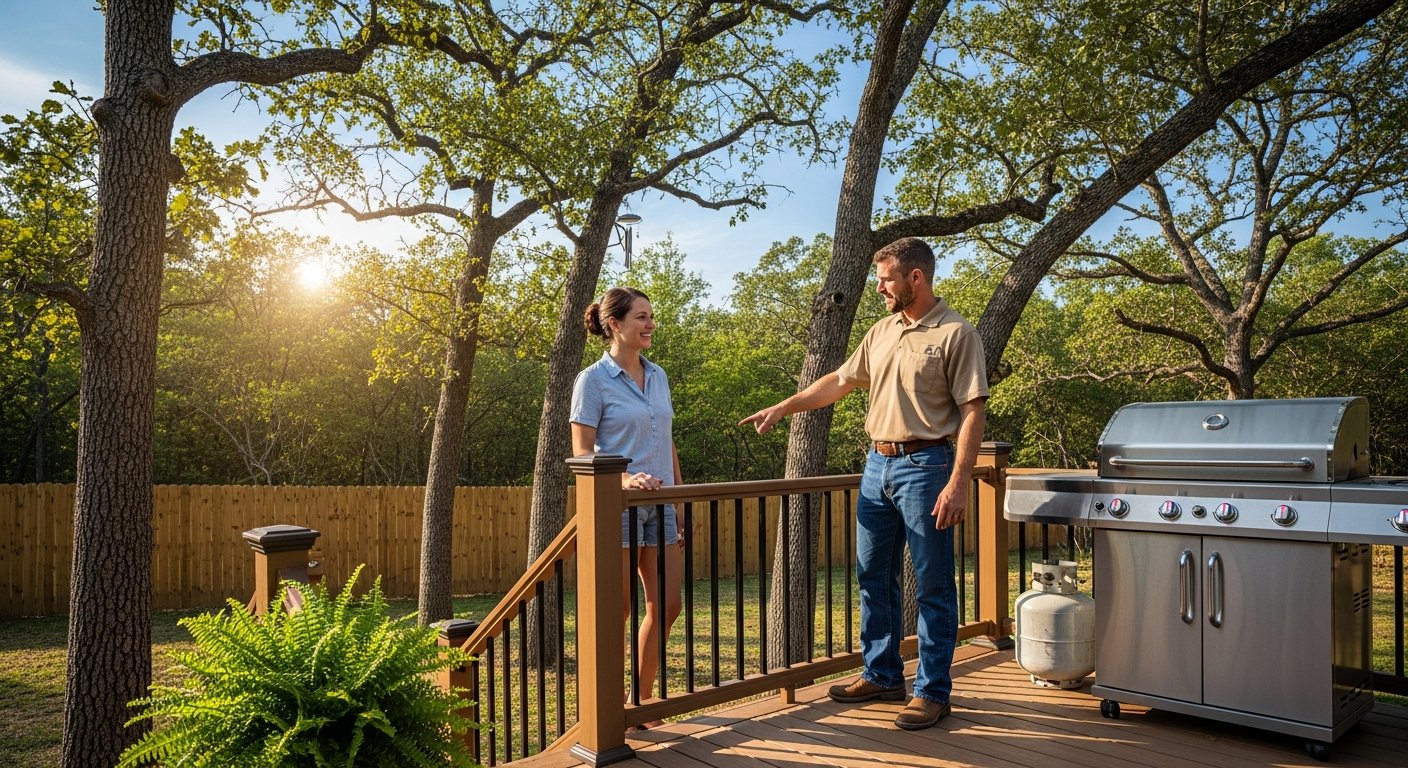
Arkansas homeowners love their outdoor living spaces. From the Ozark foothills to the White River valley, a well-built deck extends your home’s livable square footage and provides a perfect spot for summer barbecues, quiet morning coffee, or evening gatherings with friends. But maintaining that deck can become a relentless chore. In Arkansas’s humid subtropical climate, traditional wood decks face a constant battle against moisture, rot, insects, and relentless UV rays. Many homeowners find themselves spending more time staining, sealing, and repairing than actually enjoying their deck. This is why the conversation around low maintenance decking materials composite PVC hardwood Arkansas has become so important for local homeowners. The good news is that modern decking technology offers several durable, beautiful alternatives that let you reclaim your weekends. This guide explores the three primary low-maintenance options available to Arkansas residents: composite decking, PVC decking, and tropical hardwood decking. We will compare their performance in our specific climate, discuss installation considerations, and help you determine which material best fits your home and lifestyle. As a Batesville-based construction and remodeling company, we have installed all three types across Independence County and understand exactly how each one holds up to Arkansas weather.
Why Low Maintenance Decking Matters in Arkansas
Arkansas presents unique challenges for outdoor structures. Our summers bring intense heat and humidity, while winters can deliver freezing temperatures and occasional ice storms. Spring and fall often mean heavy rainfall. For a traditional pressure-treated pine deck, this cycle of wetting and drying leads to warping, cracking, and splitting. Wood decks require annual or bi-annual cleaning, staining, and sealing to prevent premature decay. Over a decade, the cost of maintenance products and the value of your labor can exceed the original cost of the deck itself. Low-maintenance decking materials eliminate or drastically reduce these ongoing tasks. Instead of spending a weekend every spring sanding and applying stain, you spend that time relaxing on your deck. This shift from maintenance to enjoyment is the primary driver behind the growing popularity of composite, PVC, and hardwood decking in Arkansas. These materials are engineered or naturally designed to resist moisture, UV damage, and insect infestation. They provide a consistent, beautiful appearance with minimal intervention. For Arkansas homeowners, selecting the right low-maintenance decking is an investment in both property value and quality of life.
Composite Decking: The Popular Performer
Composite decking is the most widely adopted low-maintenance alternative to wood. It is made from a blend of wood fibers (often reclaimed from furniture manufacturing or other industrial processes) and recycled plastic. This combination creates a material that looks like wood but resists rot, insects, and splintering much better than natural lumber. Composite decking has evolved significantly in the last decade. Early generations had a reputation for fading, scratching, and getting uncomfortably hot in direct sun. Modern composites use advanced cap technology: a protective polymer shell that encapsulates the wood-plastic core. This cap provides superior color retention, stain resistance, and durability against the intense Arkansas sun.
Performance in Arkansas Weather
In our local climate, capped composite decking performs exceptionally well. The protective shell prevents moisture absorption, which means the boards will not swell, cup, or rot like traditional wood. The UV-resistant pigments in the cap layer keep the color stable for years, even on a south-facing deck that receives full afternoon sun. Composite decking also handles the freeze-thaw cycles common in Arkansas winters. Because the material does not absorb water, it will not crack when temperatures drop below freezing. This is a critical advantage over wood, which can trap moisture and split during cold snaps. However, composite decking does have one notable drawback in our region: heat. Darker colors can become quite hot to bare feet on a July afternoon. If you plan to walk on your deck without shoes, consider a lighter color or a textured surface. We recommend choosing a composite product with a heat-reflective additive or a lighter tone to mitigate this issue. Overall, composite decking offers an excellent balance of aesthetics, durability, and reduced maintenance for Arkansas homes.
PVC Decking: Maximum Moisture Resistance
PVC (polyvinyl chloride) decking is a fully synthetic material made from 100% plastic. Unlike composite, it contains no wood fibers at all. This gives PVC decking some distinct advantages, particularly in environments where moisture is a constant concern. PVC decking is completely waterproof. It will not rot, mold, or mildew. It is also highly resistant to scratching, staining, and fading. For Arkansas homeowners near a pool, hot tub, or in a heavily shaded yard that stays damp, PVC is often the best choice. The material’s closed-cell structure prevents any water penetration, making it the most moisture-resistant decking option on the market.
Pros and Cons for Arkansas Homes
The primary benefit of PVC decking is its zero-maintenance nature. You never need to seal, stain, or paint it. A simple wash with soap and water restores its original appearance. PVC is also cooler underfoot than composite because it does not absorb and retain heat as readily. This is a significant advantage during Arkansas’s long, hot summers. On the downside, PVC decking can be more expensive than composite, and it has a slightly different feel underfoot. Some homeowners find it feels less natural than composite or wood. PVC is also more prone to expanding and contracting with temperature changes. Proper installation with the recommended gap spacing is essential to prevent buckling. In Arkansas’s climate, where temperatures can swing 50 degrees between seasons, this must be done correctly. We always follow the manufacturer’s specific guidelines for fastener placement and spacing to ensure a stable, long-lasting deck. Despite these considerations, PVC decking is an outstanding choice for Arkansas homeowners who want the absolute lowest maintenance possible, especially in areas with high moisture exposure.
Hardwood Decking: Natural Beauty with Low Maintenance
When Arkansas homeowners hear “low maintenance decking materials composite PVC hardwood Arkansas,” they might be surprised to see hardwood included. However, certain tropical hardwoods offer a natural durability that rivals or exceeds synthetic materials. Species like Ipe (Brazilian Walnut), Cumaru (Brazilian Teak), and Garapa are incredibly dense and naturally resistant to rot, decay, and insects. These hardwoods contain natural oils that act as preservatives, allowing them to withstand decades of exposure without chemical treatment. A properly installed Ipe deck can last 40 years or more with minimal maintenance. The key difference is that hardwood decking will weather to a silver-gray patina over time if left unsealed. Many homeowners love this natural, aged look. If you prefer to maintain the original warm brown color, you will need to apply an annual UV-protective oil. This is far less work than the sanding and sealing required for softwood decks, but it is more maintenance than composite or PVC.
Why Choose Hardwood in Arkansas
Hardwood decking offers unmatched natural beauty. The rich grain patterns and deep colors create a warm, luxurious appearance that synthetic materials struggle to replicate. Hardwood is also extremely strong and resistant to scratching and denting. It handles heavy furniture, foot traffic, and Arkansas’s occasional hail storms without showing damage. From a sustainability perspective, many tropical hardwoods are now harvested from managed plantations under strict environmental regulations. When sourced from certified suppliers, hardwood decking can be an eco-friendly choice. The primary challenges are cost and installation difficulty. Hardwood is expensive, often costing two to three times more than composite. It is also very dense, which requires special tools (carbide-tipped blades and drill bits) and experienced installers. Improper installation can lead to warping or fastener issues. For Arkansas homeowners who value natural aesthetics and are willing to invest in a premium product, hardwood decking provides a stunning, long-lasting outdoor surface.
Comparing the Three Options: A Detailed Breakdown
To help you make an informed decision, here is a direct comparison of composite, PVC, and hardwood decking across the factors that matter most to Arkansas homeowners. Consider your priorities carefully before choosing.
- Maintenance Requirements: PVC requires the least maintenance (just cleaning). Composite requires occasional cleaning and may need a refresher coating after 10-15 years. Hardwood requires annual oiling if you want to preserve its original color, or no treatment if you accept silvering.
- Durability in Arkansas Climate: PVC is impervious to moisture and handles freeze-thaw cycles perfectly. Composite resists moisture and rot but can be affected by extreme heat. Hardwood is naturally rot-resistant but must be properly installed to prevent movement.
- Aesthetic Appeal: Hardwood offers the most natural and luxurious look. Composite provides a convincing wood-like appearance with consistent color. PVC has a more uniform synthetic look, though modern options have improved dramatically.
- Cost (Material and Installation): Composite is mid-range. PVC is slightly higher. Hardwood is the most expensive, both for materials and installation labor due to its density.
- Comfort Underfoot: Hardwood stays relatively cool. PVC is cooler than composite. Composite (especially darker colors) can become hot in direct sun.
Each material has trade-offs. The best choice depends on your budget, your aesthetic preferences, and how much time you want to spend on maintenance. For many Arkansas homeowners, a capped composite deck offers the best balance of cost, appearance, and durability. For those with a higher budget and a love for natural materials, hardwood is unmatched. For maximum simplicity in wet environments, PVC is the clear winner.
Installation Considerations for Arkansas Decks
Regardless of which low-maintenance decking material you choose, proper installation is critical to its long-term performance. Arkansas’s climate demands attention to detail. First, the substructure (joists, beams, and posts) must be built with pressure-treated lumber or a rot-resistant alternative. Even if your deck boards are low-maintenance, the frame underneath is still vulnerable. We always recommend using hot-dipped galvanized or stainless steel fasteners to prevent corrosion in our humid environment. Second, proper drainage and airflow under the deck are essential. A low-maintenance decking surface does not eliminate the need for a well-ventilated substructure. Ensure that the ground beneath the deck slopes away from the house and that there is adequate clearance for air circulation. This prevents moisture buildup that can damage the frame and attract pests. Third, follow the manufacturer’s spacing and fastening instructions precisely. Both composite and PVC decking expand and contract with temperature changes. Failure to leave the correct gap between boards can lead to buckling in summer or gaps in winter. For hardwood, pre-drilling holes is mandatory to prevent splitting. Finally, consider the overall design of your deck. Adding features like covered sections, built-in seating, or integrated planters can enhance functionality and protect your decking from direct sun and rain, further extending its life. A well-designed deck is not just about the surface material; it is about creating a complete outdoor living environment.
Making the Right Choice for Your Batesville Home
Deciding between low maintenance decking materials composite PVC hardwood Arkansas options comes down to your specific needs. We recommend that homeowners start by asking three questions. First, what is your budget for the project? This includes both material and installation costs. Second, how much time are you willing to spend on annual maintenance? Be honest with yourself. If you dislike yard work, PVC or a high-end composite is the way to go. Third, what look do you want? If you love the natural grain and warmth of real wood and are willing to pay for it, hardwood is your best option. If you want a wood-like appearance without the work, choose a capped composite with a realistic grain pattern. If you are still unsure, visit a local deck showroom or look at completed projects in your neighborhood. Seeing the materials in person can help you make a final decision. At The Real Deal of Batesville, we guide our clients through this process every day. We can show you samples, discuss the pros and cons based on your specific site conditions, and provide a detailed estimate. Our goal is to build a deck that you will love for decades with minimal hassle.
Arkansas summers are too short and too precious to spend them maintaining a deck. By choosing the right low-maintenance decking material, you free up your time for what matters: enjoying your outdoor space with family and friends. Whether you select composite, PVC, or hardwood, you are making a smart investment in your home’s value and your own quality of life. The upfront cost is higher than a traditional wood deck, but the long-term savings in time, effort, and money are substantial. You will never buy another can of stain or spend another weekend with a pressure washer and a sander. Instead, you will be sitting on your beautiful, durable deck, watching the sunset over the Arkansas landscape.