When building a new home or adding an addition in Arkansas, the framing stage is where structural integrity meets long-term performance. Standard framing methods have been used for decades, but many Arkansas builders are now turning to advanced framing techniques to create stronger, more energy-efficient homes. These methods, also known as optimum value engineering (OVE), reduce lumber usage while improving insulation and reducing thermal bridging. For homeowners in Batesville and across the state, understanding these techniques can lead to better decisions and a more comfortable home.
What Makes Advanced Framing Different
Advanced framing is a set of design and construction strategies that optimize the wood frame of a house. Instead of using extra lumber “just to be safe,” advanced framing relies on engineering principles to place wood only where it is structurally needed. This approach reduces the amount of wood in wall assemblies, which leaves more space for insulation. The result is a home that is both cost-effective to build and cheaper to heat and cool.
In traditional framing, builders often place studs 16 inches on center (o.c.) and add extra headers, jack studs, and cripples that are not always necessary. Advanced framing techniques Arkansas builders adopt typically include spacing studs at 24 inches o.c., using single top plates where code allows, and eliminating unnecessary framing members at windows and doors. These changes may seem small, but they add up to significant material savings and energy performance improvements.
Key Techniques in Advanced Framing
There are several core techniques that define advanced framing. Each one contributes to a more efficient wall system that performs better in Arkansas’s humid subtropical climate. Understanding these methods helps homeowners ask the right questions when planning a new construction project.
24-Inch On-Center Spacing
The most recognizable feature of advanced framing is spacing wall studs 24 inches apart instead of the traditional 16 inches. This change reduces the number of studs by about one-third. With fewer studs, there are fewer thermal bridges through the wall assembly. Thermal bridging occurs when heat passes through solid wood studs, bypassing insulation. By reducing the number of studs, advanced framing reduces heat loss in winter and heat gain in summer.
This spacing works well with modern structural sheathing and engineered lumber. Plywood and oriented strand board (OSB) are strong enough to span 24 inches when properly nailed. Builders must verify that the wall sheathing meets code requirements for this spacing, but most standard products do. In Arkansas, where summer cooling costs can be high, this simple change can noticeably lower monthly utility bills.
Single Top Plate Construction
Traditional walls use a double top plate to distribute loads from above. Advanced framing allows a single top plate when the framing is aligned so that studs, rafters, and joists all stack directly over one another. This technique requires careful planning and precise construction, but it eliminates the need for a second plate and the associated lumber waste.
When using a single top plate, the builder must ensure that all load paths are continuous. This means the roof trusses or rafters must sit directly above studs, and the floor joists above must also align. When this alignment is achieved, the single plate carries the load effectively. Arkansas builders who use this method often report saving hundreds of board feet of lumber on a typical home.
Headers Sized for Actual Loads
In traditional framing, builders often install oversized headers above windows and doors. These headers are frequently built from two pieces of dimensional lumber with a piece of plywood sandwiched between them. This approach uses more wood than necessary and creates large thermal bridges. Advanced framing calls for headers that are sized to match the actual span and load they support.
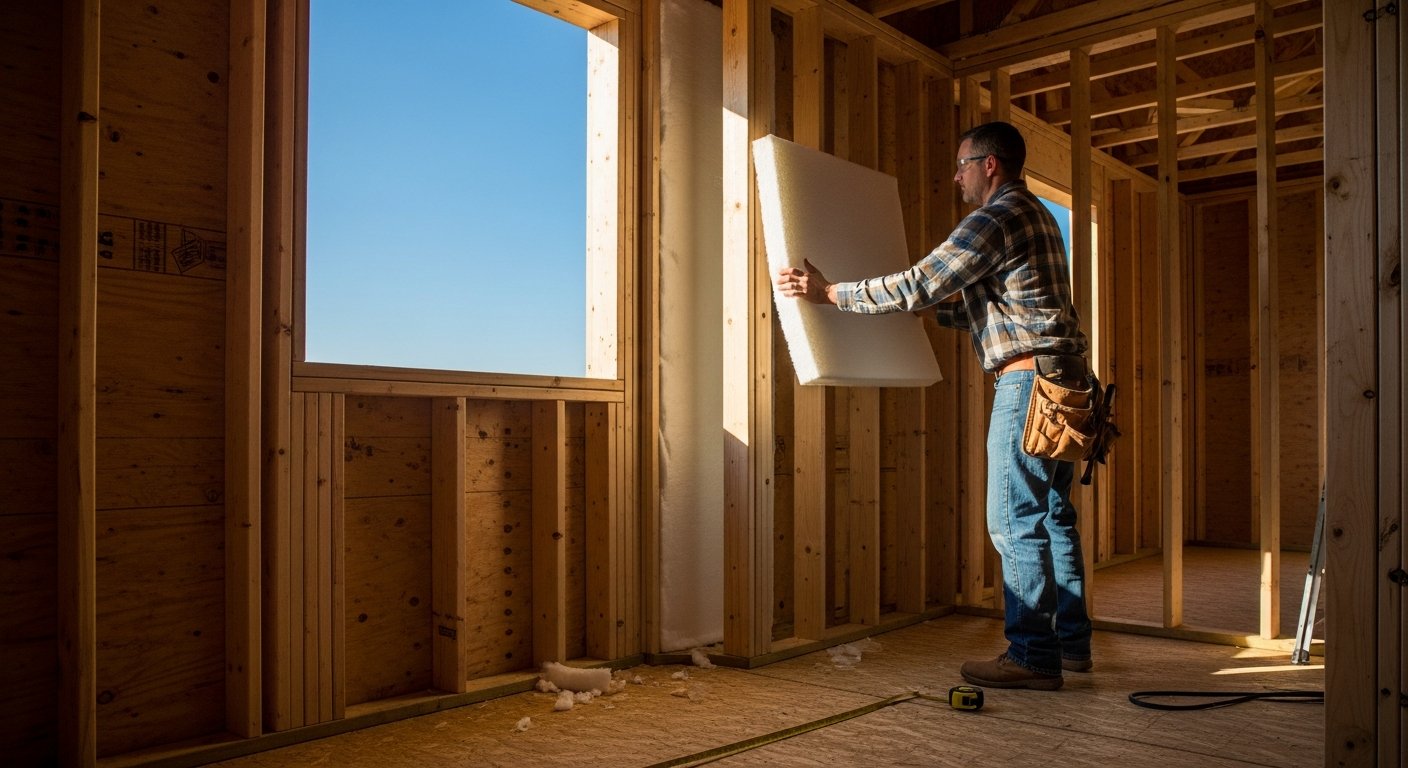
For non-load-bearing walls, advanced framing eliminates the header entirely. For load-bearing walls, the header is sized based on engineering calculations rather than habit. Additionally, advanced framing uses insulated headers, which are built with rigid foam insulation between the lumber layers. This dramatically reduces heat loss through the header area, which is often a weak point in the building envelope.
Elimination of Unnecessary Framing Members
Traditional framing includes many extra pieces such as cripple studs above and below windows, jack studs, and multiple trimmer studs. Advanced framing eliminates these where they are not structurally required. For example, windows and doors can be attached directly to the framing using special clips and brackets instead of relying on extra studs.
This technique requires the builder to use approved connectors and follow manufacturer specifications. The result is a cleaner wall cavity with fewer obstructions, making it easier to install insulation without gaps. Closed-cell spray foam insulation, which is popular in Arkansas due to its moisture resistance, works especially well in these open cavities.
Energy Performance and Comfort in Arkansas
The primary benefit of advanced framing techniques Arkansas builders are adopting is improved energy performance. Arkansas experiences hot, humid summers and cool winters with occasional freezes. A home’s envelope must resist both heat gain and heat loss. Advanced framing directly addresses this by reducing thermal bridging and increasing the effective R-value of walls.
Consider this: a standard 2×4 wall at 16 inches o.c. has an effective R-value of about R-13, but the actual performance is closer to R-9 or R-10 because of thermal bridging through the studs. By switching to 2×6 studs at 24 inches o.c. with advanced framing, the cavity can hold R-21 insulation, and the reduced stud count means less thermal bridging. The effective R-value can exceed R-17. This is a significant improvement without changing the insulation material itself.
Arkansas homeowners who build with advanced framing often report lower energy bills and more consistent indoor temperatures. Rooms feel more comfortable, and HVAC systems run less frequently. This is especially important in older homes in Batesville that may have had poor insulation and drafty walls. When combined with proper air sealing, advanced framing creates a tight building envelope that performs well in all seasons.
Material Savings and Cost Benefits
While the primary motivation for advanced framing is performance, there is also a clear financial benefit. Using less lumber means lower material costs. For a typical 2,000-square-foot home, advanced framing can save 1,500 to 2,000 board feet of lumber. This translates to several hundred dollars in material savings, plus reduced labor costs because there are fewer pieces to cut and install.
Here are the typical material savings homeowners can expect when builders use advanced framing:
- Stud count reduction of 25 to 30 percent by using 24-inch spacing
- Elimination of the second top plate saves about 120 linear feet of lumber per floor
- Header material reduced by 50 percent or more when properly sized
- Reduced use of jack studs, cripples, and unnecessary trimmer studs
- Less waste on the jobsite, which lowers dumpster and disposal fees
These savings do not come at the expense of quality. In fact, advanced framing homes are often stronger because the load paths are more direct and predictable. The money saved on lumber can be reinvested in higher-quality windows, better insulation, or upgraded HVAC equipment, further improving the home’s performance.
Structural Considerations and Code Compliance
Some homeowners worry that reducing the number of studs will make their home weaker. In reality, advanced framing is based on sound engineering principles. The International Residential Code (IRC) allows 24-inch on-center spacing for 2×6 studs in most wall configurations. The code also permits single top plates when load paths are aligned. Arkansas has adopted the IRC with state-specific amendments, and advanced framing is fully compliant when executed correctly.
Builders must pay attention to wall bracing requirements. With fewer studs, the wall relies more on sheathing for lateral bracing. Plywood or OSB sheathing with proper nailing patterns meets these requirements. Some builders also use structural insulated panels (SIPs) or insulated concrete forms (ICFs) for even better performance, but these are separate systems from advanced framing.
In our guide on Choosing Custom Home Builders in Arkansas: A Local Guide, we explain how to evaluate a builder’s approach to framing and energy efficiency. A builder who understands advanced framing will be able to explain their methods and show you examples of their work.
Advanced Framing and HVAC Ductwork
One often-overlooked benefit of advanced framing is the impact on HVAC ductwork placement. With studs spaced 24 inches apart, there is more room to run ducts through interior walls. This allows builders to keep ductwork inside the conditioned envelope of the home, which is a best practice for energy efficiency. Ducts that run through attics or crawl spaces lose energy through conduction and air leaks.
In Arkansas, attic temperatures can exceed 140 degrees Fahrenheit in summer. Ducts in the attic can lose 20 to 30 percent of conditioned air. By using advanced framing to create interior chases for ducts, builders can keep the ductwork in conditioned space. This alone can improve HVAC efficiency by 10 to 15 percent, reducing both energy bills and wear on equipment.
Advanced framing also makes it easier to install larger insulation batts without compression. When insulation is compressed, its R-value drops. With 24-inch spacing, the insulation fits perfectly without being squeezed, preserving its full thermal performance.
Working with a Local Arkansas Builder
If you are planning a new home or major addition in Batesville or the surrounding area, ask potential builders about their experience with advanced framing techniques. Not all builders are familiar with these methods, and some may be hesitant to change from traditional practices. Look for a builder who can demonstrate a track record of energy-efficient construction and who understands the specific climate challenges of Arkansas.
A good builder will walk you through their framing plan, explain where they save lumber and how they maintain structural integrity. They should also be able to provide references from previous clients who built with advanced framing. Ask about the insulation strategy, air sealing details, and how they handle thermal bridging at corners and intersections.
At The Real Deal of Batesville, we prioritize advanced framing because we believe in building homes that perform better and last longer. Our team has extensive experience with OVE techniques, and we apply them to every project where they make sense. Whether you are building a custom home, adding a room, or remodeling an existing structure, using advanced framing techniques Arkansas builders trust can make a real difference in your home’s comfort and efficiency.
Advanced framing is not a one-size-fits-all solution, but it is a proven approach that delivers measurable benefits. By reducing lumber use, improving insulation, and creating a tighter building envelope, these techniques help homeowners save money and enjoy a more comfortable living space. When paired with proper air sealing and high-performance windows, advanced framing forms the backbone of a truly energy-efficient home.
Before starting your next construction project, take the time to learn about the framing methods your builder plans to use. The upfront investment in better framing pays dividends for decades in lower utility bills, fewer drafts, and a quieter, more comfortable home. In a climate like Arkansas, where heating and cooling costs represent a significant portion of a household budget, advanced framing is one of the smartest choices you can make.