Arkansas bathrooms face a unique set of challenges. High humidity, frequent temperature swings, and the daily steam from hot showers create an environment that can destroy standard wall materials within a few years. If you are planning a bathroom remodel or building a new home in Batesville or anywhere in the Natural State, choosing the right wallboard is not just a preference. It is a necessity. The difference between a bathroom that stays pristine for decades and one that develops mold, peeling paint, and structural rot often comes down to one critical decision: using moisture resistant drywall. This guide walks through everything Arkansas homeowners need to know about selecting, installing, and maintaining moisture resistant drywall for bathrooms, with practical advice tailored to the local climate and building conditions.
Why Standard Drywall Fails in Arkansas Bathrooms
Standard drywall, also known as white board or regular gypsum board, is made from gypsum plaster sandwiched between paper facers. This material works fine in living rooms and bedrooms where moisture levels stay low. In a bathroom, however, the paper facers act like a sponge. They absorb humidity from the air, wick moisture from adjacent surfaces, and create an ideal breeding ground for mold and mildew. Over time, the paper delaminates, the gypsum core softens, and the wallboard loses its structural integrity.
Arkansas weather amplifies this problem. Summers in Batesville bring humidity levels that often exceed 80 percent. Combine that with a bathroom that gets used twice daily, and you have a recipe for rapid wall deterioration. Homeowners who use standard drywall in a shower area often notice bubbling paint, dark stains, or a musty smell within 12 to 24 months. The only permanent fix is replacement with a material designed to resist moisture from the start.
What Is Moisture Resistant Drywall?
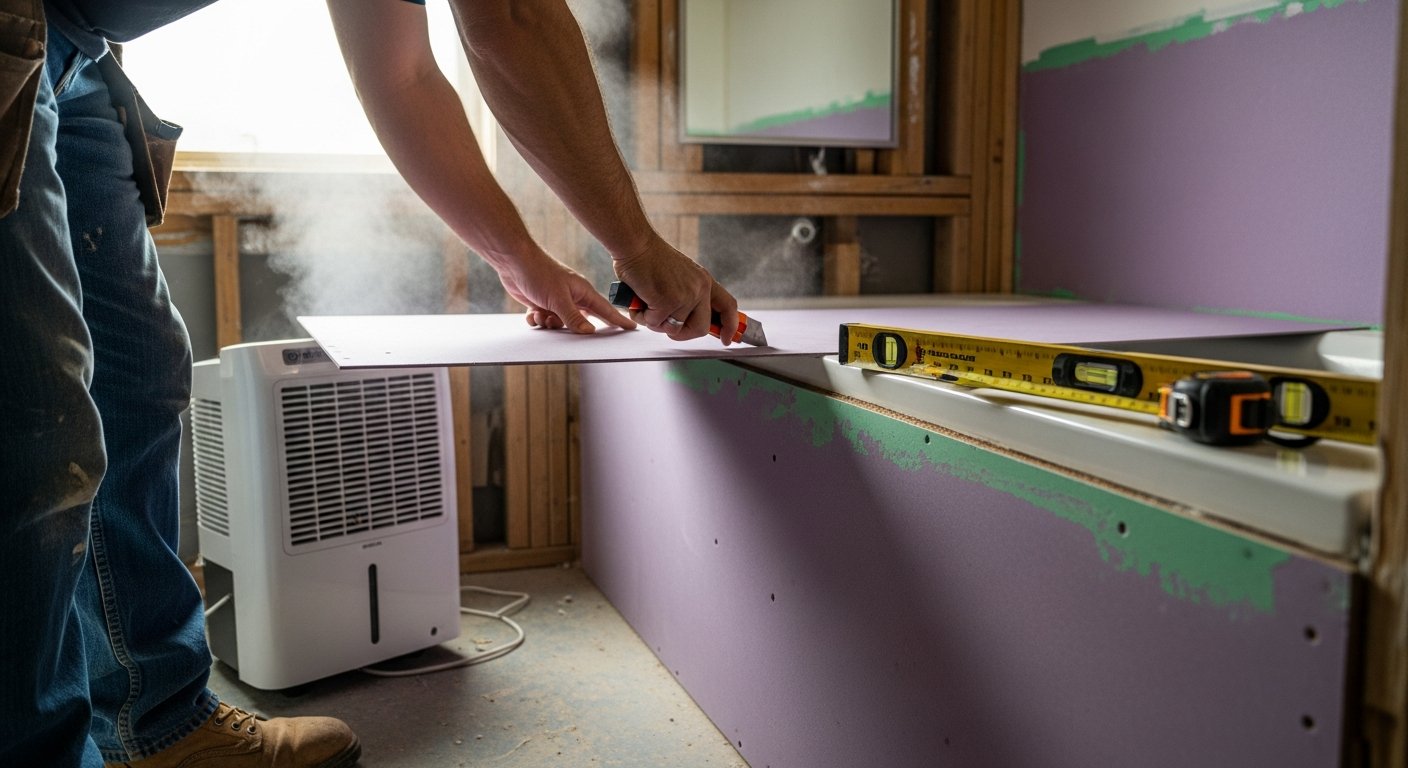
Moisture resistant drywall, often branded as green board or purple board, is a specially formulated gypsum panel designed to withstand higher levels of humidity. The core contains additives that reduce water absorption, and the facers are treated with wax or silicone to repel moisture. Green board has a distinctive green paper facing, while purple board uses a mold-resistant gypsum core and a fiberglass mat facing that offers even better protection.
These products are not waterproof. They are moisture resistant. The distinction matters. If water pools on the surface or if the board is submerged, it will still fail. But for the vapor and condensation common in bathrooms, moisture resistant drywall provides a significant performance upgrade over standard options. It also meets building code requirements in many jurisdictions for bathroom walls and ceilings.
Green Board Versus Purple Board
Green board is the older standard. It has been used for decades in bathrooms, laundry rooms, and basements. It performs well in areas with occasional moisture exposure but is not recommended for direct water contact areas like shower surrounds. Purple board, sometimes called mold resistant drywall, offers a higher level of protection. The core is treated with antimicrobial agents, and the fiberglass mat facing does not absorb water like paper. For Arkansas homeowners who want maximum durability, purple board is the better investment.
Where to Use Moisture Resistant Drywall in a Bathroom
Not every square inch of a bathroom requires moisture resistant drywall, but strategic placement prevents future problems. The key is to identify zones where humidity and condensation are highest. Here are the areas where moisture resistant drywall is essential:
- Shower and tub surrounds: These walls take direct spray and steam. Use cement board or a waterproof backer board behind tile, but moisture resistant drywall can be used on adjacent walls.
- Ceilings above showers and tubs: Steam rises and condenses on the ceiling. Moisture resistant drywall prevents sagging and mold growth.
- Walls behind sinks and vanities: Splashes and high humidity near plumbing fixtures make these walls vulnerable.
- Toilet area: Condensation from toilet tanks and nearby plumbing creates moisture issues.
- Exterior walls: In Arkansas, exterior walls in bathrooms face both indoor humidity and outdoor temperature extremes. Moisture resistant drywall adds a layer of protection against condensation within the wall cavity.
Using moisture resistant drywall in all these locations creates a comprehensive barrier against the humidity that Arkansas bathrooms endure. It also simplifies future maintenance because the wallboard itself will not degrade when exposed to normal bathroom conditions.
Installation Best Practices for Arkansas Homes
Installing moisture resistant drywall requires the same basic techniques as standard drywall, but a few details matter more when moisture is a concern. Proper installation ensures the material performs as intended. Here are the critical steps for a successful bathroom drywall project in Arkansas:
1. Use corrosion-resistant fasteners. Standard drywall screws can rust in humid conditions. Use coated screws or stainless steel fasteners to prevent rust stains from bleeding through paint or texture.
2. Leave proper gaps. Moisture resistant drywall expands and contracts with humidity changes. Leave a 1/8-inch gap at all edges and corners. Fill these gaps with flexible caulk rather than joint compound to accommodate movement without cracking.
3. Treat all cut edges. Cutting moisture resistant drywall exposes the gypsum core, which can absorb moisture. Seal all cut edges with a vinyl-on-metal primer or a specialized edge sealer before taping and finishing.
4. Use mold-resistant joint compound. Standard joint compound can support mold growth. Select a pre-mixed compound that includes antimicrobial additives. This small upgrade reduces the risk of mold forming at taped joints.
5. Prime before painting. Moisture resistant drywall has a smooth, treated surface that resists paint adhesion. Apply a high-quality primer designed for glossy or non-porous surfaces before applying bathroom-grade paint. This step prevents peeling and ensures a durable finish.
Following these installation practices maximizes the lifespan of moisture resistant drywall in an Arkansas bathroom. Skipping any of these steps can compromise the system, even if the material itself is high quality.
Local Building Codes and Permits in Arkansas
Arkansas does not have a statewide building code that applies to all residential construction. Instead, local jurisdictions adopt and enforce codes. In Batesville and Independence County, the 2018 International Residential Code (IRC) is commonly referenced. The IRC requires moisture resistant drywall behind tub and shower surrounds and in other high-moisture areas. Some local amendments may specify additional requirements.
Before starting a bathroom remodel that involves drywall replacement, check with the Batesville Building Department or your county planning office. A permit is typically required for any work that involves moving plumbing, electrical, or structural elements. Replacing drywall alone may not require a permit, but confirming this upfront avoids surprises. Working with a local contractor who knows the permitting process in Independence County saves time and ensures compliance.
The Real Deal of Batesville handles all permitting and code compliance as part of their bathroom remodeling services. They understand the specific requirements for moisture resistant drywall installation in local homes and can guide homeowners through the process from start to finish.
Cost Considerations for Moisture Resistant Drywall
Moisture resistant drywall costs more than standard drywall, but the premium is modest compared to the cost of repairing water damage. Standard drywall sheets run approximately $15 to $20 for a 4×8 panel. Green board costs about $20 to $25 per sheet. Purple board ranges from $25 to $35 per sheet. For an average bathroom with 400 to 600 square feet of wall and ceiling surface, the material cost difference is roughly $100 to $200.
Labor costs for installation are similar regardless of the drywall type. The same crew that hangs standard drywall can install moisture resistant products without special training. The total cost for a typical bathroom drywall project in Arkansas, including materials, labor, tape, mud, and primer, ranges from $800 to $1,500 depending on bathroom size and complexity. This investment pays for itself the first time a pipe leaks or a shower steams up without causing wall damage.
Long-Term Value
Consider the alternative. Replacing mold-damaged drywall in a bathroom often costs $2,000 to $5,000 because it involves removing and replacing insulation, treating framing, repainting, and potentially addressing mold remediation. Spending an extra $200 upfront for moisture resistant drywall eliminates that risk for the lifespan of the bathroom. For Arkansas homeowners, this is one of the highest-ROI decisions in a bathroom remodel.
Common Mistakes Arkansas Homeowners Make
Even with the right materials, mistakes during installation or finishing can undermine performance. Here are the most frequent errors seen in Arkansas bathroom projects:
- Using green board in wet areas: Green board is not designed for direct water contact. Behind a shower tile, use cement board or a waterproof membrane. Green board belongs on walls and ceilings away from direct spray.
- Skipping the primer: Moisture resistant drywall has a slick surface. Paint applied without primer peels within months. Always prime with a product formulated for glossy surfaces.
- Ignoring ventilation: Even the best drywall cannot overcome a bathroom without adequate exhaust. Install a properly sized fan that vents to the outside, not into the attic. Run it during showers and for 20 minutes afterward.
- Sealing edges with joint compound only: Joint compound cracks over time, allowing moisture behind the tape. Use flexible caulk at corners and around fixtures for a lasting seal.
- Overlooking the ceiling: The ceiling in a bathroom receives constant steam. Use moisture resistant drywall there too, not standard ceiling board.
Avoiding these mistakes ensures that the moisture resistant drywall performs as intended. Partnering with an experienced local contractor eliminates the guesswork and guarantees a professional result.
Why Work with a Local Arkansas Contractor
Hiring a contractor who understands Arkansas building conditions makes a significant difference. The Real Deal of Batesville has completed numerous bathroom remodels throughout Independence County. They know which materials hold up best in the local climate, which building inspectors expect, and how to schedule work around Arkansas weather patterns. Their team handles everything from drywall installation to full bathroom renovations, including plumbing, tiling, and painting.
Local contractors also source materials from regional suppliers who understand the demand for moisture resistant products in Arkansas. They can recommend specific brands and grades that perform well in Batesville homes. And because they work in the community, they stand behind their work with warranties and service guarantees that out-of-town crews cannot match.
If you are planning a bathroom project in Batesville or the surrounding area, contact The Real Deal of Batesville for a consultation. They will assess your bathroom, recommend the right drywall type for each area, and provide a detailed estimate that includes all materials, labor, and permit fees.
Moisture resistant drywall is a simple upgrade that protects one of the most used rooms in your Arkansas home. It prevents mold, extends the life of paint and tile, and saves thousands in future repair costs. With the right materials, proper installation, and a knowledgeable local contractor, your bathroom will stay beautiful and functional for years to come.