Building a home in Arkansas presents unique challenges. The state’s humid subtropical climate means hot summers, mild winters, and significant temperature swings throughout the year. For homeowners and builders in Batesville and surrounding areas, the framing stage offers one of the best opportunities to improve long-term energy performance. Energy efficient framing techniques Arkansas builders use can reduce heating and cooling costs by 15 to 25 percent while creating a more comfortable indoor environment. These methods go beyond standard construction to minimize thermal bridging, optimize insulation placement, and reduce material waste. Whether you are planning a new custom home or a major addition, understanding these framing strategies will help you work effectively with your construction team and make informed decisions that pay off for decades.
Why Standard Framing Falls Short in Arkansas Homes
Conventional framing, often called stick framing, uses 2×4 or 2×6 studs spaced 16 inches on center. While this method has been standard for generations, it creates many small gaps and solid wood paths that transfer heat directly between the interior and exterior. In Arkansas, where air conditioning runs for much of the year, those thermal bridges allow cooled air to escape and outdoor heat to enter. The result is higher utility bills and an overworked HVAC system.
Standard framing also often includes unnecessary lumber. Headers over windows that are oversized, cripple studs that add no structural value, and triple studs at corners all increase material costs without improving strength. Worse, these extra members create more places where insulation cannot be installed properly. A typical conventionally framed wall might have only 60 to 70 percent of its surface area fully insulated. The rest is wood, which has an R-value of roughly 1 per inch compared to fiberglass batts at 3 to 4 per inch. That difference adds up across an entire home.
Builders who adopt energy efficient framing techniques Arkansas construction crews have refined over recent years address these issues at the design stage. The goal is to use less lumber while achieving the same or better structural performance, then fill the remaining cavity with continuous insulation. This approach is sometimes called optimum value engineering or advanced framing. It started gaining traction in colder climates but works equally well in the South, where cooling loads dominate.
Key Energy Efficient Framing Techniques for Arkansas
Several specific techniques form the foundation of energy efficient framing. When combined, they create a building envelope that performs far better than standard construction. Below are the most important methods to discuss with your contractor.
24-Inch On-Center Spacing
Moving from 16-inch to 24-inch stud spacing is one of the simplest changes. It reduces the number of vertical studs by about 33 percent, which cuts lumber costs and decreases thermal bridging. With proper engineering, 2×6 studs at 24 inches on center provide adequate support for most residential walls in Arkansas. This spacing also leaves more room for insulation, allowing full-depth batts with less compression. The key is ensuring that the roof trusses or rafters align with the stud layout, which requires coordination during the design phase. Many truss manufacturers can accommodate this spacing without extra cost.
Single Top Plates and Header Design
Standard framing uses double top plates to distribute loads. With 24-inch spacing and careful alignment, a single top plate often suffices, provided the roof trusses land directly on studs. This change eliminates one continuous layer of lumber around the entire house perimeter, reducing thermal bridging at the top of the wall. For window and door headers, energy efficient framing uses insulated headers or single-ply headers sized only for the actual load. In non-load-bearing walls, a simple single 2×4 or 2×6 can serve as the header, allowing insulation to fill the rest of the cavity. This is a significant improvement over the traditional practice of sandwiching two 2x12s with a piece of plywood, which creates a solid thermal bridge from the interior to the exterior.
Ladder and California Corners
Standard corner framing uses three or four studs nailed together to provide a nailing surface for interior and exterior sheathing. This creates a dense cluster of wood that is impossible to insulate. The ladder or California corner method uses two studs in the corner with a third blocking piece that provides nailing for drywall. This leaves an open cavity that can be filled with insulation. In our guide on Open Concept Framing: Load Bearing Walls in Arkansas, we explain how proper corner detailing supports both structural integrity and energy performance. This technique alone can improve the effective R-value of a corner by 30 percent or more.
Eliminating Unnecessary Framing Members
Many standard wall sections include cripple studs above and below windows, extra studs at intersecting walls, and double studs at rough openings. Energy efficient framing eliminates these where not structurally required. For example, window openings can be framed with a single jack stud and a single king stud instead of doubling both. Intersecting interior walls can be tied into exterior walls using metal drywall clips or engineered brackets instead of adding extra studs. This practice, sometimes called right-sizing the frame, reduces lumber use by 10 to 20 percent and improves insulation coverage.
Here is a summary of the primary energy efficient framing techniques Arkansas builders should consider:
- 24-inch on-center spacing for walls and roof trusses to reduce thermal bridging and lumber costs
- Single top plates where load alignment allows, eliminating one layer of wood around the entire house
- Insulated or single-ply headers sized to actual loads rather than oversized stock headers
- Ladder or California corners to create insulatable corner cavities instead of solid wood stacks
- Right-sizing of stud counts at openings and intersections using clips and brackets
Each of these techniques requires careful planning and communication between the designer, framer, and insulation contractor. When executed correctly, they create a wall system that performs closer to its theoretical R-value, meaning the insulation you pay for actually delivers the expected thermal resistance. For a 2×6 wall with R-21 fiberglass batts, standard framing typically achieves an effective whole-wall R-value of about R-15 to R-17. Advanced framing can push that to R-19 or R-20, a noticeable improvement for the same insulation material.
Insulation Strategies That Complement Advanced Framing
Energy efficient framing and insulation work together as a system. The framing techniques described above create larger, more uniform cavities that are easier to insulate completely. However, the choice of insulation material also matters. In Arkansas, where humidity is high, closed-cell spray foam or dense-pack cellulose often outperform fiberglass batts because they seal air leaks and resist moisture absorption. Spray foam also adds structural rigidity and can allow for smaller HVAC equipment, since the building envelope is tighter.
For homeowners concerned about cost, a hybrid approach works well. Use spray foam in the attic and crawlspace or basement, where air sealing is most critical, and use advanced framing with dense-pack cellulose in the walls. The cellulose provides excellent thermal performance and sound dampening, and it fills cavities completely without the settling issues loose-fill products sometimes have. When combined with 24-inch on-center framing, the installed cost of cellulose can actually be lower than fiberglass batts in a 16-inch layout because there are fewer cavities to fill.
Continuous exterior insulation is another strategy gaining popularity in Arkansas. A layer of rigid foam board, typically 1 to 2 inches thick, installed over the sheathing and under the siding, breaks the thermal bridge at every stud. This method, sometimes called outsulation, can increase the effective R-value of a 2×6 wall to R-25 or higher. It also reduces condensation risk inside the wall cavity, which is important in humid climates. The added cost is offset by energy savings and the ability to downsize heating and cooling equipment.
Practical Considerations for Batesville Homeowners
If you are planning a new home or major renovation in the Batesville area, energy efficient framing techniques Arkansas contractors can implement will affect your project in several ways. First, the design phase becomes more important. Advanced framing requires that all loads be calculated and that framing members be placed intentionally rather than by habit. Your architect or designer should specify 24-inch spacing, single top plates where possible, and insulated headers on the plans. Some builders are more familiar with these methods than others, so ask potential contractors about their experience with advanced framing before hiring.
Second, expect some resistance from framers who have always done things the traditional way. The techniques described here are code-approved and structurally sound, but they require a shift in mindset. Subcontractors may worry about callbacks for drywall cracking or nail pops. In reality, advanced framing, when done correctly, produces a more stable structure because the remaining lumber is less prone to shrinkage and movement. Providing the framing crew with clear details and perhaps a brief training session can prevent misunderstandings.
Third, verify that your local building inspector is comfortable with these methods. The International Residential Code permits advanced framing, but some local jurisdictions may have specific requirements. In Independence County, the code officials are generally familiar with these techniques, but it is wise to confirm early in the planning process. A pre-construction meeting with the builder, inspector, and insulation contractor can help ensure everyone is aligned.
Cost and Return on Investment
Energy efficient framing techniques Arkansas homeowners adopt typically reduce lumber costs by 5 to 10 percent compared to standard framing. The savings come from fewer studs, headers, and plates. However, some of that savings is offset by the cost of engineered brackets, metal clips, and possibly thicker sheathing if required for structural reasons. Overall, the net material cost is often neutral or slightly lower. The real financial benefit comes from reduced energy use. A home built with advanced framing and proper insulation can save $200 to $500 per year on utility bills, depending on size and HVAC efficiency.
There are also non-energy benefits. Homes with advanced framing are quieter because the insulation fills cavities more completely. They are more comfortable because interior surface temperatures stay closer to the desired room temperature. And they are more durable because the reduced wood volume means less moisture trapping and fewer opportunities for rot or mold. For homeowners in Batesville, where summer humidity can be oppressive, these comfort and durability gains matter as much as the dollar savings.
When you factor in the potential to downsize the HVAC system, the return on investment becomes even more attractive. A tighter, better-insulated home requires less cooling capacity, which means a smaller unit that costs less to purchase and operate. The combination of framing improvements and proper air sealing can reduce heating and cooling loads by 20 to 30 percent, allowing for a smaller system that runs more efficiently and provides better humidity control.
Working With a Local Builder Who Understands Energy Efficiency
Choosing the right contractor is critical to successfully implementing energy efficient framing techniques Arkansas homeowners can rely on. Look for a builder who has completed training in advanced framing or has a track record of energy-efficient projects. Ask for references and, if possible, visit a home under construction to see how the framing is being executed. The builder should be able to explain why they use specific techniques and how those techniques improve performance.
A good builder will also coordinate the framing with the insulation and HVAC contractors to ensure the whole system works together. For example, the framing layout should accommodate the planned insulation type. If spray foam is being used, the framers need to leave access for the foam installer to reach every cavity. If cellulose is specified, the framers should install netting or fabric before the drywall goes up. These details matter, and a builder who thinks about them from the start will deliver a better result.
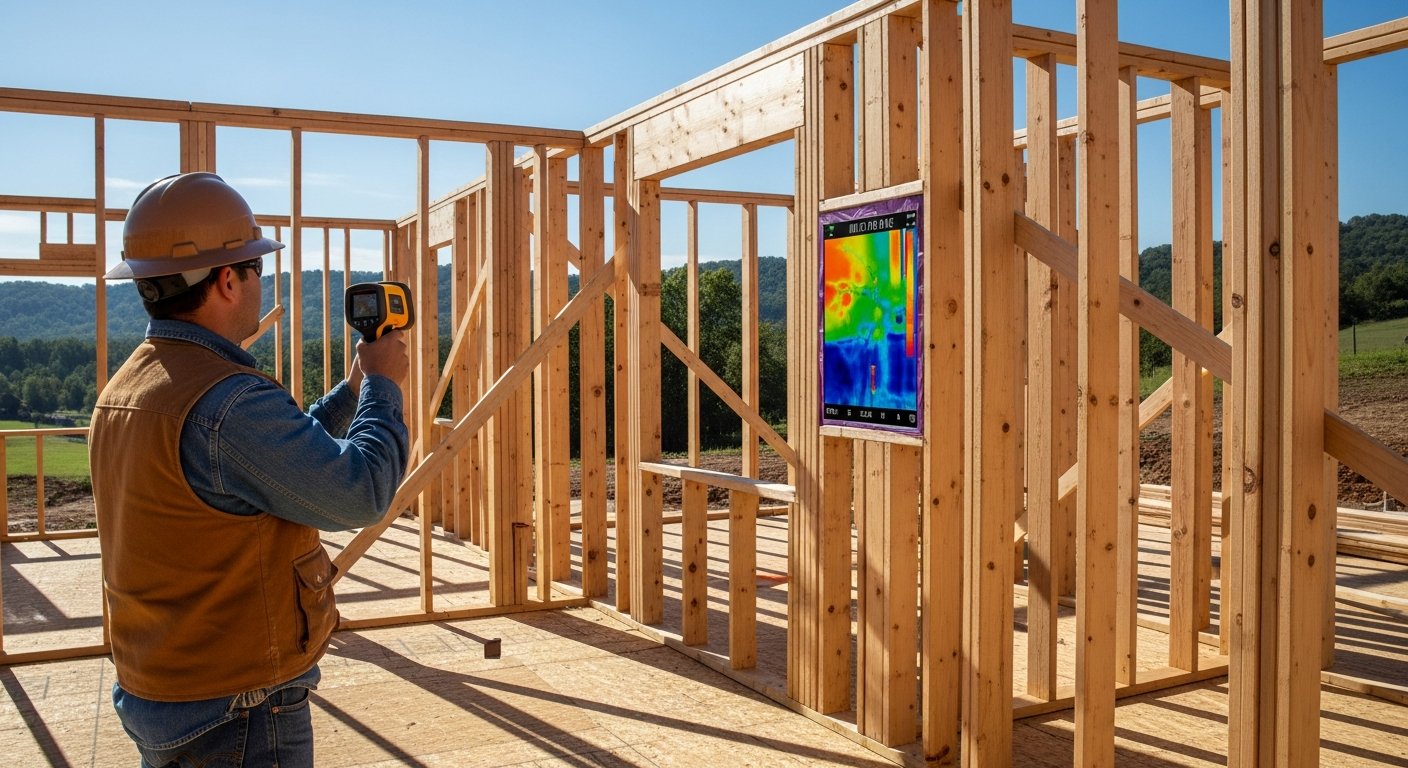
Finally, consider third-party verification of your home’s energy performance. Programs like Energy Star or the Department of Energy’s Zero Energy Ready Home offer certification that confirms the building meets rigorous efficiency standards. Even if you do not pursue formal certification, having a blower door test and thermal imaging inspection done during construction can identify air leaks and insulation gaps that need correction. These tests are relatively inexpensive and provide peace of mind that your investment in energy efficient framing is paying off.
Energy efficient framing techniques Arkansas builders have access to are proven, practical, and cost-effective. They reduce material waste, lower utility bills, and create more comfortable homes. For homeowners in Batesville and across the state, adopting these methods during the framing stage is one of the smartest decisions you can make. The upfront effort of planning and coordinating with a knowledgeable contractor pays dividends in energy savings, durability, and comfort for as long as you own the home. Whether you are building from scratch or adding onto an existing structure, ask your builder about advanced framing and make it part of your project from the beginning.