When you build a deck in Arkansas, the weather is not just a passing concern. It is the single most important factor in determining how long your deck will last and how much upkeep it will demand. Arkansas summers bring blistering heat and high humidity, while winters deliver freezing temperatures and moisture. Spring and fall often bring heavy rain and intense UV exposure. For homeowners in Batesville and across Independence County, the choice between composite and wood decking comes down to one question: which material can survive this climate with the least trouble and the most beauty? This guide breaks down the performance of each option so you can make a confident decision for your outdoor living space.
How Arkansas Weather Tests Your Deck
Arkansas sits in a humid subtropical climate zone. That means hot, humid summers with temperatures regularly reaching the 90s and occasional triple-digit days. Winters are mild but wet, with freeze-thaw cycles that can damage materials not designed for moisture expansion. The state also gets around 50 inches of rainfall per year, well above the national average. Add in strong UV radiation from long sunny days, and you have a recipe for constant wear on any outdoor structure.
These conditions affect wood and composite materials very differently. Wood is a natural product that responds to moisture by swelling and contracting. Composite decking is engineered to resist these changes. Understanding how each material handles heat, moisture, UV light, and freeze-thaw cycles is essential for choosing the right deck for your Arkansas home.
Wood Decking in Arkansas: Pros and Cons
Natural Beauty and Upfront Cost
Wood decking has been the traditional choice for decades. Pressure-treated pine is affordable and widely available, making it a popular option for homeowners on a budget. Cedar and redwood offer natural rot resistance and a richer appearance, but they come at a higher price point. The grain patterns and warm tones of real wood are hard to replicate, and many homeowners love the authentic look of a natural timber deck.
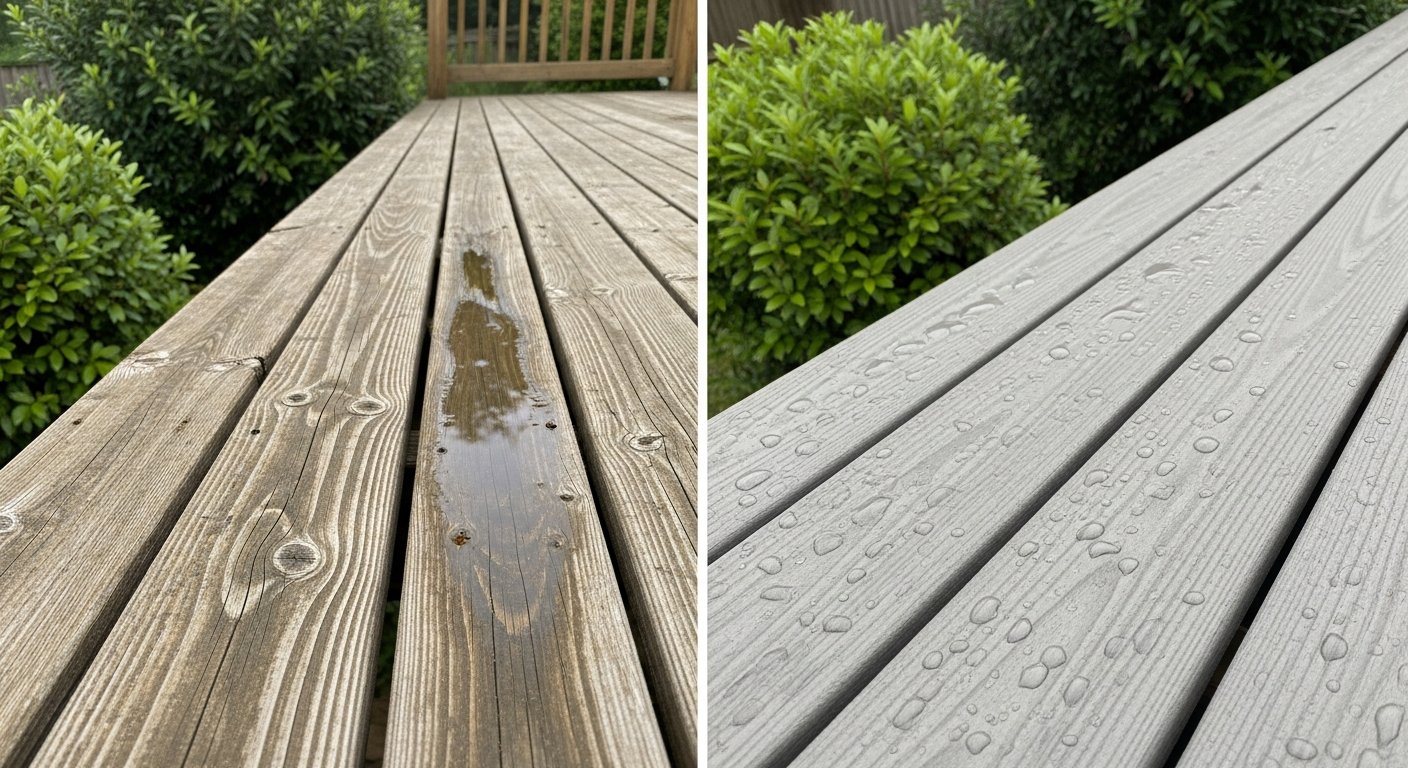
However, the initial cost savings of wood can disappear quickly in the Arkansas climate. The combination of moisture, heat, and UV light accelerates the aging process. Wood decks in this region typically need staining or sealing every one to two years. Without regular maintenance, the wood will gray, crack, and splinter. In Batesville, where summer humidity is high, mold and mildew growth is a constant battle for wood deck owners.
Moisture and Rot Concerns
Arkansas receives significant rainfall throughout the year. Wood decking absorbs moisture, which leads to swelling, warping, and eventual rot if the boards are not properly sealed. Even pressure-treated wood can develop issues over time. The freeze-thaw cycles in winter cause absorbed water to expand as it freezes, which can crack the wood fibers. This is a particular problem for decks built close to the ground or in shaded areas where moisture lingers longer.
For Arkansas homeowners, the maintenance burden of wood decking is real. You will need to plan for annual cleaning, sanding, and applying a protective finish. If you skip a season, the damage accelerates. Many homeowners in Batesville find that after five to seven years, a wood deck requires significant repairs or partial replacement.
Composite Decking in Arkansas: Pros and Cons
Engineered for the Climate
Composite decking is made from a blend of wood fibers and recycled plastic. This combination creates a material that resists moisture, rot, and insect damage far better than natural wood. For Arkansas weather, this is a major advantage. Composite boards do not absorb water the way wood does, so they are much less likely to warp, swell, or crack during freeze-thaw cycles. The plastic content also makes them resistant to mold and mildew, which is a significant benefit in the humid Arkansas summers.
Many composite products come with a cap or protective layer that blocks UV radiation. This means the color will not fade or gray as quickly as wood. High-quality composite decking can maintain its appearance for decades with minimal cleaning. You will not need to stain, seal, or paint it. A simple wash with soap and water once or twice a year is usually enough to keep it looking new.
Heat Retention and Upfront Cost
The main drawback of composite decking in Arkansas is heat retention. Darker colors can become uncomfortably hot under direct summer sun. If your deck gets full afternoon sun, you may want to choose a lighter color or a composite brand with heat-reducing technology. Some newer products use advanced cap layers that reflect more solar radiation, keeping the surface temperature lower.
Upfront cost is another factor. Composite decking costs two to three times more than pressure-treated wood. For a typical deck in Batesville, the material cost alone can be several thousand dollars higher. However, when you account for the cost of stains, sealers, and labor over ten to fifteen years, composite often becomes the more economical choice.
Comparing Long-Term Performance in Arkansas
To make the right choice, it helps to compare how each material performs across the key weather challenges in Arkansas. Below is a summary of the main differences.
- Moisture resistance: Composite decking does not absorb water, so it resists rot and swelling. Wood absorbs moisture and requires regular sealing to prevent damage.
- UV and color fading: Capped composite boards resist fading and maintain color for years. Wood turns gray and weathered without annual staining.
- Mold and mildew: Composite is naturally resistant to mold and mildew. Wood needs frequent cleaning and treatment in humid climates.
- Freeze-thaw durability: Composite handles temperature swings without cracking. Wood can split when trapped moisture freezes and expands.
- Maintenance requirements: Composite needs only occasional washing. Wood demands annual staining, sealing, and periodic repairs.
These differences add up over time. A wood deck in Arkansas may need a full refinishing every two years, each costing hundreds of dollars in materials and labor. A composite deck may require nothing beyond a simple cleaning for a decade or more. For homeowners who value their weekends and want to enjoy their deck rather than work on it, composite is a strong contender.
Cost Analysis: Short-Term vs Long-Term
Let us look at a typical 300-square-foot deck in Batesville. Pressure-treated pine decking costs roughly $2 to $4 per square foot for materials. A basic composite decking starts around $5 to $8 per square foot, with premium capped products reaching $10 to $13 per square foot. Installation costs are similar for both materials, though composite may require slightly more labor due to specialized fasteners and hidden fastening systems.
Over the first five years, the wood deck appears cheaper. But by year ten, you will have spent money on at least four stain or seal applications, possibly a partial board replacement, and significant time. The composite deck will have cost nothing in maintenance. Many homeowners find that composite pays for itself within eight to twelve years, especially if they factor in the value of their own labor.
For those planning to stay in their home long-term, composite decking is often the smarter investment. If you are building a deck to sell a home within a few years, wood may be acceptable, but you should still expect buyers to ask about the maintenance history and condition of the deck.
Choosing the Right Deck for Your Batesville Home
There is no single correct answer for every homeowner. Your decision should depend on your budget, your willingness to perform maintenance, and how you plan to use the deck. If you love the look of natural wood and do not mind spending a weekend each year staining and sealing, a wood deck can be a beautiful addition to your home. Just be prepared for the Arkansas climate to test your commitment.
If you prefer a low-maintenance outdoor space where you can relax without worrying about the next rainstorm or heatwave, composite decking is the better choice. Modern composite products have come a long way in appearance and texture. Many now mimic the grain and color of real wood so closely that guests will not know the difference. The extra upfront cost buys you years of hassle-free enjoyment.
Working with a local contractor who understands Arkansas weather is critical regardless of which material you choose. A professional builder will ensure proper substructure, ventilation, and drainage to maximize the lifespan of your deck. In Batesville, the Real Deal of Batesville offers deck building services that account for local climate conditions, from foundation to finish.
Installation Considerations for Arkansas Decks
Proper installation is just as important as material selection. For wood decks, the framing must allow for air circulation to prevent moisture buildup. Joists should be spaced correctly, and all fasteners should be galvanized or stainless steel to resist rust. For composite decks, manufacturers have specific requirements for joist spacing and fastener types. Using the wrong hardware can void the warranty and lead to sagging or warping.
In Arkansas, the ground beneath the deck also matters. Clay soils common in Independence County can shift with moisture changes, affecting deck posts and footings. A professional contractor will set footings below the frost line and use proper drainage techniques to keep the substructure dry. These details make a significant difference in how long your deck stays level and safe.
Another consideration is the deck’s orientation. South-facing decks get the most sun, which can be hard on wood finishes and can make composite surfaces hot. Adding shade sails, umbrellas, or a pergola can reduce UV exposure and keep the deck cooler. For composite decks in sunny spots, choose a lighter color to minimize heat absorption.
Final Thoughts on Composite vs Wood Decking in Arkansas Weather
Arkansas weather is beautiful but demanding. The combination of heat, humidity, rain, and freeze-thaw cycles will test any deck material. Wood offers classic charm and a lower initial price, but it requires consistent care to survive the climate. Composite provides durability and low maintenance, with a higher upfront investment that pays off over time.
For homeowners in Batesville and the surrounding areas, the best choice depends on your priorities. If you want a deck that you can build, stain, and maintain as a hobby, wood can be rewarding. If you want a deck that you can enjoy without constant upkeep, composite is the way to go. Either way, working with a trusted local contractor ensures your deck is built to withstand whatever Arkansas weather brings.