In a small kitchen, every square inch matters. You want more counter space, extra storage, and a gathering spot for morning coffee, but your floor plan feels too tight for a traditional island. Many Arkansas homeowners in Batesville and across Independence County face this exact challenge. The good news is that a well-designed island is still possible, even in a compact layout. With the right approach, you can add function and style without sacrificing valuable floor space. This guide explores practical kitchen island ideas for small kitchens Arkansas homeowners can actually use, from rolling carts to custom built-ins that maximize every inch.
Why a Small Kitchen Benefits From an Island
A kitchen island does more than provide extra counter space. It creates a natural work triangle, offers additional storage, and can serve as an informal dining area. In a small kitchen, these benefits are even more critical. Without an island, you might find yourself constantly turning between the sink, stove, and refrigerator with limited landing space. A compact island bridges those gaps and streamlines your workflow.
For Arkansas homeowners, the climate also plays a role. Hot, humid summers mean you want to minimize clutter and keep surfaces clear. An island with built-in cabinets or open shelving helps you store small appliances out of sight, reducing visual noise. It also gives you a dedicated prep zone away from the main counters, which can be a lifesaver when you are canning vegetables or preparing a large meal for family gatherings.
However, the key is choosing the right size and style. A massive, fixed island can overwhelm a small room and make it feel cramped. Instead, focus on proportions. Aim for an island that is no more than 24 to 36 inches wide and 48 to 60 inches long. This leaves enough room for a 36-inch walkway on all sides, which is the minimum clearance recommended for comfort and safety.
Small Kitchen Island Ideas for Arkansas Homes
When space is limited, creativity becomes your best tool. Below are several approaches that work well in small kitchens, whether you are remodeling a historic home in Batesville or updating a modern build in the Arkansas countryside.
Rolling Carts and Movable Islands
A rolling cart or portable butcher block is one of the most flexible kitchen island ideas for small kitchens Arkansas residents can adopt. These units provide a sturdy work surface and storage underneath, and they can be wheeled out of the way when you need extra floor space for cooking or cleaning. Many models include towel bars, shelves, and drawers, making them surprisingly functional for their size.
Choose a cart with locking casters so it stays put during food prep. Look for a solid wood top that can double as a chopping surface. If your kitchen has an unused corner, park the cart there when not in use. You can also use it as a serving station during holidays or parties. This type of island is especially useful for renters or anyone who wants to test out an island before committing to a permanent build.
Drop-Leaf and Extendable Islands
A drop-leaf island gives you the best of both worlds: a compact footprint for daily use and an expanded surface when you need it. These islands feature hinged sides that fold down to save space. When you need extra prep area or seating for two, simply lift the leaves and lock them in place.
This design works well in galley kitchens or L-shaped layouts where floor space is at a premium. You can find drop-leaf islands with built-in storage underneath, such as open shelves or a small cabinet. For a custom touch, have a local contractor build a drop-leaf island that matches your existing cabinetry. This is a great project to discuss with a Batesville remodeling team that understands the dimensions of your specific space.
Narrow Islands and Peninsula Extensions
If a full island feels too large, consider a narrow island that is just 18 to 24 inches deep. This is essentially a long, skinny table that provides a breakfast bar and extra counter space without dominating the room. Pair it with counter-height stools that tuck completely underneath when not in use.
Another option is to extend an existing counter or wall into a peninsula. A peninsula attaches to one wall or cabinet run, creating an L-shaped or U-shaped layout. This gives you the functionality of an island without needing clearance on all four sides. Peninsulas are common in Arkansas homes where the kitchen opens into a dining or living area. They define the space while offering storage and seating.
Custom Built-In Islands
For a permanent solution, a custom built-in island can be tailored to your kitchen’s exact dimensions. Work with a local construction company to design an island that incorporates your specific needs, such as a deep drawer for pots and pans, a pull-out trash bin, or a microwave shelf. In a small kitchen, every inch of storage counts, so a custom design can maximize vertical space.
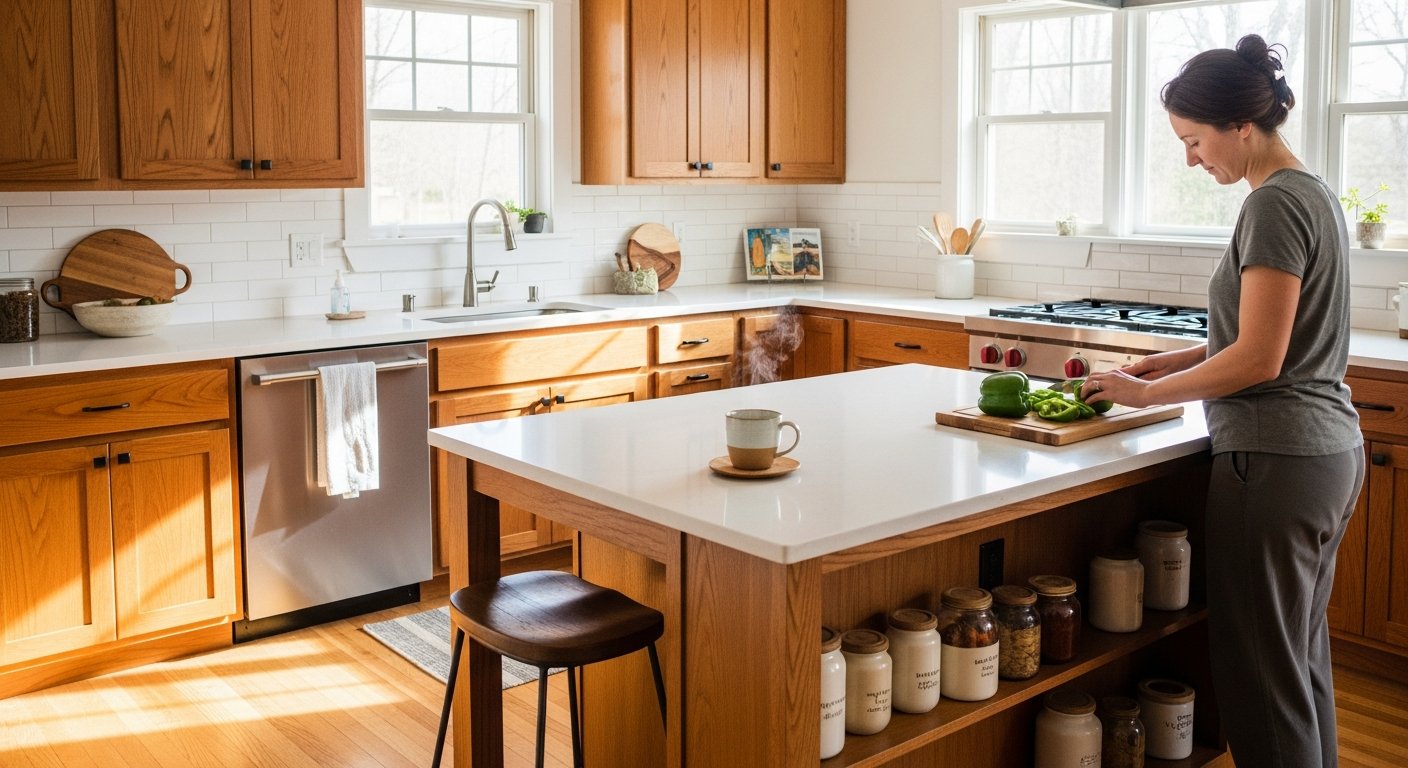
Consider adding open shelving on one side of the island for cookbooks or decorative items. This keeps the island from feeling boxy and adds visual lightness. You can also include a slim wine rack or a spice drawer. A custom island can be finished with the same countertop material as your main counters, creating a seamless look that makes the kitchen feel larger.
If you are planning a kitchen remodel, this is the ideal time to add a permanent island. A skilled contractor can ensure the island is properly anchored and that electrical outlets are installed for small appliances. For more on planning a larger renovation, see our guide on Batesville kitchen renovation.
Key Design Considerations for Small Kitchen Islands
Before you choose an island, consider these practical factors that affect usability and comfort.
- Clearance space: Leave at least 36 inches of walking space on all sides of the island. If you have a one-wall kitchen, aim for 42 to 48 inches between the island and the main counter to allow for opening cabinet doors and appliances.
- Seating overhang: If you plan to add stools, allow for a 12- to 15-inch overhang on the seating side. This gives guests enough legroom without making the island too wide.
- Electrical and plumbing: A small island can still accommodate an outlet strip or a pop-up outlet for charging devices. If you want a sink or cooktop, consult a professional to assess plumbing and ventilation requirements.
- Material choices: Lighter colors and reflective surfaces, such as white quartz or butcher block, help a small kitchen feel more open. Darker materials can work but may make the space feel smaller if used on a large surface.
Each of these factors influences how the island performs in your daily routine. Taking the time to measure and plan before purchasing or building will save you from costly mistakes.
Storage Solutions for Compact Islands
Storage is often the main reason homeowners want an island. In a small kitchen, the island can provide much-needed relief for overcrowded cabinets. Here are some storage ideas that work well in compact islands.
Open shelving on the island’s sides keeps everyday items within reach. Use baskets or bins to corral snacks, napkins, or cutting boards. This approach is affordable and easy to change as your needs evolve. If you prefer closed storage, choose an island with one or two deep drawers rather than cabinet doors. Drawers allow you to see and access items at the back without digging.
Another smart option is a towel bar or utensil rack mounted on the end of the island. This uses vertical space that would otherwise go unused. You can also install a magnetic knife strip on the side facing the cooktop, keeping knives handy but out of the way.
For larger items, consider an island with a built-in wine rack or a pull-out cutting board. These features add function without increasing the island’s footprint. If you work with a contractor, they can help you design storage that matches your cooking habits.
Making the Island a Focal Point
Even in a small kitchen, your island can become a design centerpiece. Use a contrasting countertop color or a different material to make the island stand out. For example, if your main counters are laminate, choose a butcher block or quartz top for the island. This adds visual interest without overwhelming the room.
Lighting also plays a big role. Hang two small pendant lights above the island rather than one large fixture. This draws the eye upward and makes the ceiling feel higher. Choose lights that complement your kitchen’s style, whether modern, farmhouse, or traditional. In Arkansas homes, many homeowners prefer warm metal finishes like bronze or brushed nickel.
If your island has seating, add colorful bar stools or upholstered seats to inject personality. A pop of color, such as navy blue or sage green, can brighten the entire kitchen. Keep the stools slim and backless to maintain an open feel.
Work With Professionals for Best Results
Adding an island to a small kitchen requires careful planning. A professional contractor can evaluate your layout, suggest the best island type, and ensure the installation is safe and functional. In Batesville and the surrounding areas, homeowners trust experienced builders who understand local building codes and design trends.
Whether you choose a simple rolling cart or a custom built-in, the right island transforms your kitchen into a more efficient and enjoyable space. By focusing on proportion, storage, and style, you can make a small kitchen feel bigger and work harder for your family.