
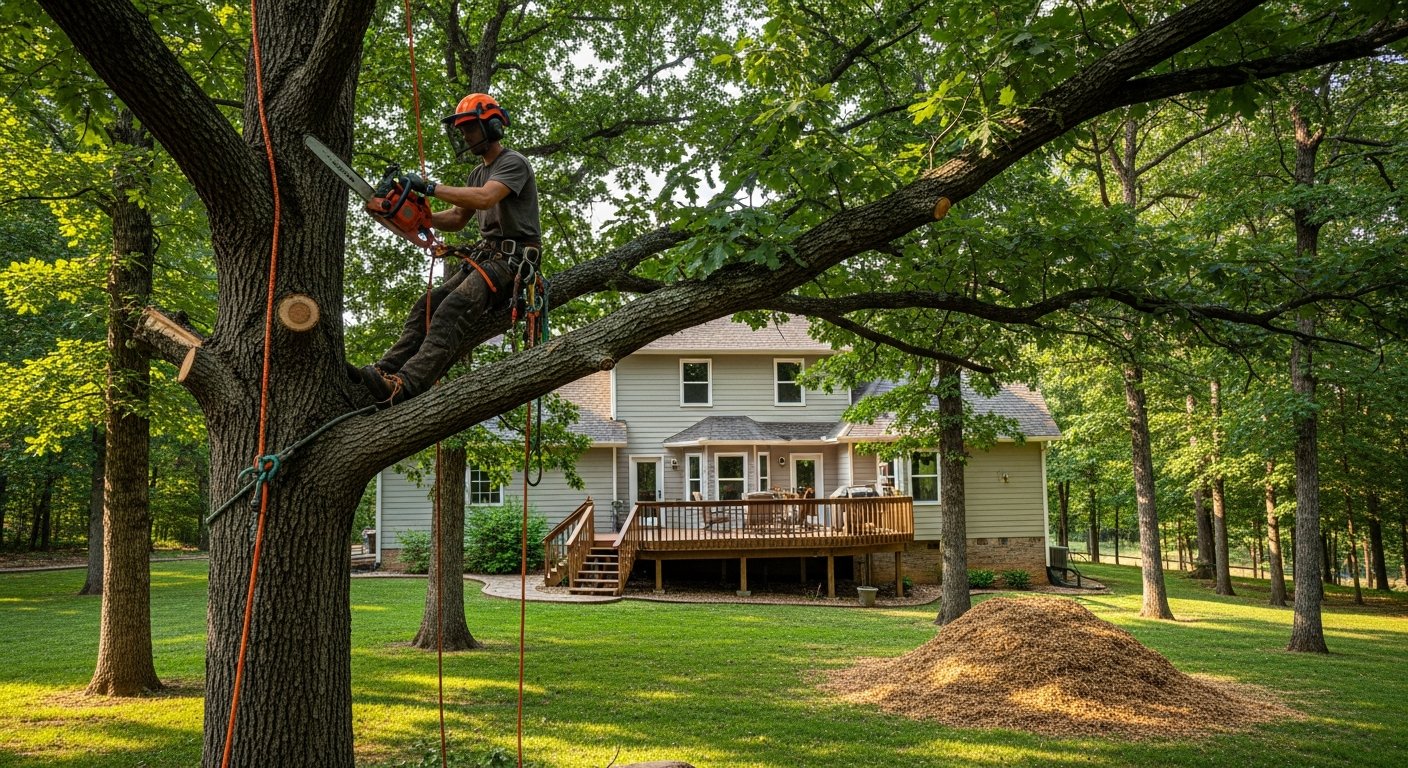
Standing under the shade of a mature oak or maple on a hot Arkansas afternoon is one of the great pleasures of life in the Natural State. But that tree, whether it shades your deck in Batesville or anchors your backyard in Independence County, needs more than rain and sunlight to thrive. Strategic tree trimming is one of the most powerful tools a homeowner can use to protect and extend the life of their trees. When done correctly, tree trimming benefits tree health in Arkansas by improving structure, preventing disease, and reducing the risk of storm damage. For homeowners who value their landscape, understanding how and why trimming works is essential.
Why Tree Trimming Matters for Arkansas Trees
Arkansas is home to a rich variety of tree species, from towering pines and hickories to flowering dogwoods and redbuds. The state’s climate, with hot summers and occasional ice storms, places unique stress on trees. Trimming is not just about aesthetics. It is a proactive health measure that addresses several critical needs. When a tree is pruned correctly, it can allocate resources more efficiently, directing energy toward strong growth rather than sustaining dead or dying limbs. This process directly supports the overall vitality of the tree.
For property owners in Batesville, where storms can bring heavy winds and ice accumulation, a well-trimmed tree is far less likely to suffer catastrophic limb failure. The removal of weak, diseased, or crossing branches reduces the weight load on the main trunk and improves the tree’s natural balance. This is where tree trimming benefits tree health in Arkansas most visibly: a pruned tree stands a better chance of surviving severe weather without splitting or uprooting.
Key Health Benefits of Regular Tree Trimming
Understanding the specific ways trimming improves tree health helps homeowners make informed decisions about their landscape care. The benefits go far beyond simple appearance.
Disease Prevention and Pest Control
Dead or dying branches are entry points for insects and fungal infections. When a branch dies, the tree’s natural defenses can no longer protect that area. Trimming removes these vulnerable spots before pests like the emerald ash borer or fungal pathogens like oak wilt can take hold. In Arkansas, where humidity is high for much of the year, fungal diseases spread quickly. Removing infected limbs early stops the spread and protects the rest of the tree.
Professional trimmers also clean their tools between cuts, preventing the transfer of disease from one tree to another. This is a detail many homeowners overlook. A single dirty cut can introduce pathogens that weaken or kill a tree over several seasons. For this reason, hiring a knowledgeable crew that understands local tree diseases is a wise investment.
Improved Structure and Strength
Young trees especially benefit from formative pruning. Guiding a tree’s growth in its first few years establishes a strong central leader and well-spaced scaffold branches. This structure reduces the likelihood of splitting later in life. Mature trees also benefit from the removal of rubbing or crossing branches, which create wounds that never heal properly.
Consider the following structural advantages of regular trimming:
- Removal of weak crotches where two branches grow too close together, reducing the risk of splitting under snow or wind load.
- Elimination of water sprouts and suckers that steal energy from the main canopy without contributing to the tree’s health.
- Thinning of dense canopies to allow wind to pass through, reducing the sail effect that can uproot trees during storms.
- Correction of leaning or unbalanced growth patterns that develop from uneven sunlight or previous damage.
Each of these interventions strengthens the tree’s long-term framework. Over time, a well-structured tree requires fewer emergency interventions and maintains its health for decades longer than an unpruned specimen.
Enhanced Sunlight and Air Circulation
Dense canopies block sunlight from reaching the inner branches and the ground below. This lack of light can kill lower limbs and create a dead zone inside the tree. It also prevents grass and other plants from growing beneath the canopy. Trimming opens up the tree to light and air, which reduces humidity levels inside the foliage. Lower humidity means less fungal growth and a healthier microclimate around the tree.
For homeowners with decks or patios, this benefit is especially noticeable. A properly trimmed tree allows filtered light to reach outdoor living spaces without overwhelming them. It also reduces the amount of debris that falls onto the deck or into gutters, making maintenance easier.
The Arkansas Climate Factor
Tree trimming benefits tree health in Arkansas in ways that are specific to the region’s weather patterns. Arkansas experiences a mix of hot, humid summers and cold winters with occasional ice storms. Ice accumulation on branches adds tremendous weight. A tree that has not been trimmed in years may have many small, weak branches that are prone to breaking under ice loads. Regular trimming removes these smaller limbs and encourages the tree to develop thicker, stronger branches that can withstand the weight.
Additionally, Arkansas is in a region prone to severe thunderstorms and tornadoes. Dead or dying limbs become dangerous projectiles in high winds. Trimming removes these hazards before they become a threat to your home, your deck, or your family. For property owners near Batesville, where storm season is a recurring concern, proactive trimming is a critical part of property maintenance.
When to Trim Trees in Arkansas
Timing matters. For most deciduous trees, late winter or early spring is the best time to prune, just before new growth begins. At this point, the tree is dormant, and cuts heal quickly when growth resumes. Pruning during dormancy also makes it easier to see the branch structure without leaves in the way. For flowering trees like dogwoods and redbuds, the timing depends on whether they bloom on old wood or new wood. A local arborist can provide guidance specific to your tree species.
Dead or hazardous branches can be removed at any time of year. Safety always comes first. If a limb is hanging over your roof or looks unstable, do not wait for the ideal season. Remove it promptly. For routine health maintenance, however, dormant-season pruning produces the best results.
Avoid heavy pruning during late summer or early fall. Cutting too late in the growing season can stimulate new growth that will not harden off before winter, leaving the tree vulnerable to cold damage. Also, avoid pruning when the tree is leafing out in spring, as this is when the tree is using stored energy to push new leaves. Cutting during this period can stress the tree.
How Professional Trimming Differs from DIY
Many homeowners attempt to trim their own trees, but the results are often disappointing. Improper cuts, such as leaving a stub or cutting too close to the trunk, create lasting damage. A proper pruning cut is made just outside the branch collar, the swollen area where the branch meets the trunk. Cutting into the collar removes the tree’s natural protection and invites decay. Leaving a stub prevents the wound from closing, leaving the tree open to infection for years.
Professional crews bring specialized equipment and training. They can reach high branches safely, remove large limbs without damaging the tree or surrounding structures, and dispose of debris efficiently. For properties with mature trees, the cost of professional trimming is a fraction of the potential cost of repairing storm damage or removing a fallen tree. Additionally, professionals can identify early signs of disease, pest infestation, or structural weakness that an untrained eye might miss.
If you are planning a landscape renovation or building a new deck, now is the perfect time to assess the trees around your home. A local contractor like The Real Deal of Batesville can coordinate trimming with your construction or remodeling project, ensuring that your outdoor space is both beautiful and safe. Whether you are adding a new deck, pouring a concrete patio, or remodeling your home’s exterior, healthy trees enhance the final result.
Signs Your Tree Needs Trimming
Not every tree needs annual trimming. But certain signs indicate that a tree is overdue for care. Watch for these indicators:
- Dead, broken, or hanging branches that could fall at any time.
- Branches that rub against each other, creating wounds in the bark.
- Excessive dead wood inside the canopy or on the ground beneath the tree.
- Branches that overhang your roof, driveway, or deck.
- Signs of disease, such as fungal growth on the trunk, peeling bark, or unusual leaf drop.
If you notice any of these issues, schedule an inspection with a professional. Early intervention can save a tree that might otherwise decline over several years. In many cases, a single trimming session can restore a tree’s health and appearance dramatically.
Integrating Tree Care with Your Home Improvement Plans
For homeowners in Batesville and surrounding areas, tree trimming is often part of a larger home improvement project. If you are building a new deck, you may want to trim branches that will hang over the structure. If you are remodeling your home’s exterior, removing overgrown limbs can improve curb appeal and allow more natural light into the house. Coordinating tree care with construction or remodeling work ensures that your landscape complements your home rather than competing with it.
When trees are healthy and well-maintained, they add significant value to your property. A mature shade tree can reduce cooling costs in summer, provide privacy, and create a welcoming environment for outdoor living. By investing in regular trimming, you protect that value and extend the life of your trees for years to come.
Tree trimming benefits tree health in Arkansas in ways that are both immediate and long-lasting. From preventing disease to reducing storm damage, the advantages are clear. Whether you are a new homeowner or have lived on your property for decades, making tree trimming a regular part of your landscape maintenance routine is one of the best decisions you can make for your trees and your home.