Expanding your home in Arkansas is a significant investment, one that promises more space for your growing family, a dedicated area for hobbies or work, or simply the joy of a sunroom to enjoy the Natural State’s seasons. Yet, the journey from a dream addition to a finished, high-quality structure hinges on a single, critical decision: selecting the right home addition builder. The process involves more than just comparing quotes, it requires understanding Arkansas’s unique building environment, from the clay soils that affect foundations to the local permitting nuances in cities like Little Rock, Fayetteville, or Bentonville. This guide provides a comprehensive roadmap for Arkansas homeowners to navigate the selection process, ensuring your project is built on a foundation of trust, expertise, and local knowledge.
Understanding the Arkansas Home Addition Landscape
Arkansas presents a distinct set of considerations for any construction project. The climate varies significantly from the humid Delta to the more temperate Ozark Highlands, influencing material choices and design for durability. Local building codes and permit requirements can differ from county to county and even between municipalities. A builder experienced in Northwest Arkansas, for instance, will be familiar with the aesthetic and regulatory expectations of communities like Rogers or Springdale, while a builder in Central Arkansas understands the specifics of working in older, established neighborhoods in Pulaski County.
Furthermore, the scope of “home addition” in Arkansas covers a wide spectrum. It could be a second-story addition over a ranch home in Jonesboro, a sprawling ground-floor family room extension in Conway, or a converted garage into a mother-in-law suite in Fort Smith. Each type demands specific expertise. A builder proficient in foundation work and slab extensions may not be the best choice for a complex second-story lift, which requires structural engineering to ensure the existing home can support the new load. Recognizing your project’s specific needs is the first step in filtering the pool of potential home addition builders in Arkansas.
The Step-by-Step Process for Vetting Arkansas Builders
Finding a qualified builder requires a methodical approach. Start by gathering recommendations from trusted sources: friends, family, neighbors who have undertaken similar projects, and local real estate agents. Online platforms and review sites are useful, but prioritize those with detailed, verifiable project photos and lengthy written reviews over simple star ratings. Once you have a shortlist of three to five candidates, initiate a deeper vetting process.
First, verify essential credentials. Any reputable home addition builder in Arkansas should be fully licensed and insured. Ask for their license number and confirm its status with the Arkansas Contractors Licensing Board. Insurance is non-negotiable, it must include both liability insurance and workers’ compensation to protect you from potential jobsite accidents. Next, examine their portfolio with a critical eye. Look for projects similar in scale, style, and complexity to yours. Do not just look at the finished product, ask to see “before” photos and inquire about the challenges they faced and how they solved them.
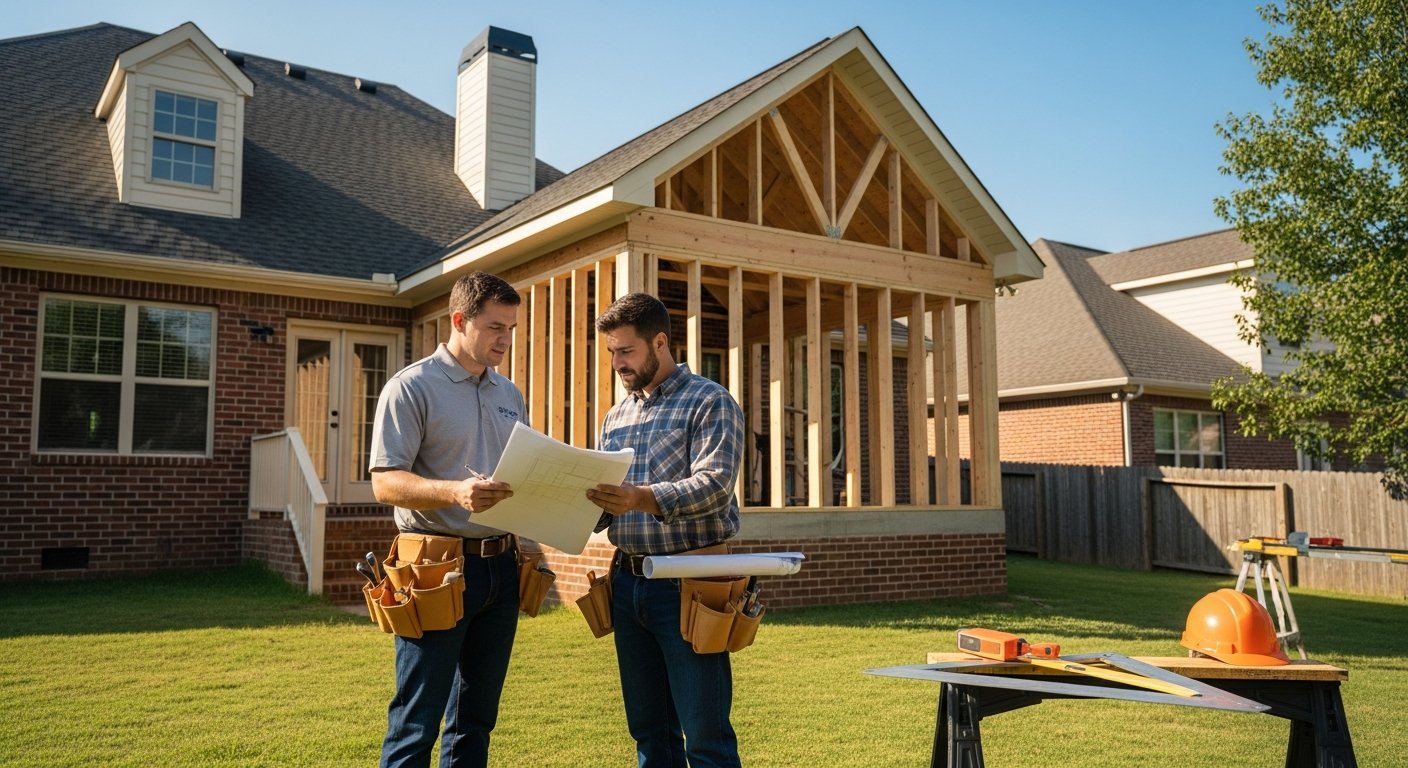
The most crucial step is the consultation and proposal phase. A professional builder will visit your home, listen to your goals, assess the site, and discuss realistic budgets and timelines. They should ask thoughtful questions about your lifestyle and how you intend to use the new space. Be wary of any builder who provides an instant, off-the-cuff quote without detailed measurements or plans. A proper proposal should be comprehensive and include several key elements.
- A detailed scope of work describing every task, from demolition to final paint.
- A clear materials list specifying brands, grades, and quantities (e.g., “CertainTeed Landmark Pro asphalt shingles” vs. “architectural shingles”).
- A project timeline with major milestones, understanding that weather in Arkansas can cause delays.
- A transparent payment schedule tied to completed work stages, not large upfront sums.
- Information on who will be your primary point of contact, the project supervisor or foreman, during construction.
Finally, and most importantly, ask for and contact references. Speak to past clients about their experience. Were communication and cleanup satisfactory? Was the project completed on time and within budget? Would they hire the builder again? This firsthand feedback is invaluable.
Key Questions to Ask Your Potential Builder
Arming yourself with the right questions transforms you from a passive consumer into an informed partner. Go beyond basic cost and schedule inquiries. Ask about their team: are employees subcontractors or in-house craftsmen? How long have their key foremen been with the company? Inquire about how they handle permitting and inspections. A top-tier Arkansas builder will manage this entire process, pulling the necessary permits from the local jurisdiction and scheduling all required inspections, which saves you immense time and hassle.
Discuss the unknowns. How do they handle unforeseen issues, like discovering outdated wiring or a compromised foundation wall once walls are opened? Their process for change orders, which are written amendments to the contract for any changes in scope or materials, should be formal and clear. Ask about their warranty: what does it cover, for how long, and is it a manufacturer’s warranty, a builder’s warranty, or both? Understanding these protocols before signing a contract prevents conflicts and ensures a smoother project.
Planning Your Addition: Budget, Design, and Logistics
A successful home addition is a blend of visionary design and pragmatic planning. Start by defining a realistic budget. As a rule of thumb, you should include a contingency fund of 10% to 20% for unexpected costs, which are common in renovation work. Your budget will directly influence the scale and finishes of your project. When working with your chosen home addition builder on design, consider both aesthetics and function. The addition should feel like a seamless part of your existing home, not an afterthought. This involves matching roofing materials, siding, window styles, and floor heights.
Also, think about the disruption to your daily life. Will you need to relocate during the noisiest phases? How will the crew access the site? Where will materials and a dumpster be placed? A considerate builder will discuss these logistics upfront and work to minimize the impact on your household. They should also explain how they will protect the parts of your home not under construction from dust and damage.
Red Flags and How to Avoid Common Pitfalls
Being able to spot warning signs can save you from a costly and stressful experience. Major red flags include a builder who demands a large cash deposit upfront (more than 10% is often excessive), refuses to provide a detailed written contract, or is evasive about licenses and insurance. Be cautious of a quote that seems drastically lower than others, it often indicates inexperience, cutting corners, or a misunderstanding of the project’s true scope that will lead to change orders later.
Another common pitfall is not formalizing everything in writing. Verbal agreements are meaningless in construction disputes. Every detail, from the paint sheen to the door handle model, should be in the contract documents. Finally, avoid the temptation to act as your own general contractor unless you have significant experience. Coordinating subcontractors, scheduling inspections, and sourcing materials is a full-time job. A professional home addition builder in Arkansas brings an established network of reliable trades and the management expertise to orchestrate the entire process efficiently.
The Value of Local Expertise for Arkansas Homeowners
Choosing a builder with deep roots in your specific region of Arkansas offers advantages that extend beyond construction skill. They understand the soil conditions, whether it’s the expansive clay common in much of the state that requires specific foundation techniques, or the rocky terrain of the mountains. They have established relationships with local building officials, which can streamline the permitting process. They know which materials perform best against Arkansas humidity, summer heat, and occasional severe weather.
A local builder is also invested in the community’s reputation. They are more likely to be accountable long after the project is complete, standing behind their work because they live and work in the same area. They can recommend local suppliers for materials and often get better pricing and service, savings they can potentially pass on to you. This local knowledge transforms a builder from a mere contractor into a true partner who is invested in enhancing your home and, by extension, your neighborhood.
Embarking on a home addition is one of the most rewarding projects a homeowner can undertake. It allows you to customize your living space to perfectly suit your needs without the hassle of moving. By dedicating time to thoroughly research, vet, and select the right home addition builder in Arkansas, you invest not just in lumber and drywall, but in peace of mind. The result will be a beautifully crafted space that adds comfort to your daily life and lasting value to your Arkansas home for years to come.