Concrete surfaces around your Batesville home take a beating from the region’s freeze-thaw cycles, heavy rain, and shifting clay soils. Driveways, patios, and walkways often develop small hairline cracks that, if left untreated, can widen into major structural problems. Knowing the right concrete crack repair methods Batesville Arkansas homeowners rely on can save thousands in replacement costs and keep your property looking its best. Whether you are a DIY enthusiast or need professional assistance, understanding which approach works for each type of crack is essential.
Understanding Concrete Cracks in Batesville Arkansas
Not all cracks are the same. The repair method you choose depends on the crack’s size, location, and cause. In Batesville, the most common culprits include expansive clay soil that moves with moisture changes, poor drainage that saturates the subgrade, and temperature fluctuations that force concrete to expand and contract. Hairline cracks (under 1/8 inch) are usually cosmetic, while wider cracks or those with vertical displacement (heaving or sinking) indicate deeper foundation issues.
Before you attempt any repair, inspect the crack carefully. Look for signs of water infiltration, such as efflorescence (white powdery residue) or nearby mold. Check whether the crack is active or dormant by marking its endpoints and monitoring over a season. Active cracks that change width with weather require flexible sealants; dormant cracks can be filled with rigid epoxy or mortar. This initial assessment ensures you pick the most effective concrete crack repair methods Batesville Arkansas professionals use.
Common causes of concrete cracks in residential surfaces include:
- Freeze-thaw cycles that force water inside microscopic pores to expand and contract
- Expansive clay soil that swells when wet and shrinks during dry spells, shifting the slab
- Poor subgrade compaction before pouring, leading to uneven settling
- Excessive weight from vehicles or equipment beyond the slab’s designed load
- Inadequate control joints that concentrate stress in one area instead of dispersing it
By identifying the root cause, you can also prevent the same crack from returning after you repair it. For instance, improving drainage around the slab or adding a vapor barrier underneath often stops recurring cracking.
DIY Concrete Crack Repair Methods for Small Cracks
For narrow cracks under about 1/4 inch wide, several do-it-yourself solutions work well. These concrete crack repair methods Batesville Arkansas homeowners can perform over a weekend require only basic tools and materials from a local hardware store. However, they are best suited for non-structural cracks in driveways, walkways, and patios where appearance matters but the slab remains stable.
Epoxy Injection for Structural Bonding
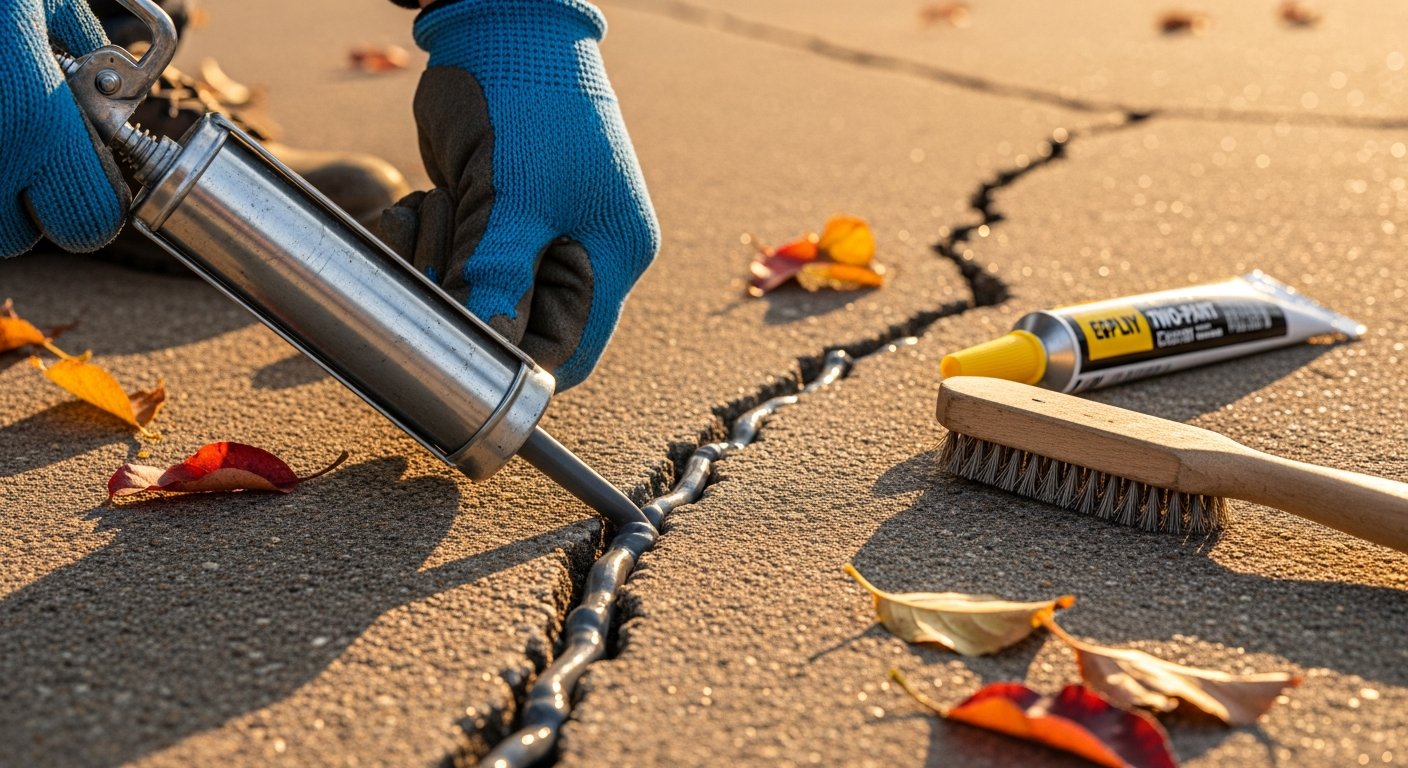
Epoxy injection is one of the strongest repair options because it restores the concrete’s original tensile strength. You mix a two-part epoxy and inject it into the crack using a caulking gun or specialized injection kit. The epoxy cures into a rigid material that bonds the two sides together, preventing further movement. This method works well on dormant cracks that are clean and dry. The steps include:
- Clean the crack thoroughly with a wire brush and compressed air to remove debris and loose particles.
- Apply injection ports every 12 to 24 inches along the crack, sealing the surface between ports with a fast-setting epoxy paste.
- Mix the epoxy resin and hardener according to the manufacturer’s instructions.
- Inject epoxy into the lowest port first, moving upward until the material emerges from the next port.
- Allow the epoxy to cure completely (usually 24 to 72 hours), then grind or sand the surface flush.
Epoxy injection creates a permanent bond that can handle light vehicle traffic once fully cured. It is ideal for horizontal surfaces like driveways and garage floors where structural integrity matters.
Polyurethane Foam for Flexible Sealing
If the crack is active (changing width with temperature) or located in an area prone to moisture, polyurethane foam sealants offer better flexibility. These one-part or two-part foams expand as they cure, filling irregular voids and forming a waterproof barrier. Unlike epoxy, polyurethane remains slightly elastic, allowing it to move with the slab without re-cracking. It is also excellent for cracks that are damp because it can cure in the presence of moisture.
To apply polyurethane foam, follow similar cleaning and injection steps. The material expands significantly, so use a low-expansion product and avoid overfilling. After curing, trim any excess with a knife and apply a concrete overlay or patch compound to match the surface texture. This method is particularly popular for foundation walls and basement slabs in Batesville homes that experience hydrostatic pressure.
Professional Concrete Crack Repair Methods for Structural Issues
When cracks exceed 1/4 inch in width, show vertical displacement, or run through the entire thickness of the slab, professional intervention is necessary. These concrete crack repair methods Batesville Arkansas contractors use involve specialized equipment, advanced materials, and often require structural engineering evaluation. Attempting DIY repairs on large or moving cracks can waste money and may even worsen the problem.
Carbon Fiber Reinforcement Strips
For foundation walls and retaining walls with non-structural cracks that have stabilized, carbon fiber strips provide a permanent solution. High-strength carbon fiber fabric is embedded in a resin matrix and bonded across the crack. The strips are incredibly strong in tension and prevent the crack from widening further. They are thin and can be covered with paint or drywall if the wall is inside a finished basement. This method adds negligible thickness and does not require excavation.
Underpinning and Slab Jacking
If the crack is accompanied by settling or sinking, the underlying soil likely needs support. Slab jacking (also called mudjacking or polyjacking) involves pumping a grout mixture or high-density polyurethane foam beneath the slab to lift it back to level. This process fills voids in the subgrade and restores proper drainage. For deep foundation issues, helical piers or push piers are driven into stable soil to transfer the load. These are major repairs that should only be performed by licensed concrete contractors in Batesville.
Professional crack repair also includes routing and sealing larger cracks with a flexible sealant system. The contractor routes the crack into a wider groove (typically 1/2 inch wide and 1/2 inch deep), cleans it, and fills it with a pourable polyurea or polyurethane sealant. This creates a waterproof, flexible joint that can accommodate movement without re-cracking.
When to Call a Professional Contractor in Batesville
Knowing when to pick up the phone rather than a caulking gun can save you money and prevent safety hazards. Any crack that is wider than 1/2 inch, shows signs of ongoing movement (e.g., the edges are no longer aligned), or allows water to pour into your basement or crawlspace should be evaluated by a professional. Likewise, cracks in structural elements like foundation walls, load-bearing columns, or retaining walls demand expert assessment.
The best concrete crack repair methods Batesville Arkansas homeowners can trust start with a thorough inspection. A local contractor will check the entire concrete structure, test drainage, and recommend a repair plan that addresses both the symptom (the crack) and the underlying cause. Attempting to hide a structural crack with a surface patch only delays the inevitable and can lead to more expensive damage.
For those looking to improve their property beyond concrete repairs, consider that a well-maintained driveway and walkway significantly boost curb appeal. In fact, many Batesville residents combine crack repairs with decorative concrete overlays or resurfacing to give their old concrete a fresh look. The same contractor who fixes your foundation cracks can also install a new stamped patio or replace worn concrete sections. And if you are planning a larger property upgrade, such as adding a secure entry, our automated gate installation Batesville Arkansas guide explains how to integrate security and convenience with your home’s existing concrete work.
Choosing the right repair method is only half the battle; proper curing and post-repair care ensure long-lasting results. After any repair, keep heavy traffic off the area for the recommended time (usually 24 to 72 hours) and seal the entire surface with a quality concrete sealer to prevent future water intrusion. Regular cleaning and resealing every two to three years will extend the life of your concrete for decades.
Concrete cracks are common in Batesville’s climate, but they do not have to ruin your home’s value or safety. By matching the correct repair method to the specific crack type, you can restore your concrete’s integrity and appearance. Whether you tackle small hairline cracks yourself or bring in a professional for major structural repairs, acting early is the key to avoiding costly replacement. Contact a trusted Batesville concrete specialist to assess your situation and recommend the best path forward.