Imagine settling into your home theater for a movie night, only to hear the lawnmower outside or the TV in the next room. A soundproof home theater eliminates those distractions, letting you enjoy every explosion and whisper as the director intended. In Batesville Arkansas, more homeowners are turning to soundproof drywall to create a true cinematic experience without disturbing the rest of the house. This guide explores how soundproof drywall works, the installation process, and why it is the smartest upgrade for your home theater project.
What Makes Soundproof Drywall Different?
Standard drywall does little to stop sound transmission. Sound travels through walls by vibrating the drywall panels, passing through studs, and radiating into adjacent rooms. Soundproof drywall systems are engineered to interrupt that path. They use a combination of mass, decoupling, and damping to absorb and block sound energy.
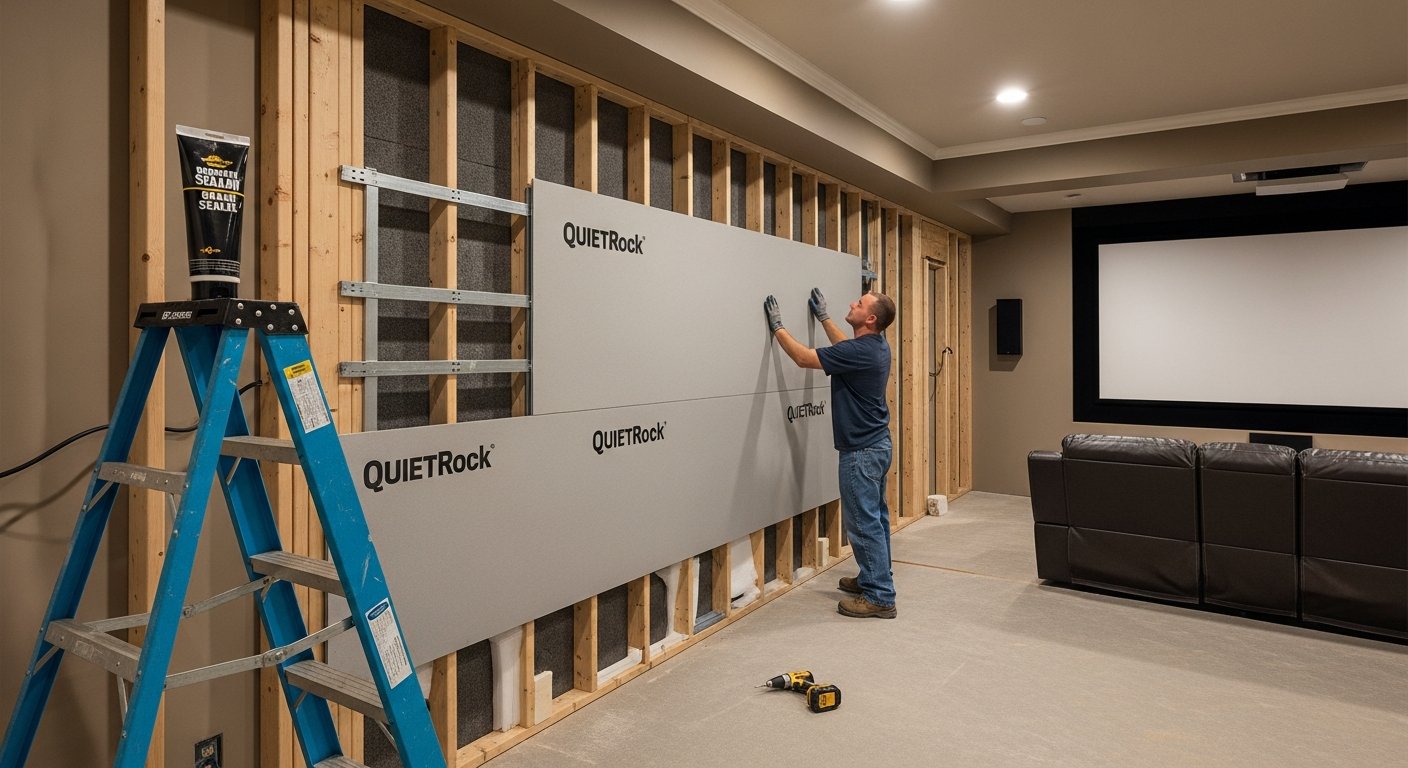
The core of a soundproof assembly is often a layer of viscoelastic polymer sandwiched between two sheets of gypsum. This patented material converts acoustic energy into heat, a process called constrained layer damping. Products like QuietRock or standard drywall paired with Green Glue compound achieve similar results. In addition to the special panels, contractors use resilient channels to physically separate the drywall from the studs, preventing vibration transfer. Acoustic sealant seals every edge and penetration to stop air leaks that carry sound.
Mass and Density Matter
Heavier drywall panels, such as 5/8-inch type X, offer more mass than standard 1/2-inch panels. For a home theater, many experts recommend double-layer construction: two sheets of 5/8-inch drywall with a damping compound between them. This combination can achieve a Sound Transmission Class (STC) rating of 60 or higher, which effectively blocks loud speech and movie audio. The extra mass also helps with low-frequency sounds like subwoofer bass, which is notoriously difficult to contain.
Planning Your Soundproof Home Theater in Batesville
Before you buy materials, take time to plan the room. The location of your home theater in Batesville matters. A basement room offers natural isolation because it shares fewer walls with the rest of the house. If you are converting an above-ground bedroom or living room, focus on the walls and ceiling that adjoin high-traffic areas. Also consider the floor: if the theater is on a second story, soundproofing the floor with carpet padding and a floating floor system can prevent noise from reaching lower levels.
Think about existing noise sources. Homes near Batesville’s main roads or with open floor plans may need more aggressive treatment. Measure the room dimensions and identify all potential sound leaks: electrical outlets, light fixtures, HVAC registers, and door gaps. Every gap reduces the effectiveness of your soundproof drywall. Budget for acoustic caulk, door sweeps, and possibly a solid-core door for the theater entrance.
The Installation Process for Soundproof Drywall
Installing soundproof drywall is not a standard drywall job. It requires careful attention to detail to avoid creating sound bridges. Below are the key steps a professional contractor follows for a home theater in Batesville Arkansas.
- Prepare the wall cavity. Remove existing drywall and inspect the studs. Install fiberglass or mineral wool insulation to fill the cavity. This absorbs airborne sound and adds thermal insulation.
- Install resilient channels. These metal strips are screwed horizontally across the studs. They create a spring-like decoupling layer that prevents vibrations from traveling through the framing.
- Hang the first layer of drywall. Use 5/8-inch fire-rated drywall. Screw it to the resilient channels, not the studs, and leave a small gap at the edges for acoustic sealant.
- Apply damping compound. Spread Green Glue or a similar viscoelastic compound across the entire surface. Then screw on the second layer of 5/8-inch drywall. The compound bonds the two layers and dissipates sound energy.
- Seal and finish. Fill all gaps around the perimeter, electrical boxes, and corners with acoustic caulk. Tape and mud the joints with standard drywall compound. For best results, use a Level 5 finish to ensure no cracks develop over time.
Each step affects the final STC rating. Skipping the acoustic caulk or using standard insulation can cut performance by 10 points or more. That is why hiring experienced drywall contractors in Batesville is essential for a successful soundproof home theater.
Local Considerations for Batesville Arkansas Homes
Batesville’s humid subtropical climate presents challenges for any drywall installation. Moisture can degrade standard drywall and reduce the effectiveness of damping compounds. For home theaters, always use moisture-resistant drywall in basement spaces and ensure proper ventilation. The contractor should also account for seasonal temperature swings that can cause framing to expand and contract, potentially cracking acoustic seals. Using resilient channels helps accommodate minor movements.
Building codes in Independence County may require permits for structural changes or addition of new rooms. A home theater conversion that involves removing existing drywall and adding electrical wiring will need inspection. Working with a local contractor who knows the Batesville permit process streamlines the project and ensures safety. Additionally, local suppliers carry the necessary materials, so you avoid shipping delays.
Benefits Beyond Noise Reduction
Soundproof drywall does more than keep movie sound inside the theater. By adding mass and insulation, it improves the thermal envelope of your home, reducing heat loss in winter and heat gain in summer. This energy efficiency can lower monthly utility bills. For homeowners already focused on eco-friendly upgrades, combining soundproofing with other improvements, such as energy efficient home remodel upgrades Batesville Arkansas, creates a more comfortable and cost-effective living space.
The added mass also provides a measure of fire resistance. Two layers of 5/8-inch type X drywall offer a one-hour fire rating, which can reduce homeowner insurance premiums. And because the soundproofing is hidden behind standard finishes, it does not affect your room’s aesthetics. You can still paint, texture, or wallpaper to match your decor.
From a resale perspective, a professionally soundproofed home theater is a sought-after feature. Buyers in Batesville appreciate a room ready for movies, gaming, or music without the need for expensive retrofits. It sets your home apart in the local market.
Cost and Investment for Soundproof Drywall in Batesville
Soundproof drywall installation costs more than standard drywall. Expect to pay between $3.00 and $6.00 per square foot for materials alone, plus labor. For a typical 12×16 foot home theater (about 200 square feet of wall area), the project may range from $1,200 to $2,500 depending on the complexity and whether you need to remove old drywall. Resilient channels, Green Glue, and acoustic caulk add to the total but are necessary for performance.
Compare this to the cost of upgrading audio equipment or adding heavy curtains later. Investing in proper soundproofing from the start is far more effective. Many Batesville homeowners find the improvement in viewing experience and peace throughout the house well worth the upfront expense. When planning your budget, include funds for a solid-core door, acoustic panels for the ceiling, and possibly a raised floor to decouple the room from the slab.
Building a soundproof home theater in Batesville Arkansas is a rewarding project that combines construction expertise with attention to detail. From selecting the right drywall system to sealing every air gap, professional execution ensures you get the quiet, immersive space you deserve. Whether you are starting from scratch or renovating an existing room, soundproof drywall is the foundation of a great home theater experience.